
“The Internet of Things is interesting because it forces us to rethink the interaction paradigms we have with objects—that is, something is different about our engagement with a smart object versus a ‘dumb’ one,” writes Thomas Wendt in his recent UX Magazine article, “Internet of Things and the Work of the Hands.”
Whatever you choose to call the grayish area sitting at the intersection of wearable technology, customizable sensors, and enhanced connectivity, it seems likely that this is where the next major breakthroughs in experience design will take place. Cisco estimates that by 2020, there will be 50 billion things connected to the Internet, so whether we settle on the “Internet of Things,” “The Internet of Everything,” or an “Experience Ecosystem,” the space is primed for explosive growth.
As Wendt notes, there is something different about interacting with smart objects and, “It’s our job to understand what that something is.” That something has been illusive in recent years, with users adopting to wearable tech slowly and a noticeable lack of sophisticated communication between objects. After all, an object sharing information with your smartphone or tablet only constitutes a relationship, it takes many more overlapping relationships to create an ecosystem.
“Connecting a device or sensors to a network is not enough to create an awesome new experience,” Avi Itzkovitch affirms in another recent article. “The most exciting products on the market are set to disrupt what we know about technology and innovation, just as the iPod and iTunes changed the way the world buys and listens to music.”
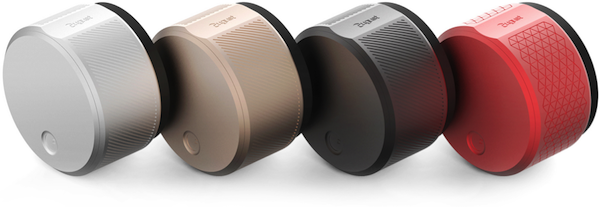
Itzkovitch points to the August Smart Lock—a system that allows you to control the locks on your home using your smartphone and send temporary keys to the devices of others—as the kind of product that will create a “virtual network around monitoring and providing access to your house.”
These ecosystems will continue to add value for users when, for instance, your smartlock can have information-rich conversations with your home security system, which is also pulling data from your thermostat and smoke alarms.
In another article, “The Internet of Things and the Mythical Smart Fridge,” Itzkovitch details how these ecosystems can go even deeper. By attaching a radio frequency identification (RFID) tag to a piece of produce, for example, your [mythical] smartfridge will be able to tell you when your kale is in danger of going bad. It might even go so far as surveying all the contents of your fridge to send you a recipe for the kale au gratin that you only need to buy breadcrumbs to make.
Embedded sensors and interactions of all kinds play an active role in advanced experience ecosystems
You could easily follow those breadcrumbs a bit further, to a push notification on your smartwatch reminding you that you only need that one ingredient as you appraoch a grocery store. The possibilities seem endless, as this illustration by graphic designer Bartosz Niemirka shows. 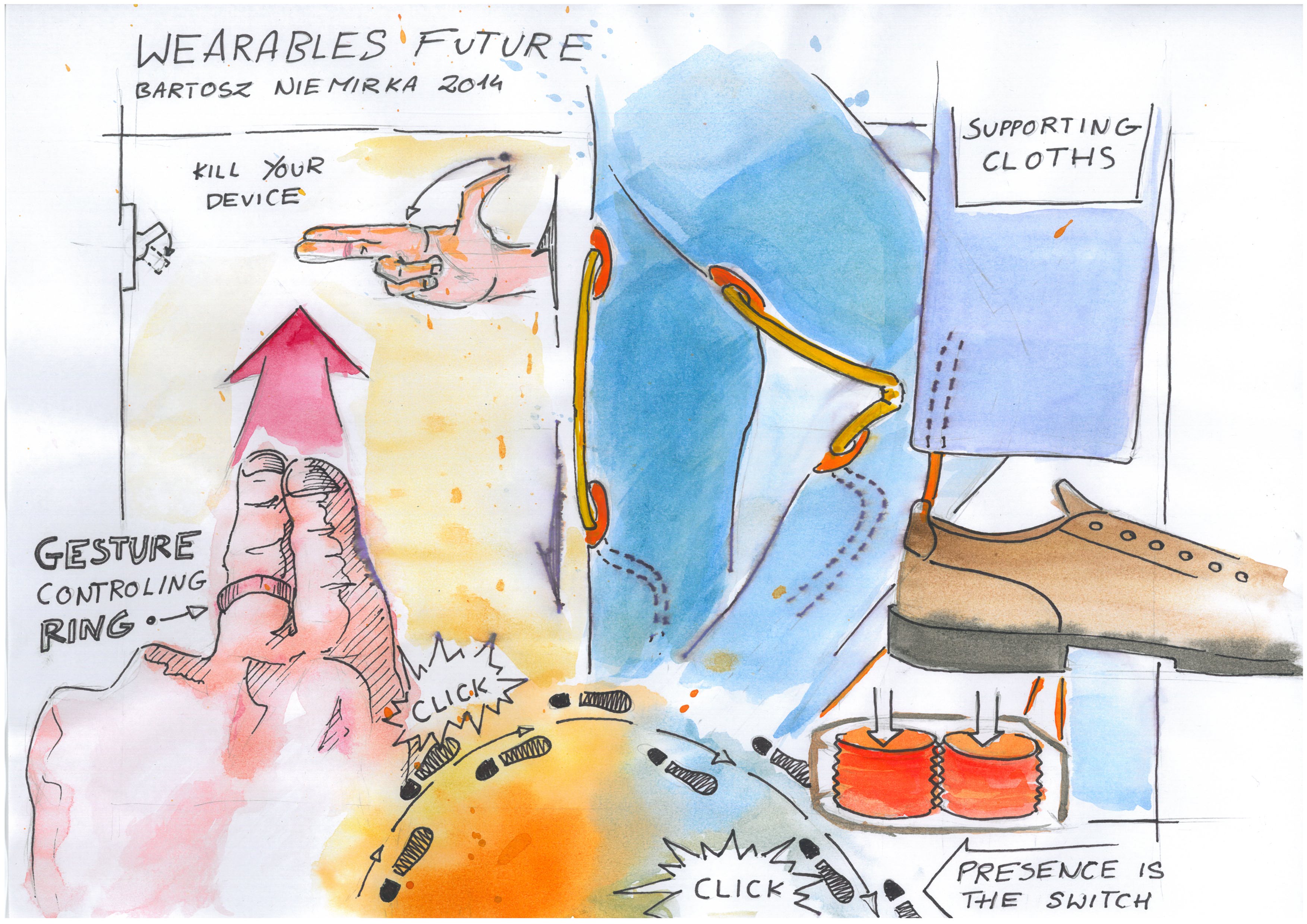
Sensors can be embedded anywhere and interactions of all kinds can play an active role in these advanced experience ecosystems. Because of the new opportunities these developments afford to designers, developers, and researchers, we felt it was important to create a category in the international Design for Experience awards to recognize the best work being done to make sure these ecosystems flourish.
Do you know of any products, individuals, or organizations that are an important part of a more Advanced Experience Ecosystem? Submit a recommendation using the form on the right. If you’re involved with something cool that derserves recognition by the DfE awards, you can use the recommendation form to let us know, or go ahead and begin the application process now.
The DfE awards draw valuable lessons from leading examples of mastery in UX and related fields, which become valuable resource material for the experience design community. Our judges want to know what can be learned from your work. Especially in the case of the Advanced Experience Ecosystem, the learnings will help shape the future of UX.