
Flag

We stand with Ukraine and our team members from Ukraine. Here are ways you can help

Get exclusive access to thought-provoking articles, bonus podcast content, and cutting-edge whitepapers. Become a member of the UX Magazine community today!

Home ›› Business Value and ROI ›› 6 Key Questions to Guide International UX Research ›› Design for Experience: Experience that Makes a Difference

Design for Experience: Experience that Makes a Difference

by UX Magazine Staff, Design for Experience
2 min read
Share this post on
Tweet
Share
Post
Share
Email
Print

Save

A closer look at the Design for Experience awards category: Experience that Makes a Difference

Technology exists to solve problems.

Some solutions are to common problems like counting calories. Other solutions effect major change and improve lives worldwide.

Take Kiva, for example, a non-profit that facilitates microloans to people without access to traditional banking systems.

Folks who wish to make a loan can get online, find an entrpreneur in need, make a loan, get updates, and get paid back.

By combining the experience of doing something charitable with the reward of seeing an investment grow (and facilitating it through a simple web transaction) Kiva has generated almost $500 million in loans.

Kiva screenshot

Earlier this year, Denver-based experience design agency Effective UI completed work on an online reporting platform that helps philanthropic organizations manage and present data.

Using the open-source platform Liferay, the team at Effective UI designed an application for Water for People that allows users to find information, data, metrics, and stories about the non-profit’s work ensuring that everyone in 30 districts around the world has reliable access to water and sanitation.
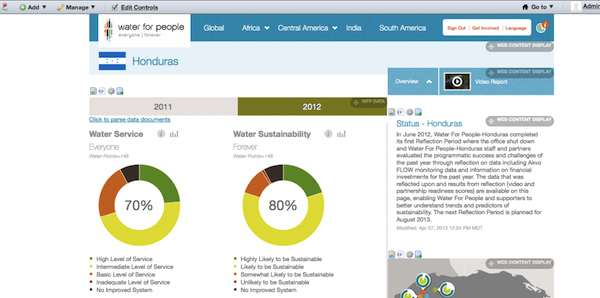
effective UI repoting app

Making improvements to experiences in healthcare is challenging work, but it has the potential to impact numerous lives in profound ways. Case in point, Doug Dietz, a designer at General Electric Healthcare who wanted to make the experience of an MRI scan less frightening for children.
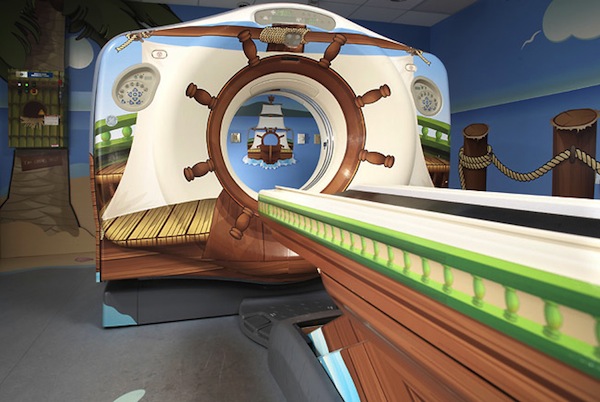
pirate themed MRI

By decorating the imaging room and scanner, Dietz transformed a foreboding medical experience into an adventure. The doctor serves as a tour guide and the young patient gets a hero’s award at the end of the procedure, rounding an experience with real value to kids and their parents.

Technology has incredible potential to make a positive impact in people’s lives, whether on an individual level or by addressing societal or global concerns like hunger, security, peace, and the environment. The DfE Experience that Makes a Difference award recognizes digital products, systems, and other experience design initiatives that have contributed meaningful improvements to people’s lives.

If you’ve experienced products, services, or systems that make a difference, recommend them now! If you’ve been a part of a design project that has changed lives for the better, apply for this award.

[google_ad:WITHINARTICLE_1_468X60]

[google_ad:WITHINARTICLE_1_234X60_ALL]

Image of hands courtesy Shutterstock

post authorUX Magazine Staff

UX Magazine Staff
UX Magazine was created to be a central, one-stop resource for everything related to user experience. Our primary goal is to provide a steady stream of current, informative, and credible information about UX and related fields to enhance the professional and creative lives of UX practitioners and those exploring the field. Our content is driven and created by an impressive roster of experienced professionals who work in all areas of UX and cover the field from diverse angles and perspectives.

post authorDesign for Experience

Design for Experience

The core mission of Design For Experience (DfE) is to fuel the growth, improvement, and maturation in the fields of user-centered design, technology, research, and strategy. We do this through a number of programs, but primarily through our sponsorship of UX Magazine, which connects an audience of approximately 100,000+ people to high-quality content, information, and opportunities for professional improvement.

Tweet
Share
Post
Share
Email
Print

Related Articles

Learn how understanding user emotions can create intuitive, supportive designs that build trust and loyalty.

Article by Pavel Bukengolts
The Role of Emotion in UX: Embracing Emotionally Intelligent Design
  • The article emphasizes that emotionally intelligent design is key to creating meaningful UX that satisfies users and drives business success.
  • It shows how understanding users’ emotions — through research, empathy mapping, journey mapping, and service blueprinting — can reveal hidden needs and shape more intuitive, reassuring digital experiences.
  • The piece argues that embedding empathy and emotional insights into design strengthens user engagement, loyalty, and overall satisfaction.
Share:The Role of Emotion in UX: Embracing Emotionally Intelligent Design
5 min read

As AI takes on more of the solution work, the real craft of design shifts to how we frame the problem. This piece explores why staying with uncertainty and resisting the urge to rush to answers may be a designer’s most powerful skill.

Article by Morteza Pourmohamadi
The Frame, the Illusion, and the Brief
  • The article highlights that as AI takes over more of the solution work, the designer’s true craft lies in framing the problem rather than rushing to solve it.
  • It shows how cognitive biases like the need for closure or action bias can distort our perception, making careful problem framing essential for clarity and creativity.
  • The piece argues that framing is itself a design act — a practice of staying with uncertainty long enough to cultivate shared understanding and more meaningful outcomes.
Share:The Frame, the Illusion, and the Brief
3 min read

UX isn’t just about screens — it’s about feelings. This article explores why the future of UX depends on blending artificial and emotional intelligence to create truly human experiences.

Article by Krystian M. Frahn
UX is More Than Screens: The Art of Designing Emotions
  • The article shows how Steve Jobs’ shift from “form follows function” to “form follows emotion” transformed design into a deeply human practice centered on empathy.
  • It explains that emotions drive perception, usability, and loyalty — making emotional intelligence essential to meaningful user experiences.
  • The piece argues that the future of UX lies in uniting artificial and emotional intelligence to create technology that feels truly human.
Share:UX is More Than Screens: The Art of Designing Emotions
6 min read

Join the UX Magazine community!

Stay informed with exclusive content on the intersection of UX, AI agents, and agentic automation—essential reading for future-focused professionals.

Hello!

You're officially a member of the UX Magazine Community.
We're excited to have you with us!

Thank you!

To begin viewing member content, please verify your email.

Tell us about you. Enroll in the course.

    This website uses cookies to ensure you get the best experience on our website. Check our privacy policy and