

Flag

We stand with Ukraine and our team members from Ukraine. Here are ways you can help

Get exclusive access to thought-provoking articles, bonus podcast content, and cutting-edge whitepapers. Become a member of the UX Magazine community today!

Home ›› Content and Copy ›› Don’t Make Your Members Feel Small #wtfUX

Don’t Make Your Members Feel Small #wtfUX

by Josh Tyson
2 min read
Share this post on
Tweet
Share
Post
Share
Email
Print

Save

Are sites slighting members by giving “Sign Up” buttons more prominence than “Sign In” buttons?

The world is full of poorly designed experiences. Let’s identify them, share them, and shrink their numbers. Here Daniel Brown muses on the perceived slighting of members in favor of those who haven’t yet signed up for certain services:

This isn’t so much an example as a trend I don’t understand.

Many sites now emphasize “Sign Up” over “Sign In”—and not in a subtle way. The “Sign Up” buttons are generally huge, obvious, and welcomingly green.

Meanwhile, the “Sign In” function is often just a text link dwarfed by the larger “Sign Up” button or tucked away in a corner waiting to be found.

Spotify sign-in

Spotify, at the moment anyway, is among the worst offenders.
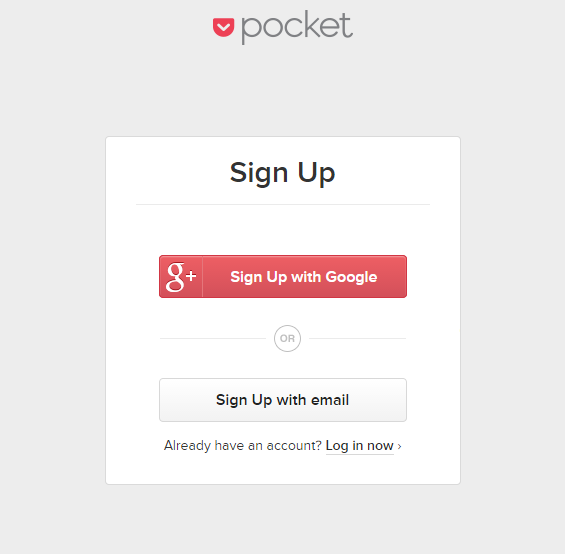
Pocket sign-in

I understand wanting to increase your installed base quickly but it’s also important to make those that may have already paid you money feel welcome.

Dropbox sign-in

In no other service industry is this approach used. It’s a little like a restaurant offering new customers a red carpet and champagne as they are escorted into the restaurant while long-time patrons are told to enter through the kitchen and past the restrooms.

Evernote sign-in

You could argue that many users come to these services routinely using the same device(s) and aren’t required to login with every visit. But Brown does raise an interesting idea: maybe even if it’s not always for the benefit of members, login pages can make more of an effort to promote membership as something special. Food for thought.

Keep these coming. Send them to us via Twitter or Facebook using the hastag #wtfUX or email them to: [email protected] with “#wtfUX” in the subject line. Include as much context as you can, so we get a full understanding of what the f%*k went wrong.


UPDATE:

tumblr sign-in

Here’s another example of a diminished sign-in on Tumblr from Andrea Barabás.

iCloud sign-in

And here’s an example of ample sign-in real estate from Tobias Horvath.

Couldn’t help but send this major counter-example. This is how it should be.

True. The icloud.com website is not Apple’s primary way to gain new users, but it’s so refreshing going there. If I go visit a service that requires me to login to use it, all I want is to be able to login instantly.


 

post authorJosh Tyson

Josh Tyson
Josh Tyson is the co-author of the first bestselling book about conversational AI, Age of Invisible Machines. He is also the Director of Creative Content at OneReach.ai and co-host of both the Invisible Machines and N9K podcasts. His writing has appeared in numerous publications over the years, including Chicago Reader, Fast Company, FLAUNT, The New York Times, Observer, SLAP, Stop Smiling, Thrasher, and Westword. 

Tweet
Share
Post
Share
Email
Print

Related Articles

Explore how interaction data uncovers hidden user-behavior patterns that drive smarter product decisions, better UX, and continuous improvement.

Article by Srikanth R
The Power of Interaction Data: Tracking User Behavior in Modern Web Apps
  • The article explains how interaction data like clicks, scrolls, and session patterns reveals real user behavior beyond basic analytics.
  • It shows how tools such as heatmaps and session replays turn this data into actionable insights that improve UX and product decisions.
  • The piece emphasizes using behavioral insights responsibly, balancing optimization with user privacy and ethical data practices.
Share:The Power of Interaction Data: Tracking User Behavior in Modern Web Apps
14 min read

Explore how design researchers can earn the trust and buy-in that give studies impact, even as AI shifts how teams work.

Article by Sara Fortier
Earning the Right to Research: Stakeholder Buy-In and Influence in the AI x UX Era
  • The article emphasizes that synthetic data and AI tools promise speed, but not the alignment or shared purpose that makes design research effective in solving design problems.
  • It asserts that meaningful human-centred design begins with trust and the permission to conduct research properly (i.e., strategically).
  • The piece outlines how to build stakeholder buy-in for design research through practical strategies that build influence piece by piece within an organization.
  • Adapted from the book Design Research Mastery, it offers grounded ways to enable impactful user studies in today’s AI-driven landscape.
Share:Earning the Right to Research: Stakeholder Buy-In and Influence in the AI x UX Era
12 min read

Explore the future of design: AI-powered interfaces that adapt, stay human-focused, and build trust.

Article by Aroon Kumar
Beyond UI/UX: Designing Adaptive Experiences in the Age of AI
  • The article discusses the shift from fixed interfaces to real-time experiences, switching the role of designers from creating screens to guiding how systems operate.
  • The piece also stresses that, as experiences become personalized, they must maintain user trust, privacy, and authentic human connection.
Share:Beyond UI/UX: Designing Adaptive Experiences in the Age of AI
5 min read

Join the UX Magazine community!

Stay informed with exclusive content on the intersection of UX, AI agents, and agentic automation—essential reading for future-focused professionals.

Hello!

You're officially a member of the UX Magazine Community.
We're excited to have you with us!

Thank you!

To begin viewing member content, please verify your email.

Get Paid to Test AI Products

Earn an average of $100 per test by reviewing AI-first product experiences and sharing your feedback.

    Tell us about you. Enroll in the course.

      This website uses cookies to ensure you get the best experience on our website. Check our privacy policy and