
Flag

We stand with Ukraine and our team members from Ukraine. Here are ways you can help

Get exclusive access to thought-provoking articles, bonus podcast content, and cutting-edge whitepapers. Become a member of the UX Magazine community today!

Home ›› Neuroscience ›› Page 4

Neuroscience

Read these first

An insight into the relationship between various brain models, decision making and UX

Article by Sreya Majumdar
UX and decision making
  • Your brain does a lot of things when you try to make a decision, here are some of them:
    • Survival instinct — human species have evolved physically as well as mentally and always adapt to their environment to survive.
    • Wiring — the pre-existing knowledge and emotions associated with the information create deeper belief systems which dictate how the user feels, thinks and responds.
    • Biases — humans begin to learn through the loop of prediction ↔ correction and this process helps reduce uncertainties.
    • Design — designers need to tap into psychological mechanisms and predict irrationalities and decision-making patterns (without being coloured by our own biases).
    • Choice architecture — limiting choices can cause discomfort to the users.
  • When making a decision, we can:
    • Present choices in a way that would not require much cognitive effort.
    • Cater to the users’ needs and biases (conscious and subconscious).
    • Drive action.
    • Appeal to the emotion of the user.
Share:UX and decision making
5 min read
UX-and-decision-making-article-image.pn

The secrets behind the world’s obsession. Learn what psychology and behavioral science principles make Worlde so addictive.


Article by Jennifer Clinehens
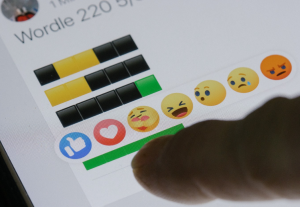
The Fascinating Psychology Tricks That Make WORDLE So Addictive
  • There are certain things that make WORDLE so addictive:
    • Wordle uses Scarcity to stand out.
    • When you share a Wordle, people notice.
    • Sharing Wordle makes sharing your results across social media incredibly easy.
  • How Wordle creates a habit — the “Habit Loop” describes the basic structure behind every habit:
    1. The trigger
    2. The routine
    3. The reward
  • Wordle would have never become as popular as it is without psychology and behavioral science principles at work in the game.
Share:The Fascinating Psychology Tricks That Make WORDLE So Addictive
4 min read
The Fascinating Psychology Tricks That Make WORDLE So Addictive

Simple is exponentially harder than complex, namely because there’s a psychological chasm that most teams cannot surpass… or perhaps they have not been setup to succeed.

Article by Joe Smiley
5 Reasons Why Designing Simple Experiences is Psychologically Impossible
  • Designing simple and seamless experiences is exponentially harder than designing complex solutions
  • Simple solutions require an extraordinary amount of time, money, and skill
  • Other obstacles to simple design include complexity bias, loss aversion, unpredicted behavior, and fear of risks
Read the full article to learn more about the psychology behind designing a simple experience.
Share:5 Reasons Why Designing Simple Experiences is Psychologically Impossible
5 min read

We will discuss 5 cognitive psychology theories that can contribute to UX design quality and help you create the experience you want your customers to have.

Article by Dorian Martin
Share:5 Cognitive Psychology Theories that Contribute to the Quality of UX Design
7 min read

You design not a product, you design interaction with the user — the psychology for UX design

Article by Olga Boichuk
Share:The Nine Principles of UX Design Psychology: Can You Predict the Behavior of Your Users?
12 min read
Frame 1

Biases often creep into our design decisions. We should avoid such biases and understand the importance of staying neutral while evaluating everyone’s opinion.

Article by Abhishek Umrao
Share:6 Ways Psychology Affects Your Design Work
8 min read
PsychologyAffectsDesign_ArticleImage
✕

Join the UX Magazine community!

Stay informed with exclusive content on the intersection of UX, AI agents, and agentic automation—essential reading for future-focused professionals.

Hello!

You're officially a member of the UX Magazine Community.
We're excited to have you with us!

Thank you!

To begin viewing member content, please verify your email.

✕

Get Paid to Test AI Products

Earn an average of $100 per test by reviewing AI-first product experiences and sharing your feedback.

    Tell us about you. Enroll in the course.

      ✕

      This website uses cookies to ensure you get the best experience on our website. Check our privacy policy and