
Flag

We stand with Ukraine and our team members from Ukraine. Here are ways you can help

Get exclusive access to thought-provoking articles, bonus podcast content, and cutting-edge whitepapers. Become a member of the UX Magazine community today!

Home ›› Design ›› The French Melted Baguette Experience

The French Melted Baguette Experience

by Josh Tyson
2 min read
Share this post on
Tweet
Share
Post
Share
Email
Print

Save

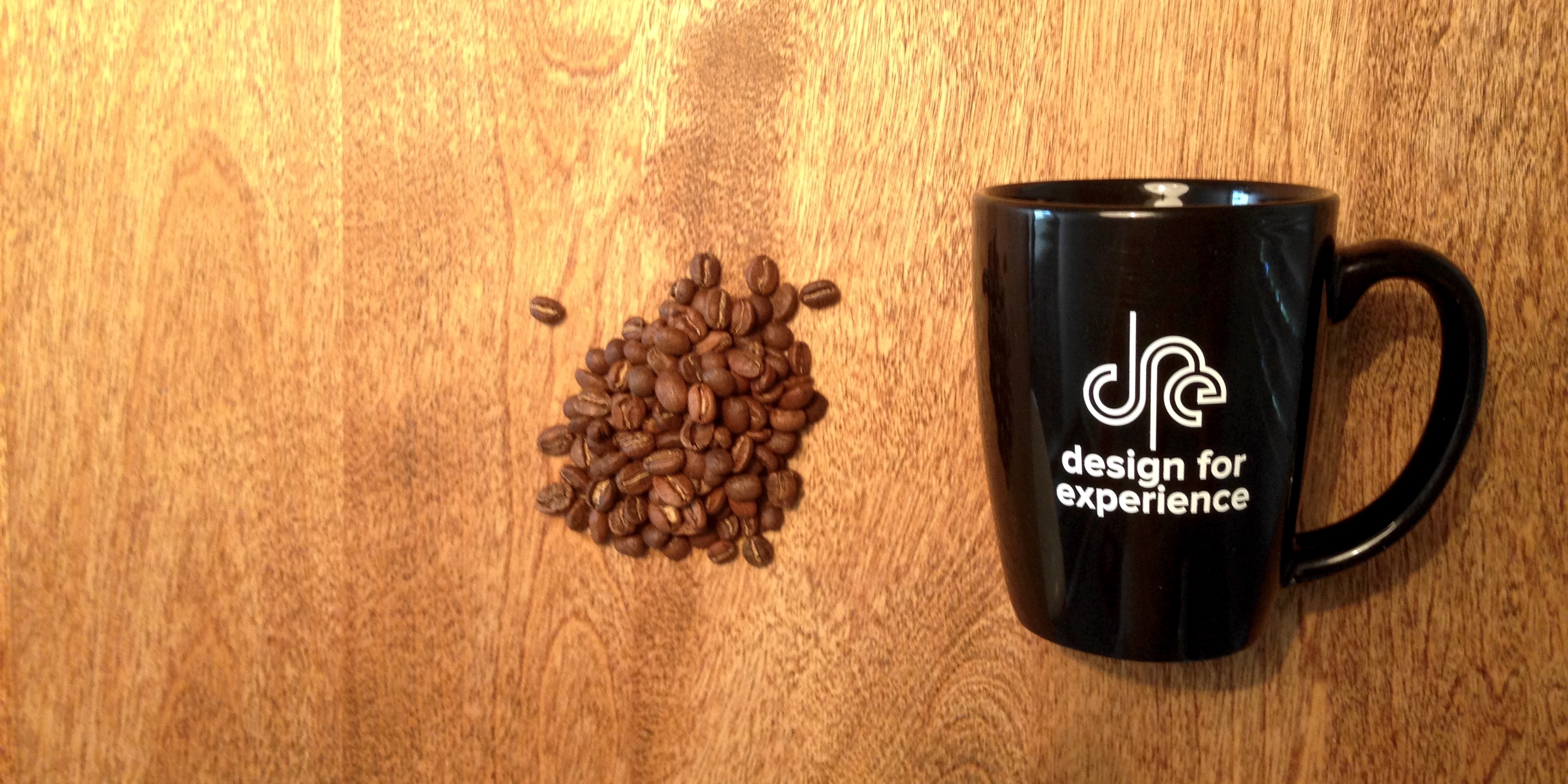
The coffee we had roasted for winners of the 2014 Design for Experience awards is magical.

When we were designing a private roast of coffee to present to this year’s winners of the Design for Experience (DfE) awards, we asked you this rather silly question:

“What’s your favorite coffee-related tasting note that also describes UX?”

We hoped an appropriate way to acknowlege excellence in experience design might be to let DfE award winners create and share a caffeinated experience of their own with some darn good coffee.
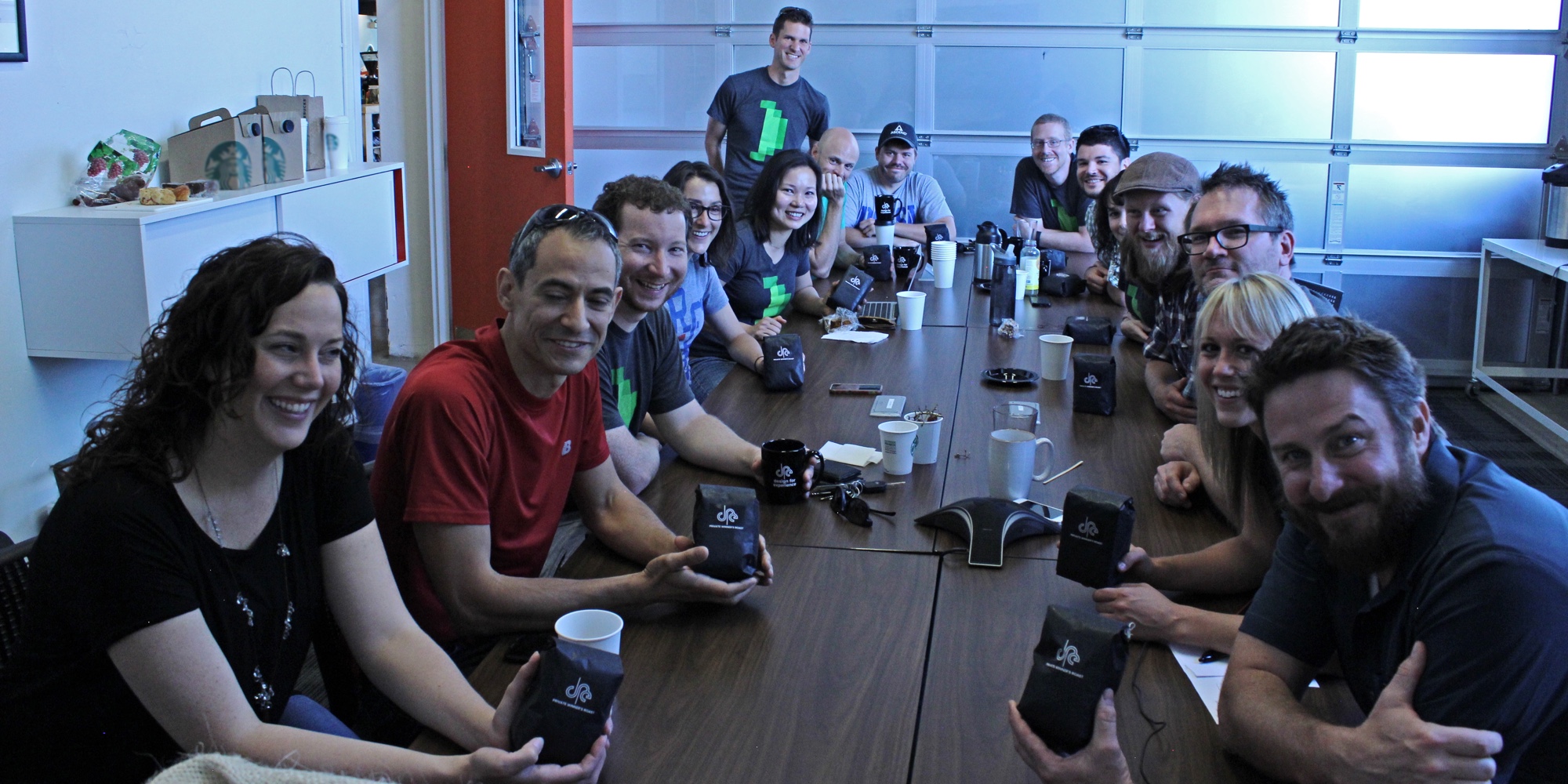
Delivering private winner's roast coffee to DfE Effective Agency Team winners, Slice of Lime

Delivering private winner’s roast coffee to DfE Effective Agency Team winners, Slice of Lime

Our favorite reader idea for a UXey coffee flavor was “French melted baguette,” though we were never able to figure out what that has to do with UX. Does the way the hard crust of freshly baked bread melts as you dip it into a cup of hot coffee parallel the way a well-designed interface thaws the divide between users and products? Who knows. The user’s always right, even if they don’t always make sense (right?), and UX Mag’s users asked for French melted baguette in a cup… so we sought to deliver.

UX Mag friend and coffee connoisseur Tyler Wells helped us find a single-origin coffee from Colombia to roast to a gentle, light brown, and sure enough: it has some French-melted-baguette-like qualities. The aroma has hints of doughiness, and the flavor has a nice, buttery finish. Or maybe that’s just the power of suggestion at work.

We hand-delivered bags and mugs to Slice of Lime, the winner of the Effective Agency Team award, and at least one team member agreed: la baguette, c’est vraie!

Try bringing a little more French melted baguette to your work. Let us know what kind of magic it brings.
post authorJosh Tyson

Josh Tyson
Josh Tyson is the co-author of the first bestselling book about conversational AI, Age of Invisible Machines. He is also the Director of Creative Content at OneReach.ai and co-host of both the Invisible Machines and N9K podcasts. His writing has appeared in numerous publications over the years, including Chicago Reader, Fast Company, FLAUNT, The New York Times, Observer, SLAP, Stop Smiling, Thrasher, and Westword. 

Tweet
Share
Post
Share
Email
Print

Related Articles

Learn why your users decide whether to stay or leave before they even understand your product.

Article by Tushar Deshmukh
The Psychology of Onboarding: First Impressions Rule the Brain
  • The article argues that onboarding is not where users begin; it is where they decide whether to stay or leave.
  • It shows that most onboarding failures are not design problems; they are psychological ones.
  • The piece challenges designers to recognize that first impressions are cognitive anchors and that the brain rarely revises its judgments.
Share:The Psychology of Onboarding: First Impressions Rule the Brain
5 min read

Discover how “consent theater” manipulates the psychology of choice, and what ethical design should look like instead.

Article by Tushar Deshmukh
Consent Theater: Are Users Really in Control?
  • The article argues that digital consent mechanisms are designed to look ethical while engineering the opposite outcome.
  • It exposes how legal compliance and ethical design have become dangerously decoupled.
  • The piece challenges designers to recognize that user psychology can serve as a tool for empowerment or a means of manipulation — the choice is theirs.
Share:Consent Theater: Are Users Really in Control?
8 min read

Learn why the design-to-development pipeline is the launchpad your team inherited but never questioned.

Article by Erika Flowers
Zero Stage to Orbit
  • The article argues that the entire design-to-development pipeline is a multi-stage rocket — a system built around workarounds, not solutions.
  • It makes the case that AI agents don’t just improve the handoff problem; they eliminate the need for handoffs.
  • The piece challenges readers to ask not how to optimize their process, but why they’re still using it.
Share:Zero Stage to Orbit
14 min read

Join the UX Magazine community!

Stay informed with exclusive content on the intersection of UX, AI agents, and agentic automation—essential reading for future-focused professionals.

Hello!

You're officially a member of the UX Magazine Community.
We're excited to have you with us!

Thank you!

To begin viewing member content, please verify your email.

Get Paid to Test AI Products

Earn an average of $100 per test by reviewing AI-first product experiences and sharing your feedback.

    Tell us about you. Enroll in the course.

      This website uses cookies to ensure you get the best experience on our website. Check our privacy policy and