
Whenever people ask me what I do, and I say I’m a designer, I dread the difficult, complex narrative, I know I’m going to have to spool, to answer that inevitable, subsequent question, “What sort of design do you do?” This is commonly accompanied by (trying to helpful) suggestions of fashion, interior etc.? I’ve truncated my response these days to “strategic and digital stuff”, which of course does little justice to design’s latest exciting incarnation.
What I’m talking about, is that I manage and do more strategic work through design thinking*, human centred innovation, service design, UX and UI design. What probably muddies the waters further is that I have an MBA; which then meanders my explanation into “Basically I can design you anything from a venture to a visual”
[*If you’re not familiar with this topic, my brief soundbite would be ‘Design Thinking’ is when you abstract design to being a thinking (and doing!) methodology and mindset that looks to problem solve through empathy, creativity and ideation, delivering value to all people in an ecosystem and the business itself. It starts with understanding the needs (known and latent), pains and aspirations of people and then sets about addressing them through what is technically feasible as well as viable for the business or organisation. It is what designers think and do, but applied to scenarios, strategies, services and businesses rather than physical (or digital) products. — This encompasses much of Tim Brown’s (IDEO) official definition but I take a step by step approach when introducing it, as it good to join the dots from design as craft to design as thinking].
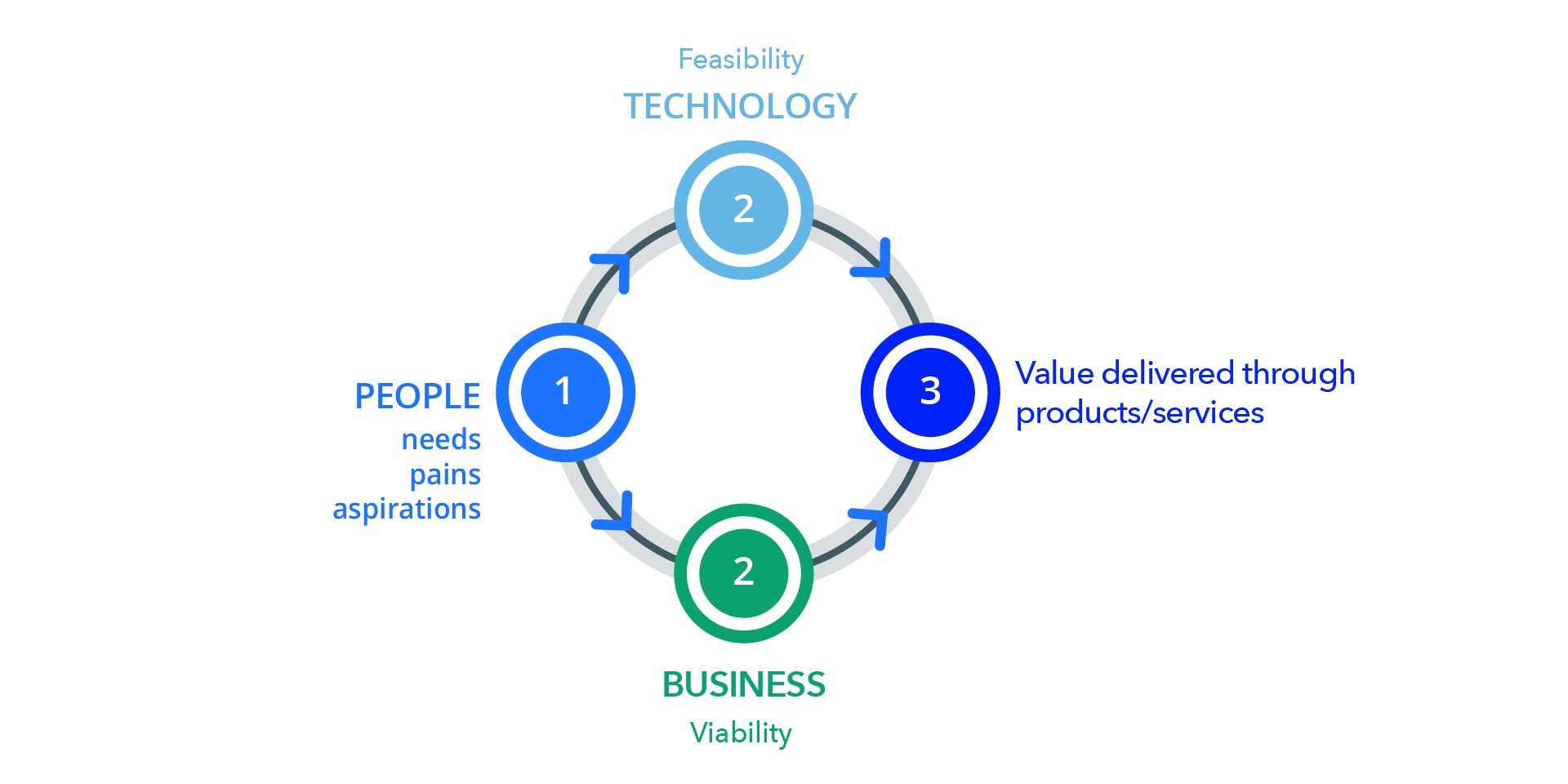
Start with people, THEN, look to see what is both feasible through technology and viable for the business to deliver value
All this got me thinking… as Design expands into the realms of solving complex business problems, strategic scenarios, customer experience and services; What is ‘Design’ (with a capital D ) today, and who are ‘Designers’?
First I introspect.
Does the design I do right now align with why I became a designer in the first place? Do I fulfil my raison d’être? Does that passion for creativity surface in what I do day-to-day? Perhaps.
My trouble is, in my definition of design (dated as it might be?), its fabric also includes the craft of making and being original in that mindset i.e. I still expect design to have aesthetic and physical quality; colour, composition, balance, material, elegance, form, function, dynamism, emotion, cognition.
This is why I became a designer, but somewhere in ‘growing up’, I found that the ‘design thinking’ part of equation allowed me to fundamentally change and shape more in the world. This is what businesses are calling out for – it may of course turn out to be a fad, it’s certainly a buzzword.
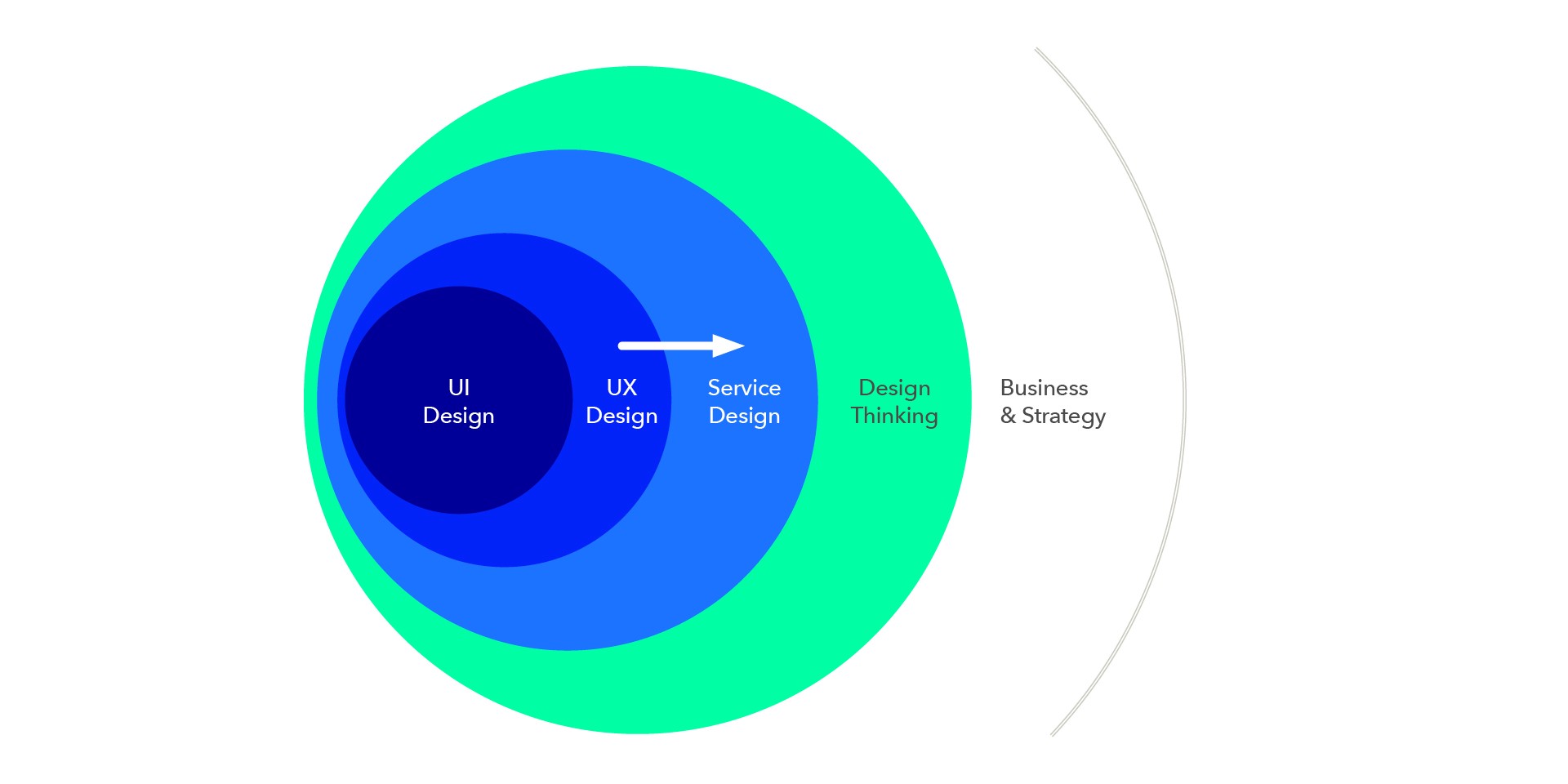
New pastures of design
Is Design the right word ?
With the establishment and growth of Service design and Design thinking, design has opened itself up to new worlds. People from non-traditional design backgrounds — that is, those that have not had formal design training or qualifications, or that have a grounding in the ‘traditional’ craft facets of design, can become practitioners of this new field. Once design has been democratised to the level of logic, user-centricity and empathy only (and separated from the ability and skill to craft and shape aesthetically, functionally and emotionally), then the potential for almost anyone to enter the field is huge. While this is still of course a net positive for any organisation and design in general, it suggests that anyone can be a ‘designer’ just by the advocacy and utilisation of a simple mindset and a handful of tools.
I have had coffees with many people that say — I heard your talk on design / read about it on the net /was introduced to it at my business school and I want to be a designer!
Generally this is a good thing. I could never begrudge anyone from design but these days I am explicit; they may not need to be a designer, just incorporate design thinking into what they do. This aspiration stems from the trigger that these people have suddenly seen how a design point of view is refreshingly different to the way their business or professional world traditionally operates. Being more human excites them, and as that dimension is fundamental to living, coupled with that the design thinking tools (in their structure) are easy to pick up, the barriers to entry are low — the grass is looking a particularly striking Chartreuse green [#7FFF00–127,255,0] on the other side.
The key is that the design thinking mindset needs to become part of what everyone does (everyone should be a design thinker), but that doesn’t mean everyone needs to become, or is, a ‘Designer’.
A ‘designer’ (in my subjective book) is someone quite different.
I say this, but some people from psychology, computing, business and particular arts backgrounds make for very good designers… given the right timely experience. This isn’t black and white, the world rarely is. Many people can enter the field from different points and become designers, but only if they adopt it more holistically; Design is a lifestyle.
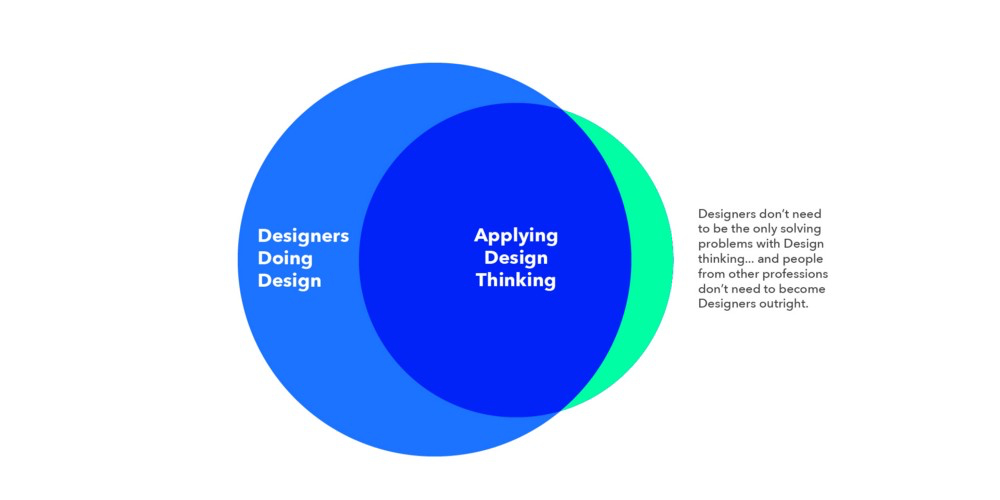
But the point is, this is not the failing. The failing is the contra.The act of solving business and strategic problems in a human centred, empathetic, creative way, is not necessarily ‘Design’. It is, and can be done very well by trained professional designers of course (and hence here we are!), but it is not exclusive to that profession.It is a way of thinking, a mindset, a culture, a method, a process and a set of tools that are a powerful way to improve business and life.
How business centric does design really need to get then?
Identity crisis. Should designers then stick to doing (traditional) design? While we’re at the start of this strategic design curve, designers are best placed to bring about change. Design projects normally involve designers utilising their skills and acting as facilitators to get the most and best out of people who have that contextual knowledge … but at a certain point, the problem may be better tackled by educating those people with the knowledge, with the tools of design thinking. Here Design is the secondary, enabling component. There is a point at which traditional designers may not be the best placed to tackle these problems.
Am I being ignorant / stuck in the past / showing inertia ?
Is this the Design of the time?
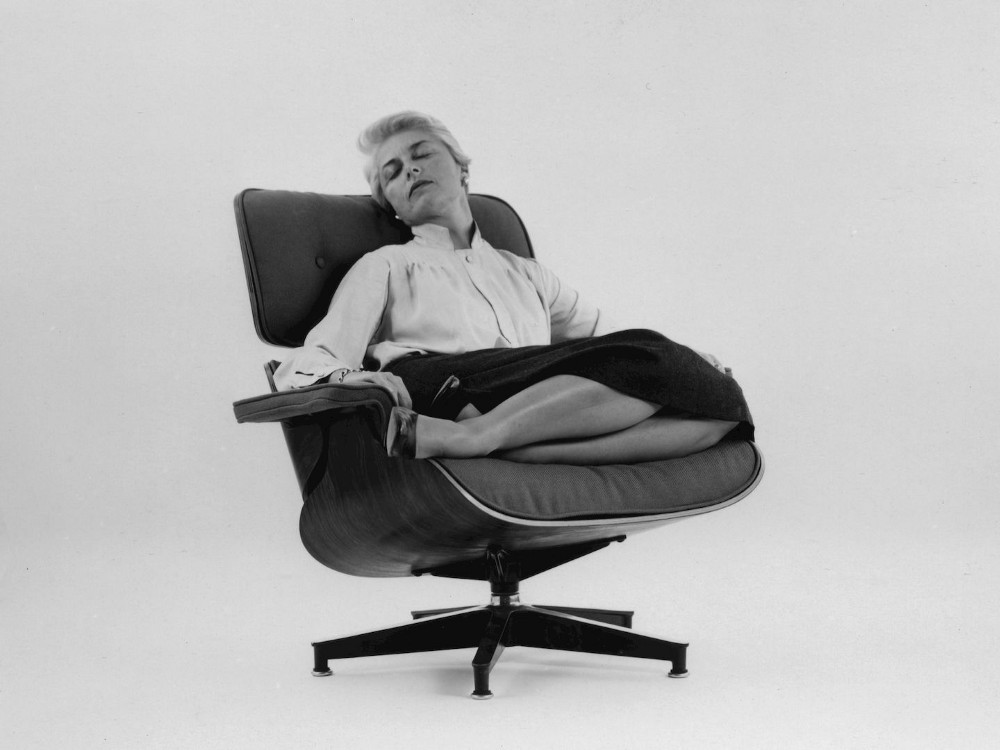
Official Site of Charles and Ray Eames https://.eamesoffice.com
With the emergence of the Bauhaus and the Eames’ pushing design into new frontiers in the 20th Century, there must have been skeptics, perhaps anchored in their arts & crafts traditions? In fact when I first heard about design thinking, I too was skeptical and cynical. Design was most certainly about the aesthetics, the craft, the form and function… surely? But I did make that jump to abstraction, drank the kool-aid and probably got caught up in the opportunities that the new design discipline gave me. I have no regrets, I think.
There is good reason to believe that Design Thinking, is now very much Design. Not that the traditional design professions have been replaced in any way…
What now?
On the one hand, Design has found itself in a critical and coveted position where it has genuine influence in business with a much greater power to fundamentally shape (It has always been a valuable component, but normally at the level of product design, or the creative within marketing and advertising)… on the other, this new direction no longer leverages its old foundations and opens the door to all, potentially allowing the profession to be reduced to a process. This is what I call McDesign, something I go into more detail about in my MBA thesis — ‘How will new directions in Design shape the future of business?’.
Why did I write this article — for therapy? Perhaps.
But I’m not looking for agreement to these points of view, but more to put the questions out there, of whether this new direction of design puts the profession at jeopardy? Should it always encompass the craft components? Should it necessarily be done by ‘Designers’ and who really are they?