

Flag

We stand with Ukraine and our team members from Ukraine. Here are ways you can help

Get exclusive access to thought-provoking articles, bonus podcast content, and cutting-edge whitepapers. Become a member of the UX Magazine community today!

Home ›› Design ›› Constraints Propel Design Thinking

Constraints Propel Design Thinking

by Priya Dubey
3 min read
Share this post on
Tweet
Share
Post
Share
Email
Print

Save

Constraints_LeadBanner

The Covid-19 pandemic has put the whole world in a tizzy. It is time we looked at our situation as a Design Thinking challenge.

The Covid-19 pandemic has put the whole world in a tizzy. People are grappling with the new normal and wishing they could go back to how things were. It is time we looked at our situation as a Design Thinking challenge. We have to adopt a new mindset that looks at various possibilities to ease the challenges we face in our personal lives and on the business front.
Teapot

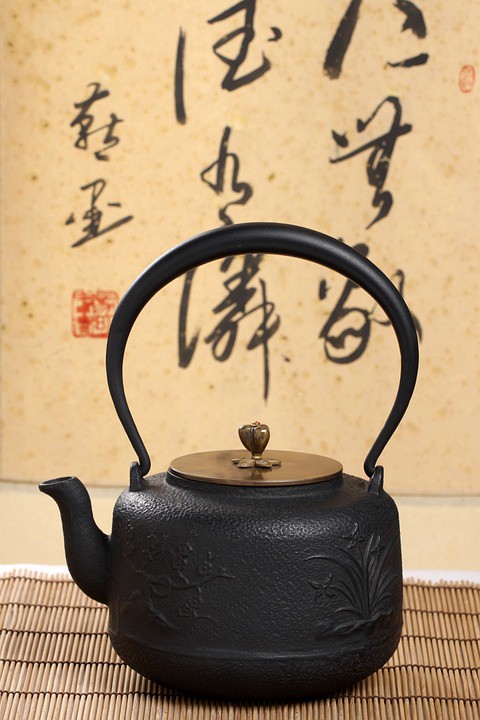
Have you noticed how the tea kettle is designed? Why is it designed differently from other pots that hold liquids like water? It is because, it holds ‘boiling’ hot liquid, which needs to retain that temperature, till it gets consumed. It also needs to serve the purpose of pouring the hot liquid into small cups, without it getting cold while doing so. Hence the kettle is designed with a handle to lift the hot pot. A spout is incorporated so that the liquid can be carefully poured into the small cups with ease while retaining the required temperature. Now imagine using the regular water pot for storing and serving tea. You will probably end up burning your fingers; mess up the place while pouring tea and it will most likely be served cold!

Human mind is capable of imagining far more sophisticated solutions to problems when we are faced with constraints. The kettle demonstrates that someone successfully overcame the problem of handling hot tea and managed to serve it elegantly as well.

This is how ships were built — because we could not walk on sea! Airplanes were conceived because we couldn’t fly. And cars were built because we could not run as fast as we wanted to. This goes to show that, design thinking helps us get around any situation.

Human race has evolved & developed because we were faced with certain constraints, every step of the way in our evolutionary journey. Constraints propel innovation and progress. Unfortunately, we often look at constraints in a negative light. Constraints are looked upon as roadblocks. We tend to take the easy route of looking at a problem and coming up with solutions which were used by others earlier or are the norm. We often assume that we too have the same resources available as the person who has faced a similar problem earlier. If we methodically analyse our situation we will realize that every problem is unique and needs a carefully thought out customized solution. We need to consciously train our minds to not see constraints as problems but as opportunities to create something useful, meaningful and which adds value to the outcome. Design thinking also involves harnessing the power of divergent thinking where you explore different ways to solve a given problem and choose the best fit.

Why Design Thinking is the Need of the Hour?

Design thinking has been around since the Stone Age and was practiced by our ancestors. But it was only recently that design thinking has evolved as a formal discipline. There is a greater need for it right now, as our world is getting more & more complex for us to make sense of it all. We become impatient, confused, frustrated or angry when devices, machines, organisations or any living experiences around us does not respond to our needs when required.

Hence, a studied approach to design thinking and learning its methodologies can help create the right mind set for individuals and for organisations to deal with the current situation we find ourselves in and design a better products, experiences and newer solutions to deliver services. The best part of it all is almost anyone can be design thinker if they just decided to become one! So what’s your excuse for being chained to your constraints?

post authorPriya Dubey

Priya Dubey

Priya Dubey combines her UX Design skills, with her prior experience in brand management & content strategy, to create delightful and intuitive designs. Keen interest in Design Thinking and how it can change the world for the better. She is also an artist and writer. You can reach her on twitter @Pridub. 

Tweet
Share
Post
Share
Email
Print

Related Articles

When a traveler loses her bag, a simple UX flaw turns inconvenience into chaos. What if smart design and AI could turn that moment into a story of trust instead?

Article by Krystian M. Frahn
UX Promptly Needed: a Railway Digital Transformation Story
  • The article shows how poor UX design in railway lost and found systems creates frustration and inefficiency for passengers and staff.
  • It argues that applying human-centered design and AI-powered tools, such as QR-based tracking and digital reporting, could transform the process into a seamless, trust-building experience.
Share:UX Promptly Needed: a Railway Digital Transformation Story
3 min read

AI is changing how designers work — speeding up workflows, sparking creativity, and taking care of the tedious parts. But it’s not here to replace designers — it’s here to amplify their insight, empathy, and impact.

Article by Nayyer Abbas
AI Boosts for UI/UX Designers: Fast Growth with Smart Tools
  • The article explores how AI transforms UI/UX design by automating repetitive tasks, speeding up workflows, and enhancing creativity across ideation, prototyping, and research.
  • It argues that AI empowers rather than replaces designers, freeing them to focus on insight, empathy, and strategy while maintaining ethical and user-centered design.
Share:AI Boosts for UI/UX Designers: Fast Growth with Smart Tools
5 min read

AI didn’t just change work — it removed the starting point. This piece explores what happens when early-career jobs vanish, and why the most “future-proof” skills might be the oldest ones.

Article by Pavel Bukengolts
AI, Early-Career Jobs, and the Return to Thinking
  • The article illustrates how AI is quickly taking over beginner-level jobs that involve routine work.
  • The piece argues that the skills that remain most valuable are human ones, like critical thinking, communication, big-picture understanding, and ethics.
  • It suggests that companies must decide whether to replace junior staff with AI or use AI to help train and support them.
Share:AI, Early-Career Jobs, and the Return to Thinking
5 min read

Join the UX Magazine community!

Stay informed with exclusive content on the intersection of UX, AI agents, and agentic automation—essential reading for future-focused professionals.

Hello!

You're officially a member of the UX Magazine Community.
We're excited to have you with us!

Thank you!

To begin viewing member content, please verify your email.

Get Paid to Test AI Products

Earn an average of $100 per test by reviewing AI-first product experiences and sharing your feedback.

    Tell us about you. Enroll in the course.

      This website uses cookies to ensure you get the best experience on our website. Check our privacy policy and