
The Missing Layer in Enterprise AI
There’s a reason that Gartner warned that over 40% of agentic AI projects are likely to be scrapped by the end of 2027 (Reuters, 2025). Many enterprises are racing to adopt AI, but few are building the infrastructure necessary to succeed at scale. Generative models and point solutions might get a pilot off the ground—but they won’t sustain flight.
To truly operationalize AI across the organization, you need a management layer—a live execution environment where autonomous agents can coordinate, collaborate, and carry out real work. This isn’t about automation on the fringes. It’s about embedding AI as a full-stack participant in your operations.
That’s where the concept of an AI agent runtime comes in—a persistent, scalable orchestration layer designed specifically to support intelligent, goal-oriented agents in real time.
What Is an AI Agent Runtime?
Just as JavaScript needed Node.js to become truly operational, generative AI needs a runtime that can support agentic behavior at scale.
An AI agent runtime provides:
- State and memory management
- Tool and API integration
- Logic execution
- Real-time coordination between agents and systems
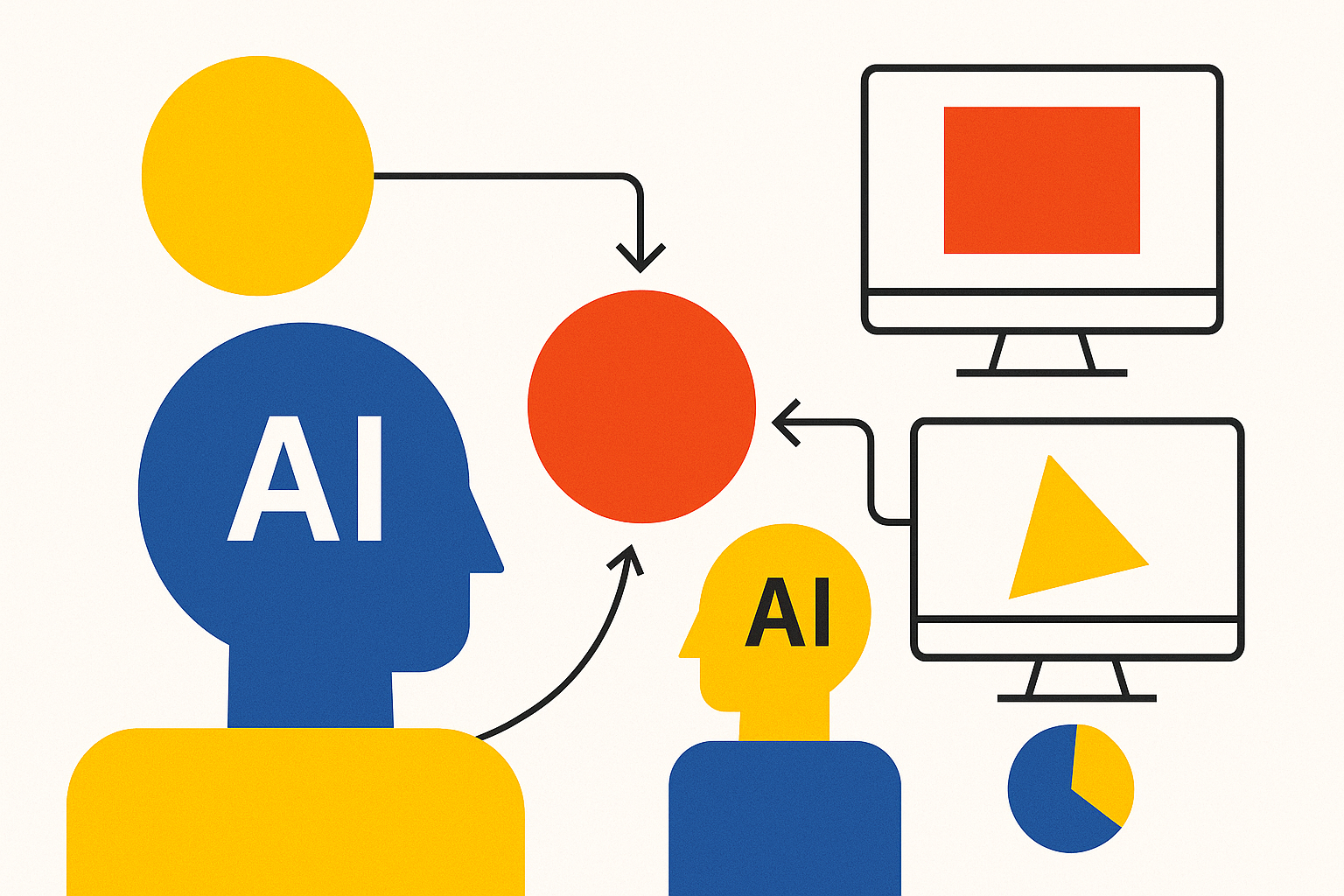
It’s the connective tissue between models, interfaces, business logic, and enterprise systems. Without it, AI agents are isolated prompts. With it, they become autonomous digital workers capable of complex reasoning, collaboration, and sustained execution.
As Robb Wilson, CEO and Co-Founder of OneReach.ai and author of Age of Invisible Machines, explains:
“The real magic of AI isn’t in the model—it’s in how we orchestrate intelligence across tools, teams, and systems. You need a runtime that acts as the nervous system for your organization.”
AI at Scale Requires a Platform Built for Real-Time AI
Off-the-shelf tools, and point solutions, no matter how powerful, weren’t designed for real-time orchestration across the enterprise. Adopting AI at scale means adopting a platform that can:
- Handle long-term goals and evolving contexts
- Support multimodal interactions (text, voice, visual)
- Manage agent memory and decision chains
- Ensure governance, security, and scalability
For developers, this means less complexity and more control. The runtime abstracts orchestration logic, system integration, and state persistence—so agents can behave more like full-stack applications.
For AI practitioners, it means no more “prompt and pray.” Instead, agents have persistent memory, tool access, workflows, and the ability to invoke APIs and other agents. The result? Real-time responsiveness, not one-shot outputs.
For technical architects, it means scalable deployment of intelligent systems—without managing microservices or containerized workloads. It’s a serverless runtime for AI-first applications.
Ecosystemic by Design
The enterprises succeeding with AI are the ones thinking ecosystemically. They aren’t stitching together tools—they’re building agentic systems that can scale, evolve, and adapt.
OneReach.ai, for example, is one of the few platforms purpose-built for this. With over a decade of development behind it, the platform is now used by organizations like Verizon, Deloitte, Pepsico, DHL, PwC, and BASF to deploy intelligent systems in minutes, not months.
When selecting such a platform, it’s critical to make sure you’re setting yourself up for success with capabilities like:
- No-code agent creation
- Multimodal AI orchestration
- Seamless conversational collaboration
- Enterprise-grade security and compliance
- Composable, AI-first architecture
- Prebuilt agents, flows, and extensible use-cases
- Contextual memory and persistent logic
As one innovation leader from Deloitte put it:
“We used to have to focus our conversational AI design around what was possible with technology. Finding OneReach.ai meant that the technology melted away for the first time. We could focus on the best experience for the user—not the limitations of the platform.”
The Strategic Horizon for AI-Driven Enterprises
Operationalizing AI isn’t about finding the right tool—it’s about creating the right environment. A runtime built for AI agents acts as the execution layer for your enterprise’s intelligence, letting agents:
- Coordinate across systems
- React to change in real time
- Collaborate with humans and other agents
- Carry persistent knowledge forward
This is the architecture of the future: orchestrated, composable, and AI-first by design.
As explored in the Invisible Machines podcast and frameworks like AI First and Wiser, this moment marks a shift from static digital workflows to dynamic, intelligence-powered ecosystems. Organizations that embrace this will lead—not just in technology adoption, but in operational agility.
Key Considerations When Choosing or Building a Runtime
If you’re exploring how to create or evaluate an agent runtime platform, prioritize:
- Interoperability with existing business systems and APIs
- Modularity and extensibility through no-code/low-code tools
- Security and compliance for sensitive workflows
- Built-in memory, context switching, and goal execution
- Composable orchestration of agents and logic chains
AI is becoming the operating layer for enterprise work. Make sure your foundation is strong enough to support it.
Sources and References: