
Flag

We stand with Ukraine and our team members from Ukraine. Here are ways you can help

Get exclusive access to thought-provoking articles, bonus podcast content, and cutting-edge whitepapers. Become a member of the UX Magazine community today!

Home ›› Artificial Intelligence ›› AI-First Design

AI-First Design

Read these first

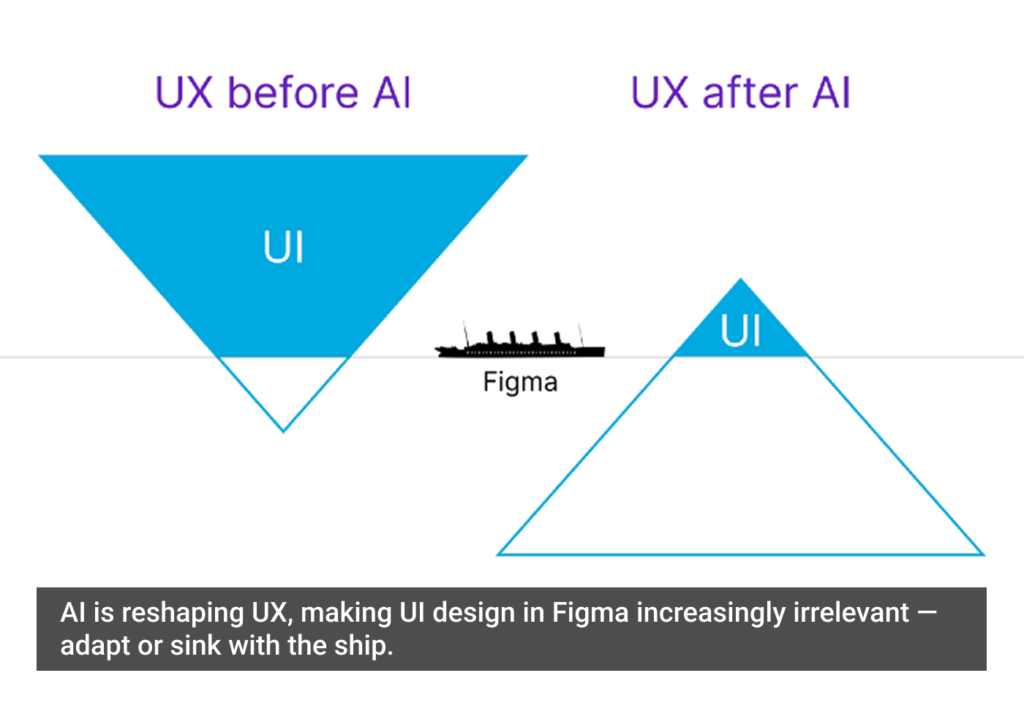
AI is reshaping UX, and Figma may be sinking. As AI-driven systems minimize UI, traditional design roles must evolve — or risk becoming obsolete. Are you ready to adapt?

Article by Greg Nudelman
AI Is Flipping UX Upside Down: How to Keep Your UX Job, and Why Figma is a Titanic (It’s not for the Reasons You Think)
  • The article explores the fundamental shift in UX as AI-first systems minimize the role of UI, rendering traditional design tools like Figma increasingly obsolete.
  • It introduces the “Iceberg UX Model,” illustrating how modern AI-driven interfaces prioritize functionality and automation over visual design.
  • The piece argues that UX professionals must shift their focus from UI aesthetics to AI-driven user experience, emphasizing use case validation, AI model integration, and data-informed decision-making.
  • It warns that designers who remain fixated on pixel-perfect layouts risk becoming obsolete, urging them to adapt by engaging in AI-driven UX strategies.
Share:AI Is Flipping UX Upside Down: How to Keep Your UX Job, and Why Figma is a Titanic (It’s not for the Reasons You Think)
7 min read

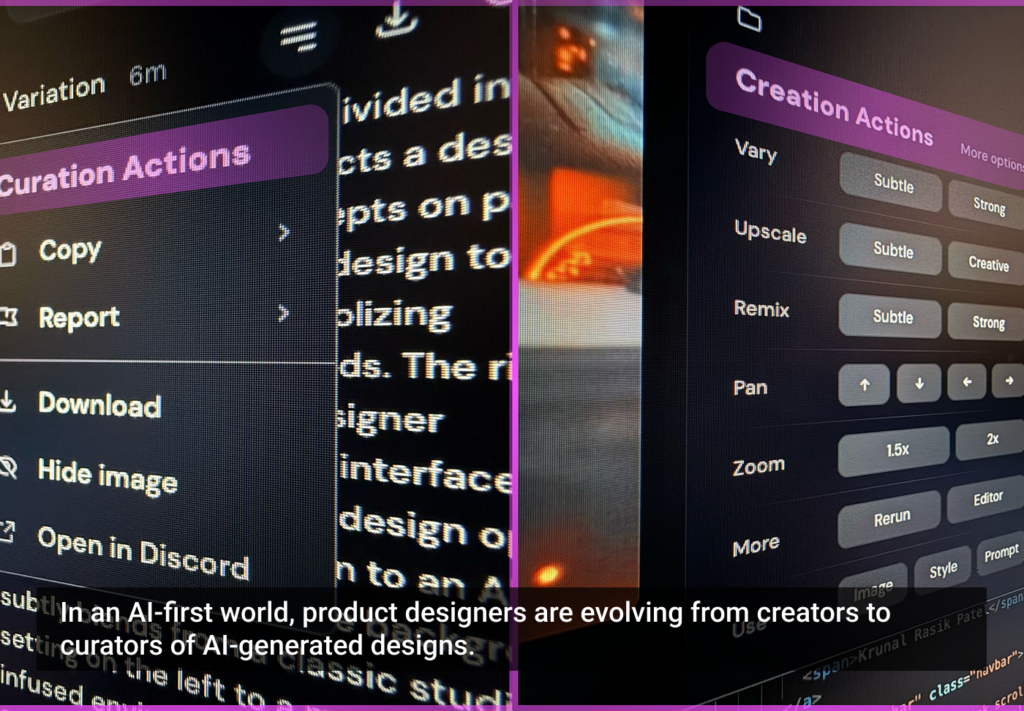
AI is shifting designers from creators to curators. How can we refine AI-driven designs while keeping creativity and user needs at the core?

Article by Krunal Rasik Patel
The Future of Product Design: From Creators to Curators in an AI-First World
  • The article explores how AI shifts product designers from creators to curators.
  • It highlights AI Agents and Copilots transforming design workflows.
  • The piece stresses guiding AI outputs to ensure human-centered design.
  • It advocates mastering AI tools and curating user-centric experiences.
  • The article underscores the need for human expertise in refining AI-driven designs.
Share:The Future of Product Design: From Creators to Curators in an AI-First World
4 min read

The era of hype-driven AI products is over. It’s time for a smarter approach: building reliable, tailored tools that focus on real value for domain experts, streamline workflows, and enhance AI-human collaboration. Discover the principles guiding the next generation of AI innovation.

Article by Varun Aggarwal, Kuldeep Yadav
It Is Time to Build the 2nd Generation of AI Products
  • The article critiques first-generation AI products, highlighting the need for AI solutions to address real problems.
  • It advocates building for domain experts, ensuring AI reliability, and using tailored models for specific tasks.
  • The piece stresses creating AI-first workflows and improving AI-human collaboration for better productivity.
Share:It Is Time to Build the 2nd Generation of AI Products
6 min read

Discover how AI-first design principles let you build beautiful, functional UIs in minutes — without ever opening Figma or writing any code.

Article by Adam Judelson, Ryan Brotman
Making Designs Without a Designer
  • AI-first design turns simple text prompts into fully functional, production-ready UIs — no coding or Figma required.
  • Learn how to develop structured AI prototyping workflows to eliminate bottlenecks, and ensure fast, scalable, and consistent UX across projects.
  • This isn’t just faster design — it’s the future of product design, making high-quality UI creation accessible to everyone.
Share:Making Designs Without a Designer
10 min read

Are we on the brink of an AI-first revolution? As more products are built entirely around AI engines, designers must adapt. From dynamic interfaces and non-linear journeys to helping users optimize prompts, discover how the next generation of AI-driven products will reshape UX design.

Article by Tom Rowson
AI-First: Designing the Next Generation of AI Products
  • The article introduces “AI-first” products, designed around AI engines to offer more than just chat interfaces and improve over time.
  • It highlights key challenges for designers: creating flexible interfaces, helping users with prompts, and managing AI errors like hallucinations.
  • The piece stresses the need to adapt to non-linear, iterative user journeys as AI-first apps evolve.
Share:AI-First: Designing the Next Generation of AI Products
4 min read
✕

Join the UX Magazine community!

Stay informed with exclusive content on the intersection of UX, AI agents, and agentic automation—essential reading for future-focused professionals.

Hello!

You're officially a member of the UX Magazine Community.
We're excited to have you with us!

Thank you!

To begin viewing member content, please verify your email.

✕

Get Paid to Test AI Products

Earn an average of $100 per test by reviewing AI-first product experiences and sharing your feedback.

    Tell us about you. Enroll in the course.

      ✕

      This website uses cookies to ensure you get the best experience on our website. Check our privacy policy and