
Flag

We stand with Ukraine and our team members from Ukraine. Here are ways you can help

Get exclusive access to thought-provoking articles, bonus podcast content, and cutting-edge whitepapers. Become a member of the UX Magazine community today!

Home ›› Technology ›› New Google Docs Released

New Google Docs Released

by Alex Schleifer
2 min read
Share this post on
Tweet
Share
Post
Share
Email
Print

Save

Another day, another UI update. We look at Google’s decision to go “classic”.

Google has just released an updated version of Google Docs & Spreadsheets. While the update really only truly affects to the document browsing page it adds a substantial amount of usability to the entire application. The visual overhaul is quite a step up and shows that, once again, Google isn’t afraid to roll out disruptive changes in an effort to enhance user experience (as it did with Analytics).

I call this disruptive because, while the interface overhaul offers a far shorter learning curve for new users, it also means old users need to learn what is essentially (if only partially) a new application. I’m willing to bet that the change is dramatic enough to annoy the hell out of a handful of heavy users (once again, as with Analytics). It’s interesting to see Tags (or Labels) refashioned into Folders — this makes sense considering a) you’re dealing with documents and b) it simplifies the transition from desktop to webtop.

Overall, it’s a sign of a maturing Google. Not afraid to do things differently (Gmail) but also willing to change its mind for the benefit of the end-user. The old tag’n‘search interface has been turned into something far more familiar, classic even. Some might say that this looks “less Google” and it will be interesting to see if similar changes are rolled out into more apps in the future in an effort to bring them more in line with people’s expectations. While oft hailed as a UI masterpiece I still hear of many people shying away from Gmail because they “don’t get the interface” so maybe that’s next.

post authorAlex Schleifer

Alex Schleifer
Alex is CEO of Sideshow , an award winning creative agency. You can read his blog here.

Tweet
Share
Post
Share
Email
Print

Related Articles

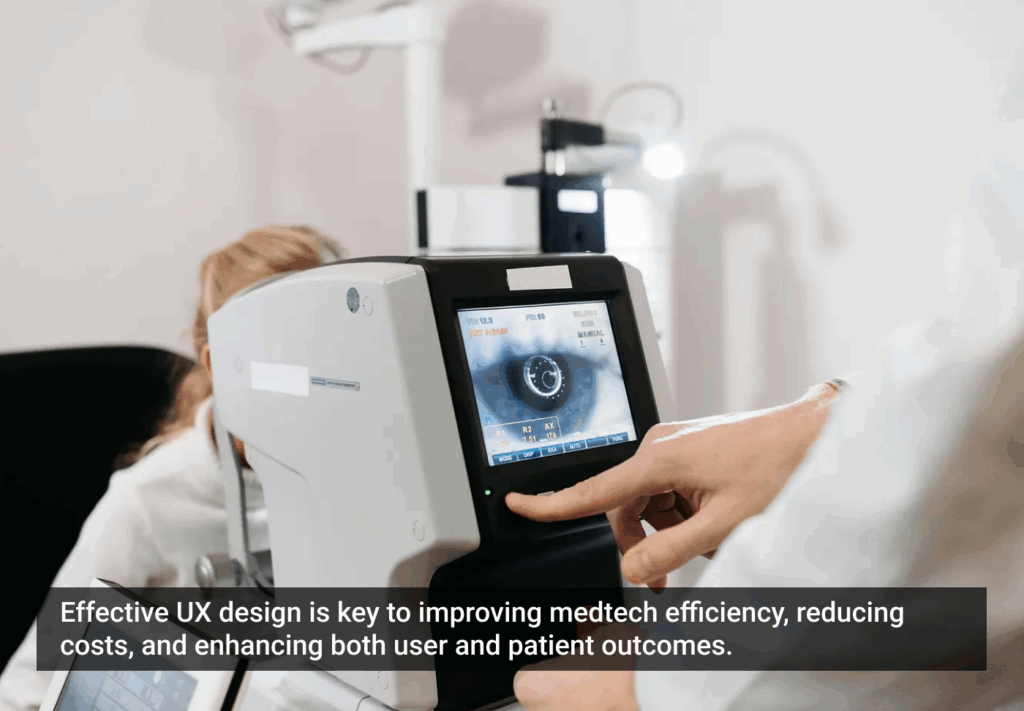
Discover how human-centered UX design is transforming medtech by cutting costs, reducing errors, and driving better outcomes for clinicians, patients, and healthcare providers alike.

Article by Dennis Lenard
How UX Design is Revolutionising Medtech Cost Efficiency
  • The article explains how strategic UX design in medtech improves cost efficiency by enhancing usability, reducing training time, and minimizing user errors across clinical workflows.
  • The piece argues that intuitive, user-centered interfaces boost productivity, adoption rates, and patient outcomes while lowering support costs and extending product lifecycles, making UX a crucial investment for sustainable growth and ROI in healthcare technology.
Share:How UX Design is Revolutionising Medtech Cost Efficiency
7 min read

Discover how the future of AI runs on purpose-built infrastructure.

Article by UX Magazine Staff
AI Agent Runtimes in Dedicated Lanes: Lessons from China’s EV Roads
  • The article states that AI’s progress depends less on creating larger models and more on developing specialized “lanes” (agent runtimes) where AI can run safely and efficiently.
  • It argues that, like China’s EV-only highways, these runtimes are designed for smooth flow, constant energy (through memory and context), and safe, reliable operation, much like EV-only highways in China.
  • The piece concludes that building this kind of infrastructure takes effort and oversight, but it enables AI systems to work together, grow, and improve sustainably.
Share:AI Agent Runtimes in Dedicated Lanes: Lessons from China’s EV Roads
4 min read

AI agents are getting smarter — but can they truly work together? Meet MCP, the open-source protocol quietly reshaping how machines connect, collaborate, and get things done.

Article by Josh Tyson
What to Know About Model Context Protocol (MCP)
  • The article introduces MCP — a new way to help AI agents easily work with business tools.
  • It shows how MCP could change how we use software by letting AI control all our tools through one interface.
  • The article sees MCP as a big step toward building smarter, more flexible AI systems in the future.
Share:What to Know About Model Context Protocol (MCP)
5 min read

Join the UX Magazine community!

Stay informed with exclusive content on the intersection of UX, AI agents, and agentic automation—essential reading for future-focused professionals.

Hello!

You're officially a member of the UX Magazine Community.
We're excited to have you with us!

Thank you!

To begin viewing member content, please verify your email.

Get Paid to Test AI Products

Earn an average of $100 per test by reviewing AI-first product experiences and sharing your feedback.

    Tell us about you. Enroll in the course.

      This website uses cookies to ensure you get the best experience on our website. Check our privacy policy and