

Intuitive, human-centric designs empower clinicians, patients, and administrators by minimizing errors, increasing productivity, and maximizing the value of technological investments. From our work with clients across various industries, the Creative Navy team has seen firsthand how strategic UX investment can positively impact performance, engagement, and long-term value.
Rather than adding features without consideration, refining usability and consolidating functionality results in a seamless experience that drives satisfaction and success over time.
Prioritising UX is not just a strategic advantage; It is a must-have for product growth.
UX optimization guide for medtech cost-efficiency
Creative Navy’s guide aims to answer the burning question: How do we reduce costs while also improving product efficiency?
1. Minimising training costs
Pairing a poorly designed interface with complex medical software or products leads to inefficiency and user frustration. In the medtech industry, where complexity is often present, the focus must be on creating an intuitive design.
Medical professionals already face immense cognitive demands, which are only intensified by confusing interfaces. These poorly designed systems contribute to errors, increased stress, and a significant reduction in efficiency.

One of the most significant advantages of optimising UX design in medical interfaces is the potential to minimise training costs.
When the focus is set on ease of use, consistent design patterns, and logical workflows, healthcare providers can integrate new systems more seamlessly into their work routines. Not only does this accelerate adoption, but it also reduces the likelihood of mistakes because of misunderstanding system functions.
Intuitive design = Familiarity = Minimised training costs
2. Reducing errors
As previously mentioned, a well-designed interface reduces the likelihood of user errors in data entry, especially in the Medtech field.
By prioritising intuitive navigation and reducing cognitive load, users are less likely to make errors during critical tasks such as ordering medication or operating equipment. Mistakes may lead to compromised patient safety and expensive corrective measures.
Clear workflows enable healthcare professionals to complete tasks accurately and efficiently. For example, when it comes to EHR systems in hospital settings, a user-friendly interface can ensure proper diagnosis and administration of medication (correct dosages and compatible drug combinations). This eliminates a plethora of risks and reduces the incidence of malpractice claims and associated costs.
Error prevention features
Effective UX design integrates error prevention mechanisms to safeguard against common mistakes stemming from the increased cognitive load of professionals. Features such as:
- Real-time Feedback: Immediate alerts when an action deviates from a standard or recommended protocol help users correct mistakes before they escalate. For instance, if a healthcare worker inputs an abnormal lab value, the system can flag it instantly for verification.
- Confirmation Prompts: These require users to double-check critical actions, such as finalising surgical equipment setup.
- Visual Cues: Colour coding, icons, and visual hierarchies guide users toward correct actions while highlighting potential risks. For example, a red border around incomplete mandatory fields ensures that no crucial information is overlooked.

Such design elements minimize costly reworks, enhance user confidence while reducing cognitive load.
3. Boosting productivity
UX improvements in medtech software can significantly reduce administrative burdens for healthcare professionals. To continue with the example of EHR systems, Athenahealth incorporates a visual timeline representation that helps physicians track the progress of certain conditions while also being provided with the relevant metrics and medication dosages.

Although this might seem like an intuitive feature to add to an EHR system, many do not, further increasing cognitive load.
Another addition tailored to physicians’ workflows is the natural language component, which helps professionals take notes of patient visits (via templates and voice recognition). This is especially helpful because it supports better bedside manner and saves precious time for the doctor.
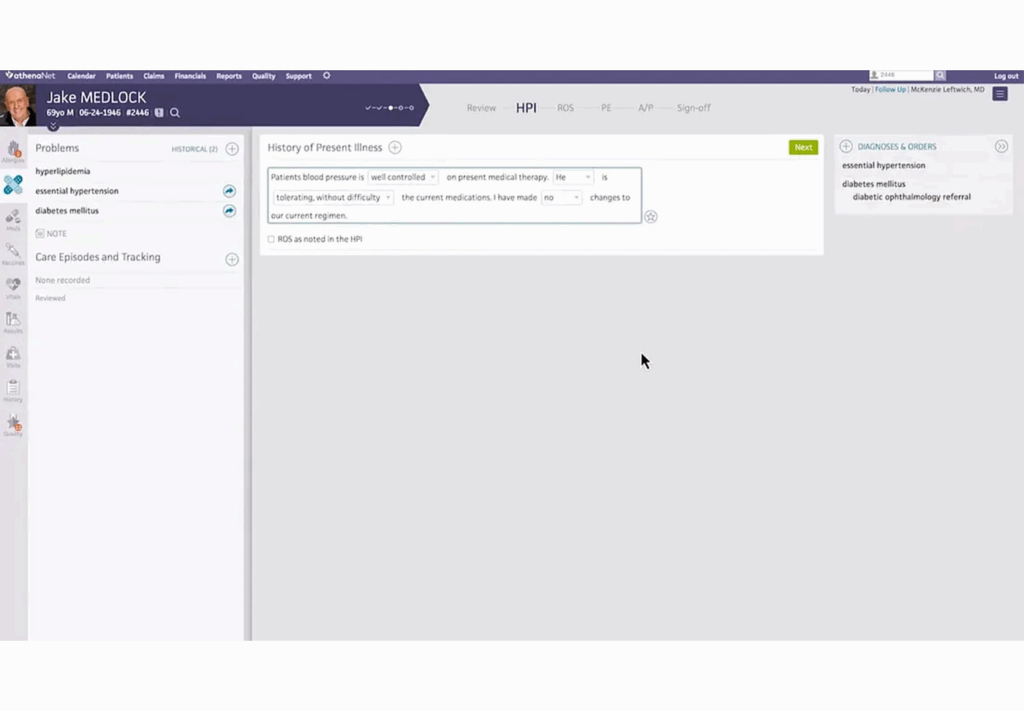
However, ensuring the UX design strategy supports productivity goes beyond certain select user-oriented components. How the interface is built can drastically cut down on the time required to retrieve or input data. For example, certain medical systems provide dashboards that allow quick access to relevant information. Let’s look at OpenMRS, an open source medical record platform.
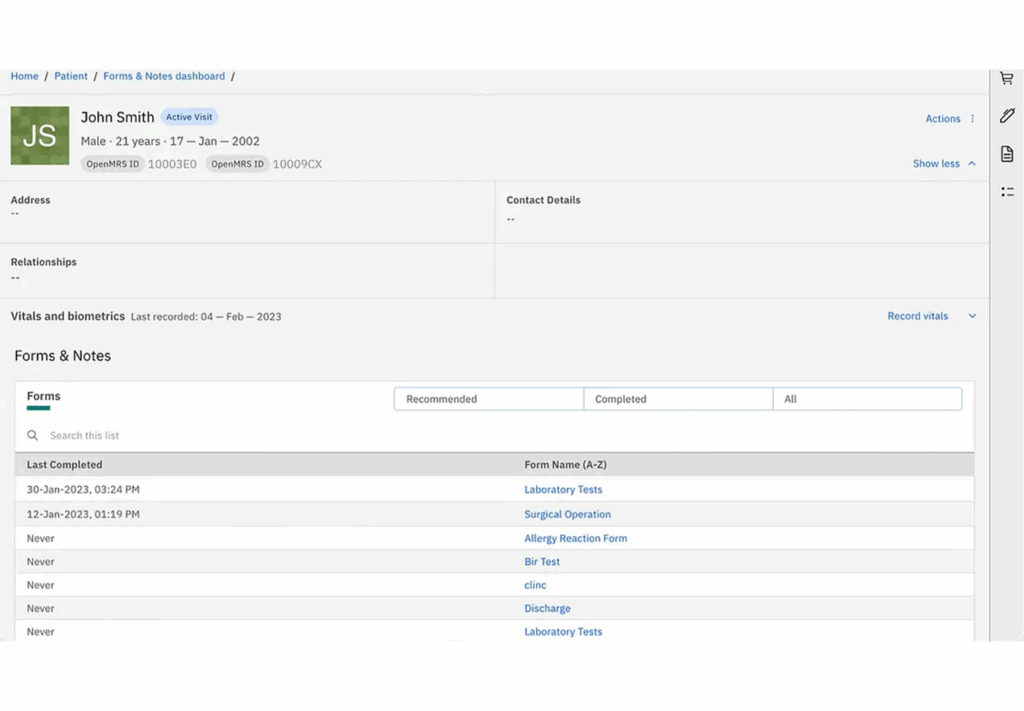
The dashboard sports a clean and intuitive layout, which helps users focus on the important data. If it feels familiar, that’s because it’s supposed to. Functionality is more important than showy bells and whistles. The colours used are neutral, and the card-based layout optimally guides the gaze of the physician to the essential information.
4. Increasing adoption rates
According to an article from the International Journal of Information Management, positive user perception influences adoption rates, particularly perceived usefulness. As such, a well-designed medical device or software can attract a higher number of users by creating a positive first impression.
Clear, intuitive interfaces and seamless functionality ensure a smoother onboarding process, reducing the learning curve and accelerating implementation.
Products that are satisfying and easy to use encourage consistent interaction while minimising user frustration. By prioritising aspects such as usability, medical software and devices are more likely to keep users engaged over time, preventing abandonment and underutilisation (for example, glucose monitoring devices that provide the relevant information without overwhelming the users).
5. Lowering support costs
Intuitive medtech products and software reduce user reliance on tech support. When users can navigate product challenges with ease, the frequency of calls decreases, leading to lower operational costs.
And no, they don’t want to talk to an AI chatbot.
Built-in FAQs, interactive walkthroughs, and contextual tooltips empower users to resolve minor issues on their own. Such UX optimisation techniques minimise downtime and reduce the need for CS.
6. Enhancing patient outcomes
Patient-centred design encourages adherence to treatment plans, accurate tracking of health metrics, and timely professional intervention. This not only prevents medical complications but also supports better overall health management.
Dr. Gregory Gasic from VMeDx explained:
“There are a lot of factors that encourage patients to comply with usage of medical devices. However, there are three factors that stand out from the rest: Familiarity, Reward, and Personalization.
– Familiarity is important because there is comfort in knowing what you can do, especially with medical devices which are, at times, fickle.
– Reward is linked to motivation: no matter the task, humans always need motivation to continuously do menial tasks, especially repetitive ones.
– Personalization allows for control and integrating a sense of self.”
Patients who actively interact with their health data are more likely to follow care recommendations, leading to improved outcomes and reduced costs associated with long-term care or hospitalizations.
Ergonomic design is essential, both for maximising clinician potential and ensuring patient wellbeing throughout the medical journey. Would you rather be treated by the doctor using tools that feel like extensions of his brain or the one who’s deeply annoyed with them and exhausted?
7. Extending product lifecycle
Products designed with a user-centric approach are more adaptable. Adequate UX makes it easier to introduce updates or expand product functionality without a complete redesign.
Adaptability helps future-proof the product, ensuring it can accommodate emerging needs or technical advancements. For example, a healthcare app that prioritises user feedback during development will be better equipped to scale features or integrate with new systems down the line. This minimises redevelopment costs and disruptions.
A product that can scale well helps you maximise your return on investment in the long term.
When medical software or devices are designed with usability in mind, they’re more adept at withstanding misuse or wear and tear. They need fewer repairs or replacements. Medical staff are less likely to accidentally break them.
Medical devices with streamlined, accessible interfaces are less prone to operational issues caused by user mishandling, which minimizes maintenance and lowers long-term operational costs.
8. Improving procurement ROI
Procurement ROI is reliant on vendor satisfaction.
Healthcare organisations and decision-makers are increasingly prioritising solutions that demonstrate clear usability benefits. Take, for example, the usability standards of the U.S. Office of the National Coordinator for Health Information Technology, which emphasise the importance of user-centred design. Such products are more likely to improve workflow efficiency and user satisfaction, which makes them the perfect fit for new implementations.
When choosing a medical product, candidates with strong UX are seen as lower-risk investments (because they facilitate faster adoption and create fewer challenges).
When healthcare professionals or patients find a system intuitive, they are more likely to advocate for it during procurement discussions. This user-driven support can positively influence purchasing decisions, leading to higher adoption rates and ensuring that the product meets user needs, ultimately maximising ROI.
Rundown
UX is a key driver of cost efficiency in healthcare because it:
- Reduces wasted time and resources by streamlining workflows and allowing healthcare professionals to focus on patient care rather than administrative tasks.
- Prevents costly errors through intuitive design that minimises the risk of mistakes in critical processes, reducing financial consequences.
- Enhances adoption rates due to ease of use, which leads to faster implementation and user acceptance while also reducing training costs.
- Improves overall satisfaction through positive user experience that boosts engagement, which ultimately leads to higher morale and better outcomes for both providers and patients.
In conclusion, by integrating good design practices into medtech software and hardware products, organisations can improve care quality while optimising financial and operational efficiency.
The article originally appeared on Medium.
Featured image courtesy: Pavel Danilyuk.