

I miss the old UX. The kind that actually cared about making things easier, clearer, and more humane. The kind of design that felt on our side.
Today, it feels like something is changing. Scratch that. Something has changed.
More and more, UX in big tech is drifting away from helping users and moving toward something that feels a lot more uncomfortable. Instead of supporting what we want to do, many apps are quietly shaping what they want us to do.
And the shift is no longer subtle. It is right there in front of us, especially in apps like Instagram.
The Instagram update that tells the whole story
If you use Instagram often, you probably noticed their recent layout change. At first, it seems small. A tiny icon moved here or there. No big deal, right? But the placement is everything.
Instagram put Reels right between Home and Messages. That is exactly where your thumb naturally lands when you want to check your DMs.
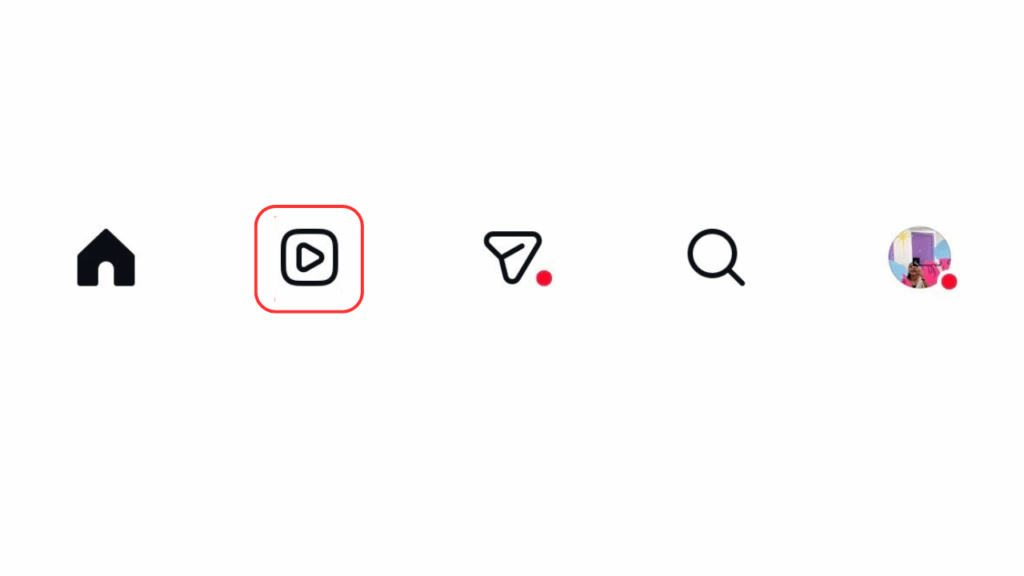
So what happens?
- You open the app.
- Your thumb follows old muscle memory.
- You think you are tapping Messages.
- You suddenly fall into a Reels feed.
- You spend way more time than you planned.
This is not a bug. It is not bad UX. It is a trap dressed as a redesign.
It is a design that nudges you into a behaviour that benefits the platform, not you.
When well-known UX principles get thrown out
Most UX designers were taught to:
- Respect the user’s intent.
- Avoid accidental actions.
- Keep navigation consistent.
- Reduce friction, not increase it.
- Protect attention, not steal it.
But these principles only work when the business and the user want the same thing. And right now, they often do not.
So instead, we get UX that focuses on:
- Pulling you back into the app.
- Hijacking habits.
- Using familiar gestures against you.
- Creating loops you never meant to enter.
The dark part is that it is extremely effective. This is why so many apps keep doing it.
The attention economy changed UX forever
This is the uncomfortable truth. Your attention is not just attention anymore. It is revenue.
Your time equals profit. Your habits equal retention stats. Your scroll equals ad impressions.
So design starts to shift. Not toward what helps you, but toward what keeps you hooked.
And because these changes happen slowly and subtly, we adapt without noticing, which is exactly why they work so well.
Is it smart business or manipulation?
Here is the big question that many designers do not want to say out loud.
Is this clever product strategy, or is it manipulation wrapped in a clean UI?
On paper, it is brilliant. In reality, it feels wrong.
When a design intentionally leads us somewhere we did not choose to go, it stops being guidance and starts being control. It stops being design that supports us and becomes design that takes advantage of us.
Designers need to decide what side they are on
UX was built on empathy. On understanding people. On solving real problems.
But today, designers are stuck between two forces.
On one side is the user, trying to navigate life without being endlessly pulled into apps. On the other side is a business model that only grows if people stay glued to the screen.
So we have to ask ourselves:
- Are we helping users, or are we hooking them?
- Are we empowering them, or shaping them?
- Are we solving problems, or adding new ones just to create engagement?
This is not a small choice. It defines the future of our entire field.
We can still bring UX back to what it should be
Here is the hopeful part. UX is not doomed.
At least, not yet.
Designers can still choose to stand for something better. We can choose clarity over trickery. We can choose real value over artificial engagement spikes. We can choose humans over metrics.
UX should feel like a handshake, not a trap. A guide, not a hook. A service, not a strategy.
It is time to start designing, as we remember that.
TLDR in points
- UX in big tech is drifting from helping users to quietly manipulating them.
- Instagram’s new layout puts Reels where Messages used to be, creating intentional “accidental” engagement.
- This design is not an error; it is a behaviour trap.
- Old UX principles like clarity and user intention are being replaced with retention-focused tactics.
- The attention economy rewards apps for stealing time, not respecting it.
- Designers now face a real ethical question about whether they are empowering users or exploiting them.
- The future of UX depends on choosing humans over growth metrics.
The article originally appeared on LinkedIn.
Featured image courtesy: Krisztian Tabori.