
Flag

We stand with Ukraine and our team members from Ukraine. Here are ways you can help

Get exclusive access to thought-provoking articles, bonus podcast content, and cutting-edge whitepapers. Become a member of the UX Magazine community today!

Home ›› Design ›› Oversoaped in Los Angeles #wtfUX

Oversoaped in Los Angeles #wtfUX

by Josh Tyson
1 min read
Share this post on
Tweet
Share
Post
Share
Email
Print

Save

A confusing real-life interface at Los Angeles International Airport leaves an interaction designer with too much soap on his hands.

Bad design decisions don’t just effect our experiences with digital products. There are plenty of poorly conceived products in the world of flesh and blood and brick and mortar waiting to derail your flow.

A sink in the men’s restroom at Los Angeles International Airport (LAX) recently reminded Kane Albarron of this. The Interaction Design Lead at Fjord in New York City got more soap than he anticipated thanks to a confusing real-life interface.

“At first glance, it appears as if you have two options for dispensing water: by sensor or by push button, as indicated on the labels,” Albarron says. “What is actually happening here is that the push dispenses soap, and the sensor dispenses water. To further complicate things, soap pumps are also available above the sink.
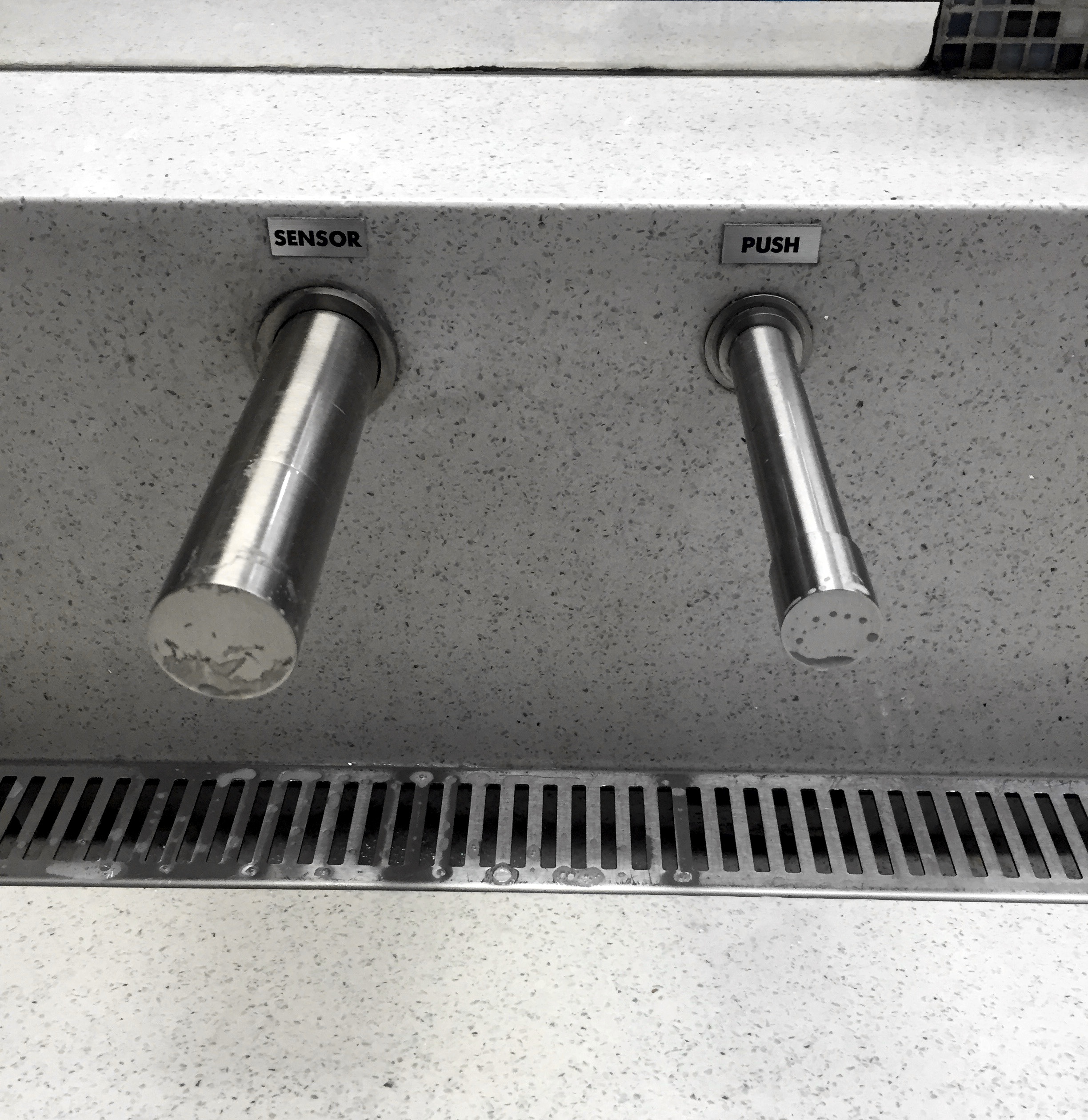
LAX bathroom wtfUX

“I thought this was interesting, seeing as how someone actually spent time and money making little plaques that indicate the action instead of the contents. It was a real WTF moment for me when I went to rinse off my soap with more soap.”


Keep these coming. Send them to us via Twitter or Facebook using the hastag #wtfUX or email them to: [email protected] with “#wtfUX” in the subject line. Include as much context as you can, so we get a full understanding of what the f%*k went wrong.
post authorJosh Tyson

Josh Tyson
Josh Tyson is the co-author of the first bestselling book about conversational AI, Age of Invisible Machines. He is also the Director of Creative Content at OneReach.ai and co-host of both the Invisible Machines and N9K podcasts. His writing has appeared in numerous publications over the years, including Chicago Reader, Fast Company, FLAUNT, The New York Times, Observer, SLAP, Stop Smiling, Thrasher, and Westword. 

Tweet
Share
Post
Share
Email
Print

Related Articles

Explore the future of design: AI-powered interfaces that adapt, stay human-focused, and build trust.

Article by Aroon Kumar
Beyond UI/UX: Designing Adaptive Experiences in the Age of AI
  • The article discusses the shift from fixed interfaces to real-time experiences, switching the role of designers from creating screens to guiding how systems operate.
  • The piece also stresses that, as experiences become personalized, they must maintain user trust, privacy, and authentic human connection.
Share:Beyond UI/UX: Designing Adaptive Experiences in the Age of AI
5 min read

Uncover the AI-driven future of product management, where execution is automated and staying close to the market is key.

Article by Pavel Bukengolts
The AI-First Operator Is the New Product Manager
  • The article explores how AI tools such as Startup.ai and Ideanote are turning ideas into products, minimizing the need for traditional project management jobs.
  • It stresses that success in product management today depends on staying close to present market signals rather than coordinating or interpreting concepts.
  • The piece highlights that the future belongs to quick thinkers: AI prioritizes ideas over resumes, leveling the playing field for innovators everywhere.
Share:The AI-First Operator Is the New Product Manager
3 min read

Discover how ableism influences our interfaces and why real design begins with humanity, not assumptions.

Article by Tamara Sredojevic
Ableist Design: Challenging Systemic Norms
  • The article claims that design often defaults to an able-bodied “norm,” making exclusion a structural rather than an unwanted consequence.
  • It illustrates that accessibility mistakes come from assumptions: designers believe who the user is instead of investigating, researching, or involving Disabled people.
  • The piece highlights that accessibility must be built in from the start and seen as an ethical, collective responsibility rather than a specialized add-on or professional task.
Share:Ableist Design: Challenging Systemic Norms
24 min read

Join the UX Magazine community!

Stay informed with exclusive content on the intersection of UX, AI agents, and agentic automation—essential reading for future-focused professionals.

Hello!

You're officially a member of the UX Magazine Community.
We're excited to have you with us!

Thank you!

To begin viewing member content, please verify your email.

Get Paid to Test AI Products

Earn an average of $100 per test by reviewing AI-first product experiences and sharing your feedback.

    Tell us about you. Enroll in the course.

      This website uses cookies to ensure you get the best experience on our website. Check our privacy policy and