
There comes a time in every designer’s life when “winging it” stops being a practical career growth strategy. Personally, I’ve hit the limit, not with the work itself, but with the idea that my title should define my future. Titles, as it turns out, are a terrible mapping device, and conversation design offers no obvious career path.
Design excites me, but I don’t know what my options are. I didn’t grow up around tech. I don’t have many role models to imitate. In fact, I stumbled upon conversation design because of a YouTube video. I’m a self-taught and community-raised designer. My biggest accomplishment is breaking into the field itself. Career planning? What’s that?
Congrats, you’re a conversation designer… now what?
To everyone who has proclaimed that conversation design is “the next big thing,” I say: conversation design is an imaginary destination that recedes as you approach it. This field doesn’t come with a visible career ladder, but that’s not unique to conversation design. It’s 2025. It’s tech. The ladder doesn’t exist. I say this in case there’s anyone out there wondering if the grass really is greener on the other side. The grass will never really be greener, but the fences might be taller.
So, where does this leave us? We all seem to be asking the same question in different ways: what does career progression look like in this field? I don’t have the answer (sorry), but I am nosy and, for the past week, I’ve been attempting to understand — well, is it possible to make CxD a long-term career? Does everyone leave eventually?
In search of an answer, I picked a small handful of LinkedIn profiles who worked in conversation design to see what they’re doing now. The more I uncovered, the more I wanted to know. In total, I gathered 146 points of data from seniors, peers, and juniors alike. What had started as a simple search for options for a career move became a quick census of CxD data I felt compelled to write about and publish.
Spoiler: there’s no blueprint. There’s nothing I wish more than for careers to be as simple as hard work = linear recognition and advancement over time, but they’re not, and we have to be mindful of the parameters we work within. It’s okay. All careers are one day at a time. My goal in sharing these brief notes and insights is that you might find inspiration. Maybe you’ll consider a path you wouldn’t have dared to before. If nothing else, I hope you may find solace knowing someone else feels confused about the next step. Someone else out there feels anxious about skill development, job security, portfolios, falling behind, legacy, and countless other career-related things.
Disclaimer: The research I did was hardly comprehensive and wholly dependent on publicly-available information. Plus, I have zero background in data analysis, so if you’re expecting to read some hardcore quantitative report of the CxD field, I’m afraid you’ll have to continue waiting for the State of Conversation Design.
The 3 waves of conversation design
As I clicked through profiles, one pattern became immediately clear: there are three distinct cohorts or “waves” of conversation design in the U.S.*. I had always assumed there were only two cohorts — the “OGs” and everyone else who came after them. In reality, there are three: the founding designers, the designers who got their start during the hiring boom of CxD, and the newest generation of designers. For my personal amusement, I nicknamed each of these waves after its biggest distinguishing feature. However, it should be stated that each is influenced by their own unique moment in Conversational AI.
*CxD industry maturity differs greatly across countries, so unfortunately, this piece is mainly reflective of the American job market.
The Nuance(d) Era
1980’s-2009
Hopefully, by now, most people know that conversation design originally started as “Voice User Interface” design. Many sources (books, webinar recordings, interviews, profiles on a professional networking site) confirm this lore: “VUI” and “VUX” describe an exciting new discipline born out of a need to translate human-centric language expertise into usable, cutting-edge speech products. My data supports it too — 90% of wave 1 designers either had “Voice” or “Speech” in their job title.
From a modern perspective, it’s hard to fully comprehend just how impressive the rapid advancement of 1990’s telecommunications was. Digital telephony was a growing consumer touchpoint at the time, with huge commercialization potential. The top company to ride this wave was Nuance Communications, Inc. Founded in 1992, Nuance hired and fostered Conversational AI talent for over a decade. From my data, 76% of first-wave designers worked at Nuance. Heck, the first major CxD publication, Voice User Interface Design, co-authored by Michael Cohen (founder of Nuance), James Giangola, and Jennifer Balogh, is copyrighted by Nuance.
There are 2 interesting pieces of lore from this era:
- Nuance shipped its first major voice-based application in 1996 for client Charles Schwab & Co. [source].
- The first automated voice portal to access the internet was Tellme’s 1–800–555-TELL in the year 2000 [source], [sample].
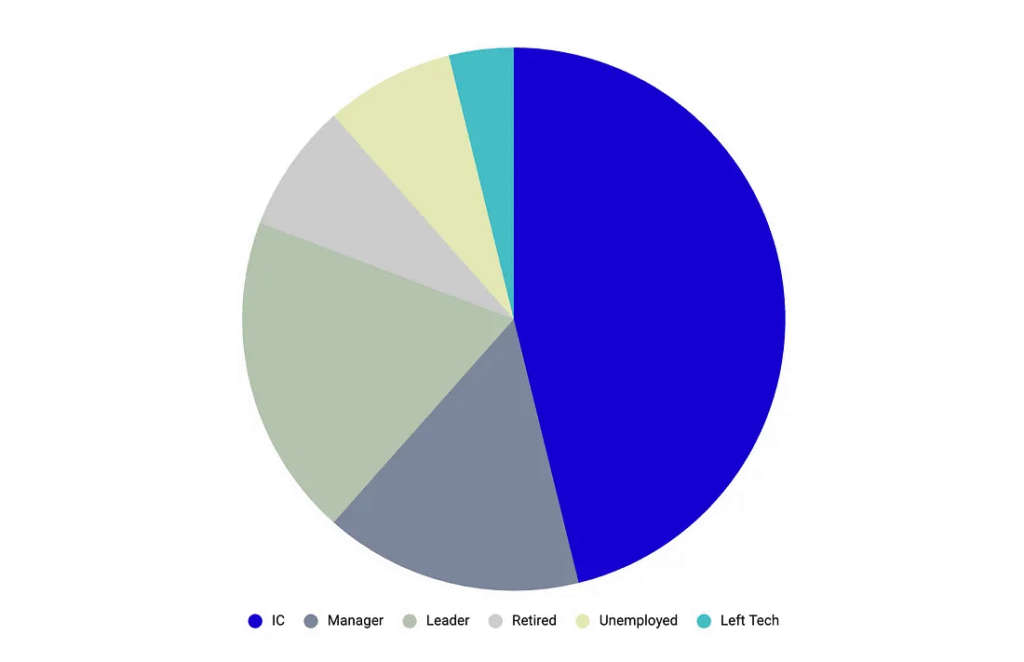
The first wave of designers didn’t climb a ladder; they paved the way. They experimented. They wrote books. They built and vetted the frameworks that the design industry still uses to this day. Comparing then and now, designers from this era started in highly technical, engineering-adjacent linguistics or speech-related roles. Today, they hold titles such as Principal, Director, VP, Head of UX/Design, or Founder. Only two people from this group have retired. Years of Experience for this cohort range between 36–17 YOE. Surprisingly, nearly everyone stayed in voice or conversational AI.
And honestly, that’s the dream.
La Belle Époque
2010–2019
“The best technology cannot compensate for poorly designed dialog strategies or prompts. That remains the biggest challenge today. We need to advance our basic understanding, train many more practitioners, and make the process more efficient.” — Michael Cohen in a 2004 interview
During this era, conversation design matured and expanded in scope. Is it “dialog” or “dialogue”? Is it voice user interface design or conversation design? What constitutes a bot persona? Do Grice’s maxims hold up? The second wave was a period for many different discussions and perspectives in CxD.
Notwithstanding, no single debate influenced this generation of design quite as much as the following:
- The launch of direct-to-consumer voice assistants began with Siri in 2010, followed by Cortana (2014), Alexa (2014), and Google Assistant (2016).
- The rise and proliferation of chatbots and enterprise automation worldwide.
Both led to a massive hiring boom in CxDs. “Train more practitioners” was the ethos of the time. Companies didn’t merely want to hire experienced conversation designers; they wanted these designers to scale themselves by building teams and nurturing talent. For these reasons, I consider this the golden age of conversation design.
From the data, while this time boasts the highest volume of CxDs, it also shows fewer breaks into executive leadership roles than the first wave. In this group, 42% of designers, irrespective of YOE, have maintained a senior IC title, which can go either way: designers from this time prioritize being a specialist over being a leader, or senior titles were normalized faster than authority, leading to title compression. This period was also the first time I saw extreme pivots outside of tech altogether. Some notable transitions include switches to acting, academia, and working in a café.
Other stats from this era:
- Over 80% of designers who started their careers during the 2nd wave are employed full-time in Conversational AI roles.
- 21% of designers in this group previously worked at Nuance.
- 5 individuals from this group transitioned into Product roles.

The Era of Austerity
2020–now
It’s been one blow after another. A pandemic, mass layoffs, and the advent of LLMs and commercial Gen AI models have characterized the third wave of conversation design. There are significantly fewer roles than there are designers. Meanwhile, interviews are longer (more rounds), profiles get more scrutiny (hello, deck portfolios), and job security is a fantasy. I call it the age of austerity.
Looking at the data, it’s interesting — though not surprising in the least — to see more title fragmentation in this group than in the previous two. Titles pair “conversation,” “chatbot,” “agent,” “prompt” with “designer,” “analyst,” “architect,” “engineer,” “strategist,” or more. It’s like CxD Mad Libs.
Granted, we’re only 5 years into the third wave of CxD, so there are too few insights to extract yet. However, since conversation design could and does live inside many organizational roles (“AI,” product, systems, strategy), this may suggest CxD skills travel farther now. It’s a bit too early to call it, but we might see more outward rather than upward advancement in the coming years. I predict professionals will “leave” traditional design roles to build their own expertise and influence.
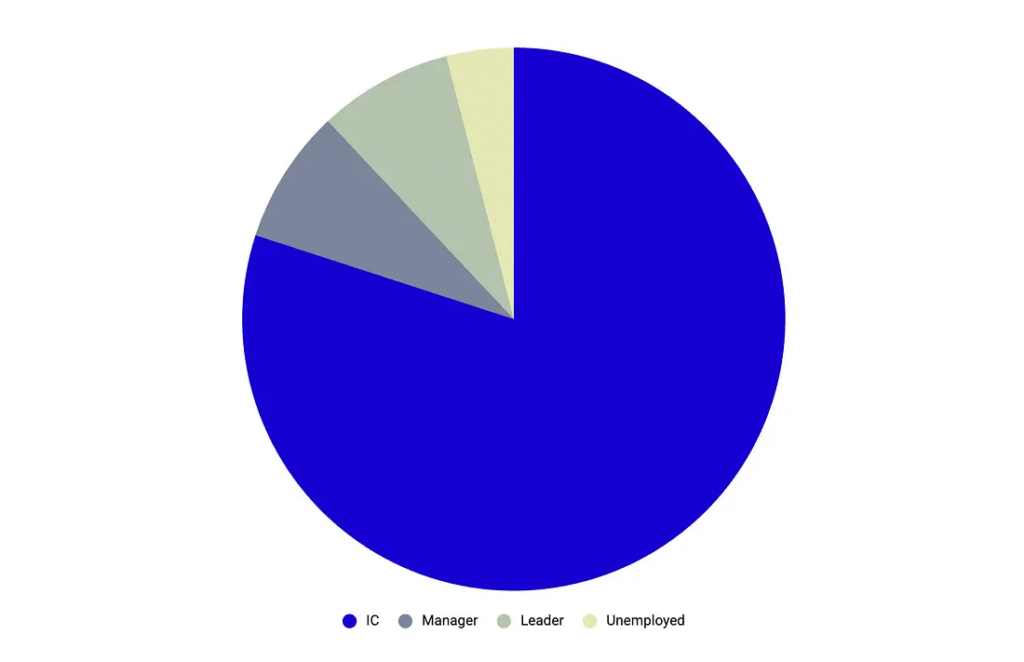
One interesting thing to note: my hypothesis of rapid senior title jumps was validated by data in wave three. As a reminder, designers who started in CxD during this era on paper have 5 years of CxD work experience or less. And yet, over 40% of these CxDs currently hold senior titles, including one “Head of Conversation Design.”
The big picture
I had quite a few biases coming into this project. The pessimist in me assumed most professionals would leave design entirely. The data, across all 3 waves, actually indicates the opposite.
Of the conversation designers who are currently employed and stayed in tech, 84% of them stayed in design-related roles! Again, my sampling isn’t representative of the CxD industry, but it does give me hope that this percentage would only shrink mildly when fitted with more data.

Rapid-fire questions
Are conversation designers becoming:
- Leaders (Director/Head/VP/Executive)? Yes.
- Specialists (Senior/Staff/Principal)? Also, yes.
- Managers? Not really, the data seems to suggest non-CxDs manage CxDs.
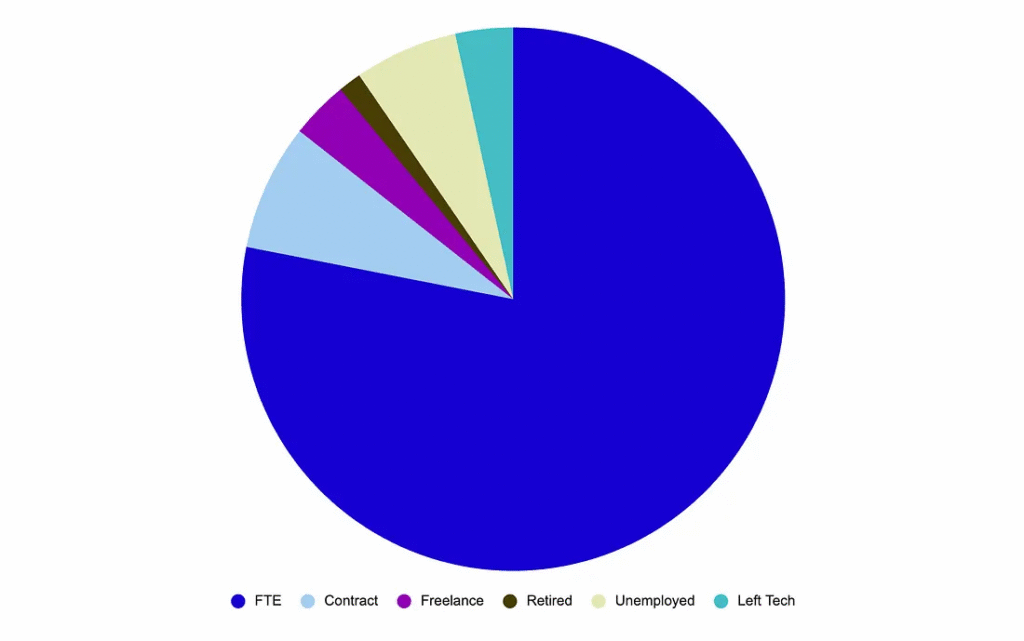
Do the majority of CxDs in today’s job market work on contract?
- No, more designers work full-time (FTE) as opposed to contract. But, there is a higher incidence of this with the third wave (16% of employed designers) than for the second wave CxDs (0.03%).
One last note
If I can impart any wisdom from all this, it would be:
“Don’t compare your career to the people who were inventing the job while doing it.”
It’s easy to romanticize previous generations. For those of us who started in CxD only recently, it’s extremely tempting to feel like we missed out on an ideal golden age. Some days it can feel like “what in the world did I get myself into?” I have hope that things will get better. If we can’t find spaces, who says we can’t create them? If we can’t find mentors at our jobs, what’s stopping us from reaching out to others outside the company? I believe the best way to pay homage to all the people who came before us is to keep their legacy alive by sharing their knowledge and recalling CxD lore.
Tech moves so fast. One conversational AI product sunsets, another one gets deployed. If everyone these days is an AI “thought leader,” why not us? Why can’t we be the ones guiding others in the AI landscape?
“Sometimes, leadership is just starting a conversation. Not telling people what to do, but creating a space for dialogue. Not offering solutions, but helping the team find their own.” — Camilo Granados
The article originally appeared on Medium.
Featured image courtesy: Diana N.