

Flag

We stand with Ukraine and our team members from Ukraine. Here are ways you can help

Get exclusive access to thought-provoking articles, bonus podcast content, and cutting-edge whitepapers. Become a member of the UX Magazine community today!

Home ›› AI Adoption is an Act of Self-Disruption

AI Adoption is an Act of Self-Disruption

by Josh Tyson
1 min read
Share this post on
Tweet
Share
Post
Share
Email
Print

Save

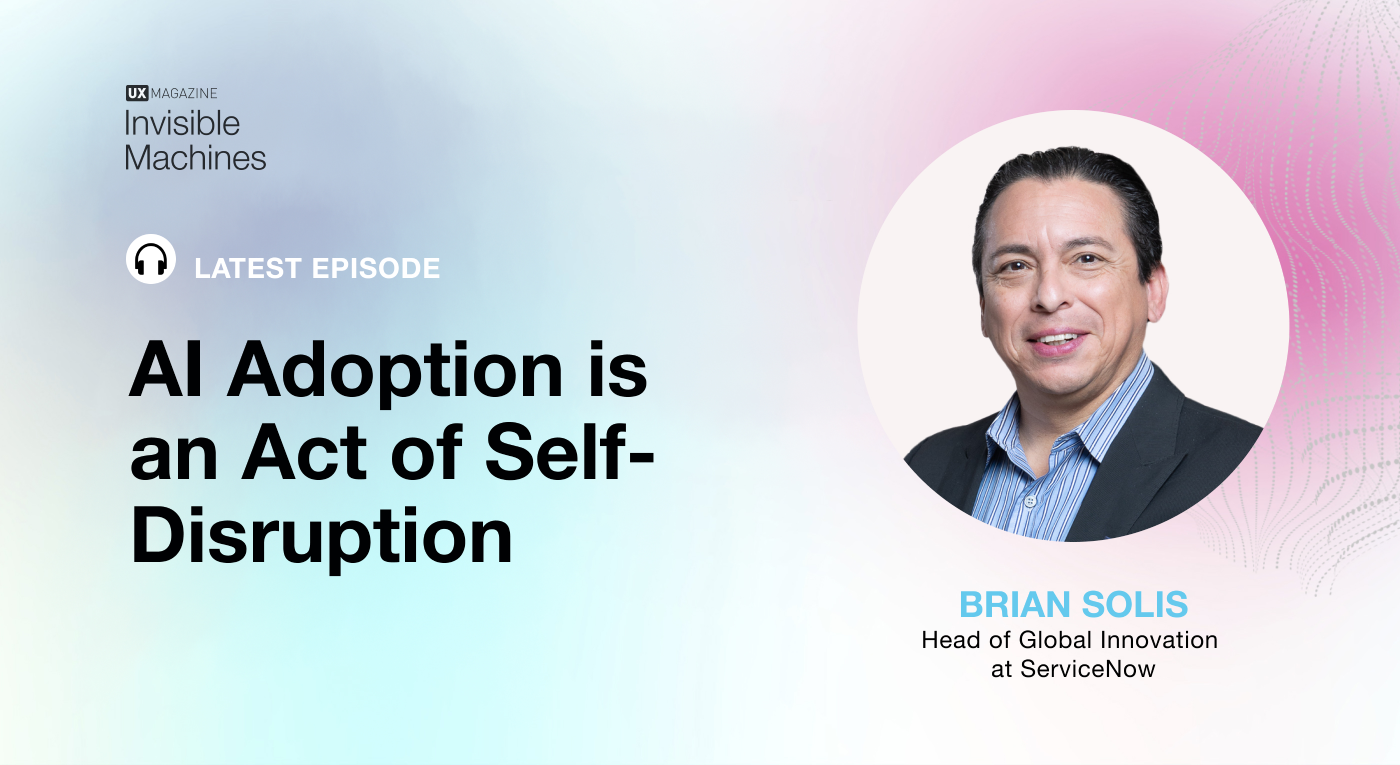
What does it really take for businesses to successfully adopt AI? According to Brian Solis, digital anthropologist, futurist, and Head of Global Innovation at ServiceNow, it’s not just about new tools. It’s about self-disruption.

Dubbed “the CEO whisperer,” Brian brings decades of experience advising leaders at the highest levels. In this thought-provoking episode of Invisible Machines, he joins Robb Wilson and Josh Tyson to discuss why true AI adoption requires rethinking nearly every layer of business infrastructure, and how the C-suite mindset must shift to meet the challenge.

The conversation dives into:

  • What self-disruption looks like at the enterprise level.
  • The difference between “ah-ha” moments and “uh-oh” moments in innovation.
  • How storytelling can make or break technology adoption.
  • Lessons from companies like IKEA and Airbnb that embraced self-disruption.
  • Why hopeless optimism can be just as dangerous as resistance to change.
  • What a future awash in simulations and predictions could look like.

This is a brisk, jam-packed episode that offers both strategic insights and practical inspiration for leaders navigating the AI-first future. Tune in now to hear Brian Solis on Invisible Machines and discover why AI adoption is the ultimate act of self-disruption.

post authorJosh Tyson

Josh Tyson
Josh Tyson is the co-author of the first bestselling book about conversational AI, Age of Invisible Machines. He is also the Director of Creative Content at OneReach.ai and co-host of both the Invisible Machines and N9K podcasts. His writing has appeared in numerous publications over the years, including Chicago Reader, Fast Company, FLAUNT, The New York Times, Observer, SLAP, Stop Smiling, Thrasher, and Westword. 

Tweet
Share
Post
Share
Email
Print

Related Articles

Discover why your most irreplaceable asset isn’t the technology you use. It’s your humanity.

Article by Pavel Bukengolts
Reimagining Work: How Designing for Humanity Will Shape 2030
  • The article argues that creativity, empathy, and emotional intelligence aren’t threatened by AI but become more valuable as automation takes over routine tasks, freeing people to focus on complex, uniquely human challenges.
  • It highlights that the key to thriving in an AI-driven world is using technology to enhance human potential: optimizing environments for focus and well-being, rather than letting it overshadow the qualities that make us effective.
  • The piece emphasizes that as workplaces evolve toward 2030, empathy becomes a core leadership skill: the engine behind authentic collaboration and meaningful human connection in increasingly automated environments.
Share:Reimagining Work: How Designing for Humanity Will Shape 2030
5 min read

Discover how personalization crosses the line from serving users to silently shaping them.

Article by Tushar Deshmukh
The Ethics of Personalization: When UX Crosses the Line from Helpful to Harmful
  • The article argues that personalization walks a fine ethical line between empowering users and quietly manipulating them.
  • It exposes how over-filtering doesn’t just limit content; it limits identity, replacing user curiosity with algorithmic compliance.
  • The piece calls on UX practitioners to treat ethical personalization as a foundational responsibility: one that demands transparency, fairness, and respect for human dignity.
Share:The Ethics of Personalization: When UX Crosses the Line from Helpful to Harmful
4 min read

Join the UX Magazine community!

Stay informed with exclusive content on the intersection of UX, AI agents, and agentic automation—essential reading for future-focused professionals.

Hello!

You're officially a member of the UX Magazine Community.
We're excited to have you with us!

Thank you!

To begin viewing member content, please verify your email.

Get Paid to Test AI Products

Earn an average of $100 per test by reviewing AI-first product experiences and sharing your feedback.

    Tell us about you. Enroll in the course.

      This website uses cookies to ensure you get the best experience on our website. Check our privacy policy and