



Flag

We stand with Ukraine and our team members from Ukraine. Here are ways you can help

Get exclusive access to thought-provoking articles, bonus podcast content, and cutting-edge whitepapers. Become a member of the UX Magazine community today!

Home ›› Knowledge Management Challenges and Building Advanced Digital Assistants at Morgan Stanley

Knowledge Management Challenges and Building Advanced Digital Assistants at Morgan Stanley

by Josh Tyson
1 min read
Share this post on
Tweet
Share
Post
Share
Email
Print

Save

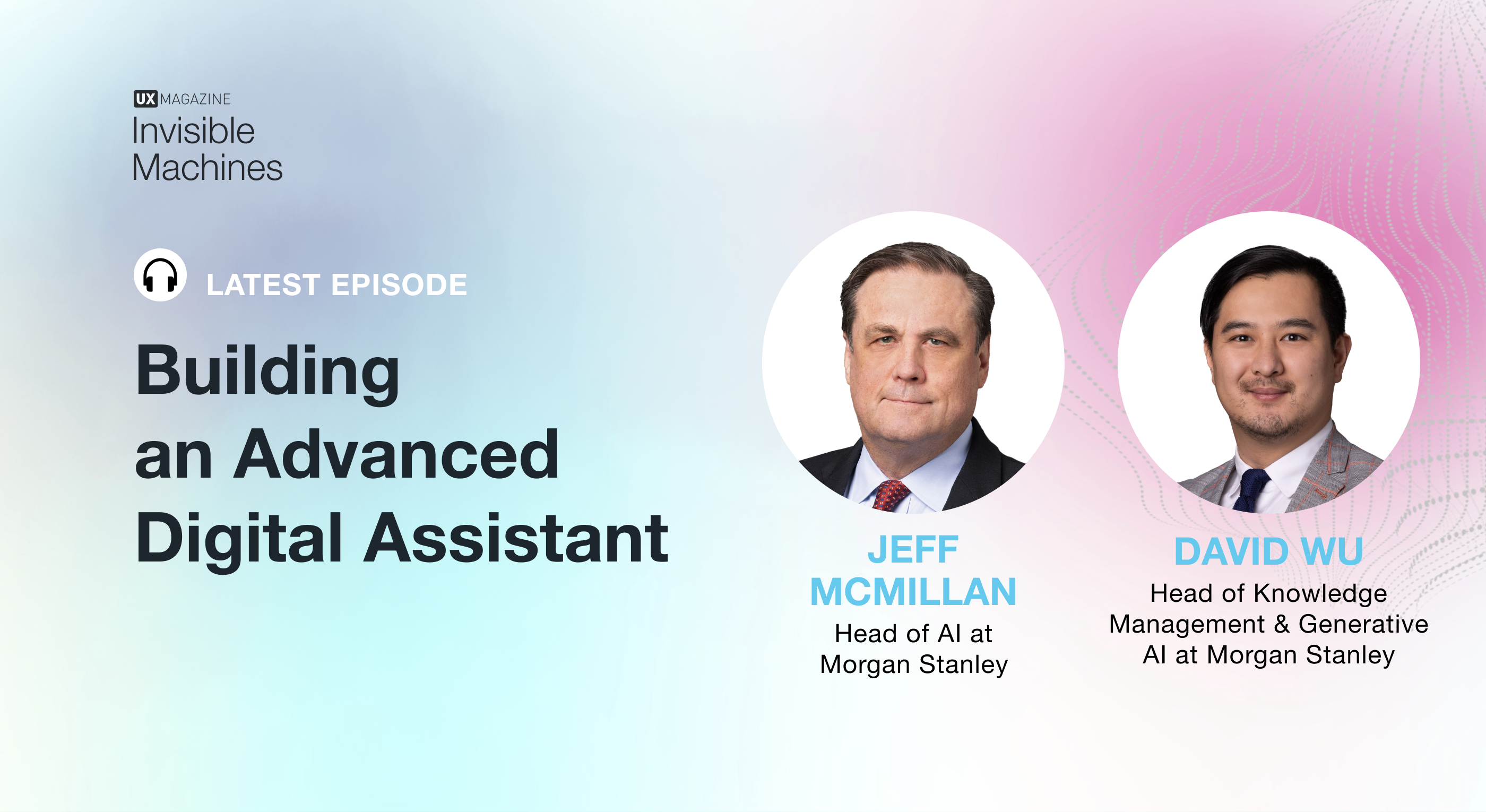
Jeff McMillan and David Wu of Morgan Stanley join Robb and Josh for a deep dive into the technical work and strategic initiatives that allowed the global investment bank to create a knowledge base that’s allowing them to take a massive leap forward with conversational AI. As the Head of AI and the Head of Knowledge Management & Generative AI respectively, Jeff and David led the creation of an intelligent digital assistant that is making their advisors smarter and saving them time.

Partnering with OpenAI in the months before ChatGPT was released, Morgan Stanley was able to rebuild their existing content using generative AI and relational databases. This is a deep dive into the technical work and strategic planning required to leverage conversational AI in ways that become a force multiplier within an organization. Don’t miss this high-value episode of Invisible Machines.

Check out the episode here.

post authorJosh Tyson

Josh Tyson
Josh Tyson is the co-author of the first bestselling book about conversational AI, Age of Invisible Machines. He is also the Director of Creative Content at OneReach.ai and co-host of both the Invisible Machines and N9K podcasts. His writing has appeared in numerous publications over the years, including Chicago Reader, Fast Company, FLAUNT, The New York Times, Observer, SLAP, Stop Smiling, Thrasher, and Westword. 

Tweet
Share
Post
Share
Email
Print

Related Articles

Learn when to talk to users, and when to watch them in order to uncover real insights and design experiences that truly work.

Article by Paivi Salminen
Usability Tests vs. Focus Groups
  • The article distinguishes between usability tests and focus groups, highlighting their different roles in UX research.
  • It explains that focus groups gather opinions and attitudes, while usability tests observe real user behavior to find design issues.
  • The piece stresses using each method at the right stage to build the right product and ensure a better user experience.
Share:Usability Tests vs. Focus Groups
2 min read

Explore how interaction data uncovers hidden user-behavior patterns that drive smarter product decisions, better UX, and continuous improvement.

Article by Srikanth R
The Power of Interaction Data: Tracking User Behavior in Modern Web Apps
  • The article explains how interaction data like clicks, scrolls, and session patterns reveals real user behavior beyond basic analytics.
  • It shows how tools such as heatmaps and session replays turn this data into actionable insights that improve UX and product decisions.
  • The piece emphasizes using behavioral insights responsibly, balancing optimization with user privacy and ethical data practices.
Share:The Power of Interaction Data: Tracking User Behavior in Modern Web Apps
14 min read

Join the UX Magazine community!

Stay informed with exclusive content on the intersection of UX, AI agents, and agentic automation—essential reading for future-focused professionals.

Hello!

You're officially a member of the UX Magazine Community.
We're excited to have you with us!

Thank you!

To begin viewing member content, please verify your email.

Get Paid to Test AI Products

Earn an average of $100 per test by reviewing AI-first product experiences and sharing your feedback.

    Tell us about you. Enroll in the course.

      This website uses cookies to ensure you get the best experience on our website. Check our privacy policy and