
Flag

We stand with Ukraine and our team members from Ukraine. Here are ways you can help

Get exclusive access to thought-provoking articles, bonus podcast content, and cutting-edge whitepapers. Become a member of the UX Magazine community today!

Home ›› The Comic Guide to the Simplicity Cycle

The Comic Guide to the Simplicity Cycle

by Dan Ward
1 min read
Share this post on
Tweet
Share
Post
Share
Email
Print

Save

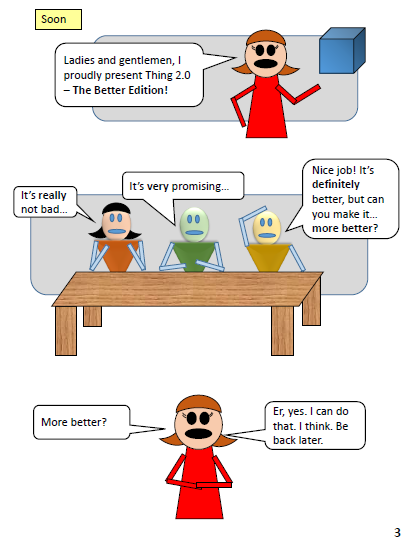
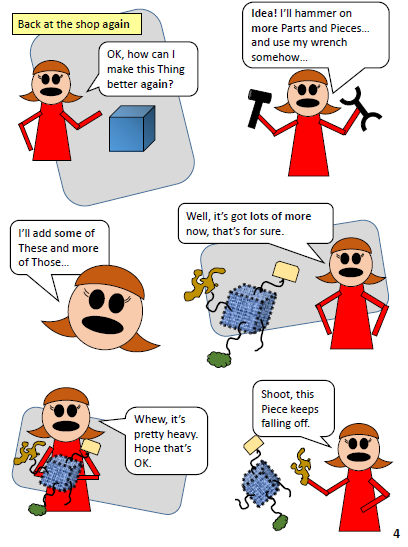
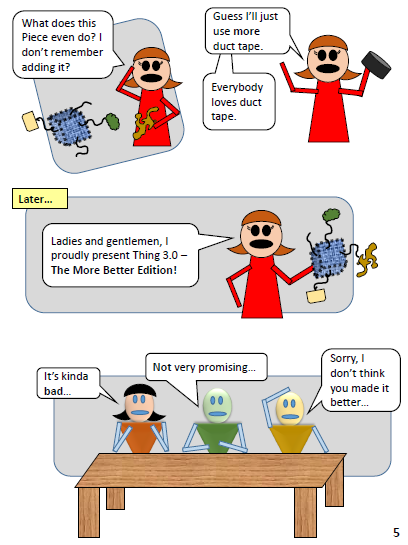
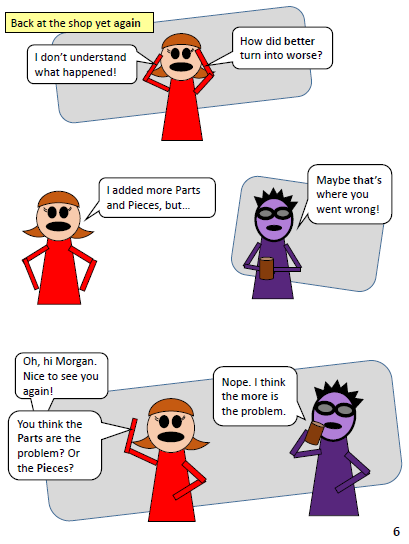
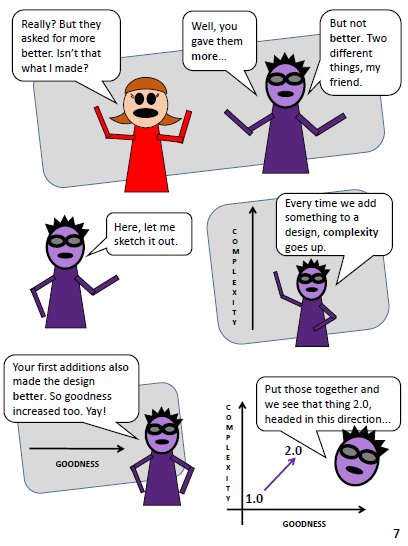
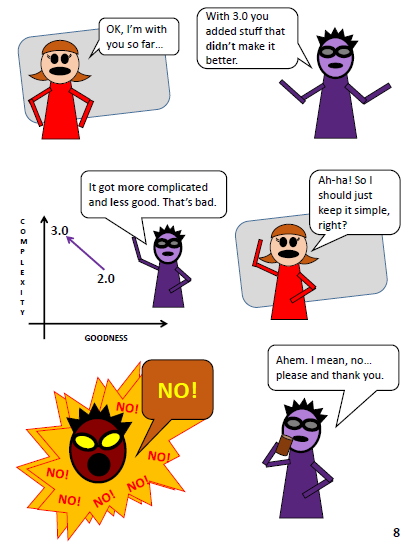
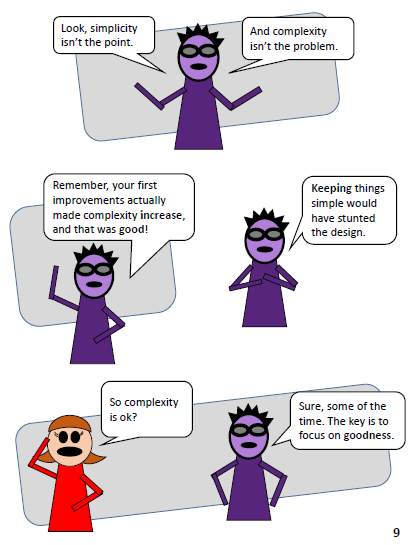
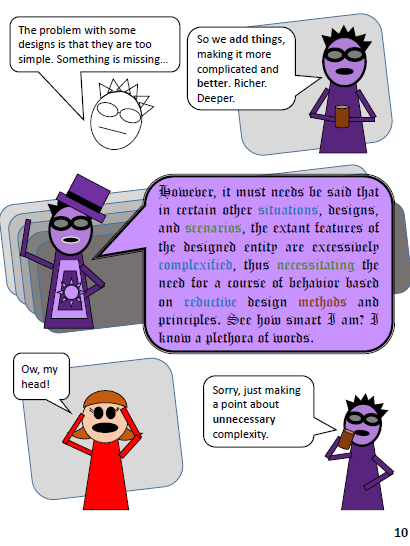
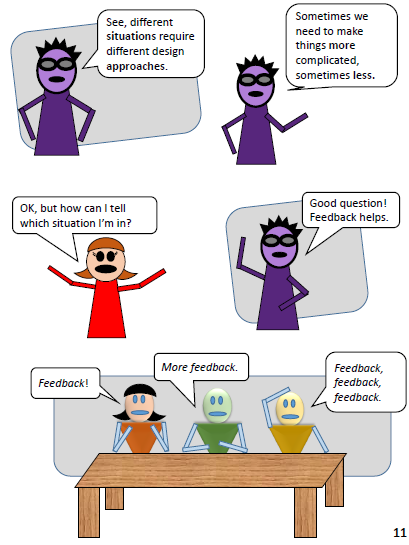
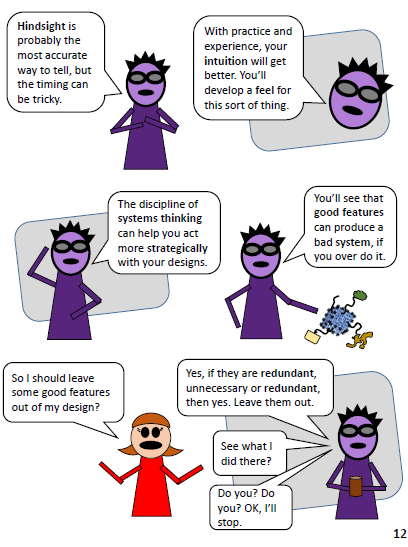
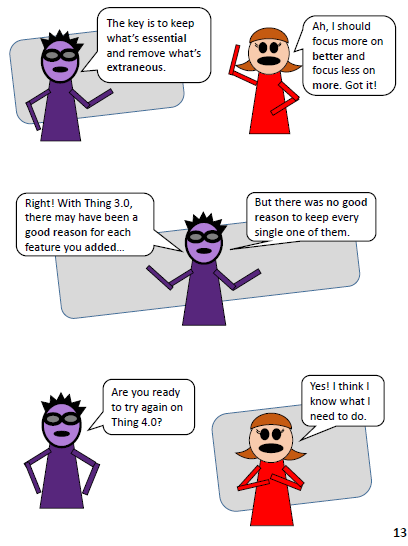
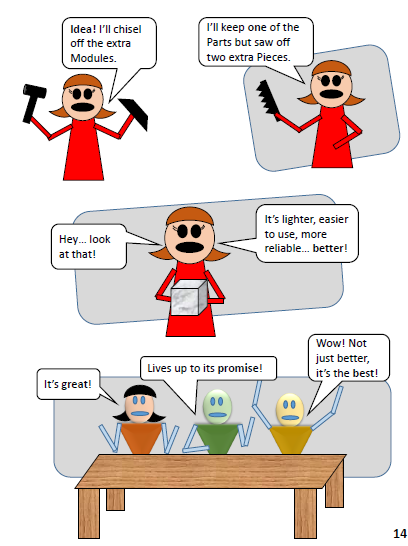
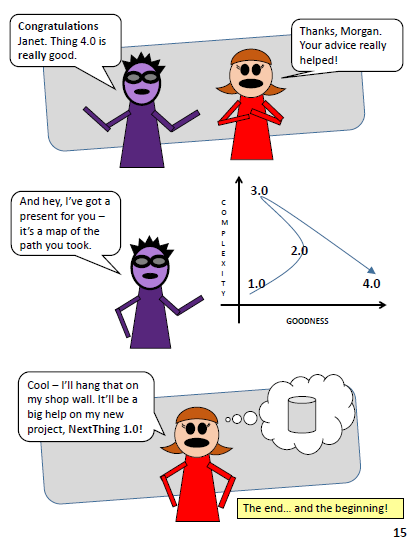
Author and UX consultant Dan Ward shares an illustrated interpretation of his book, “The Simplicity Cycle.”
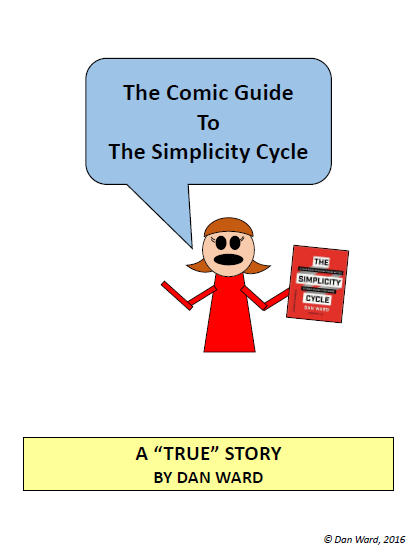
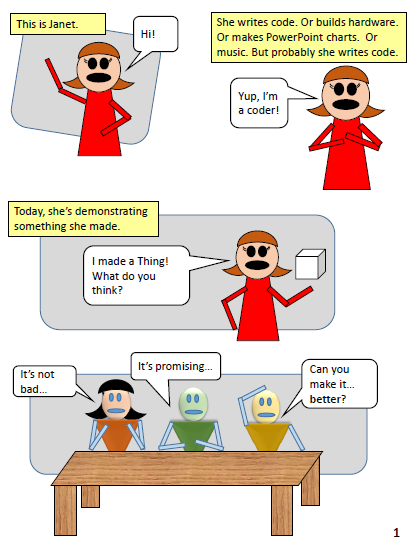
Author and UX consultant Dan Ward shares an illustrated interpretation of his book, “The Simplicity Cycle.”
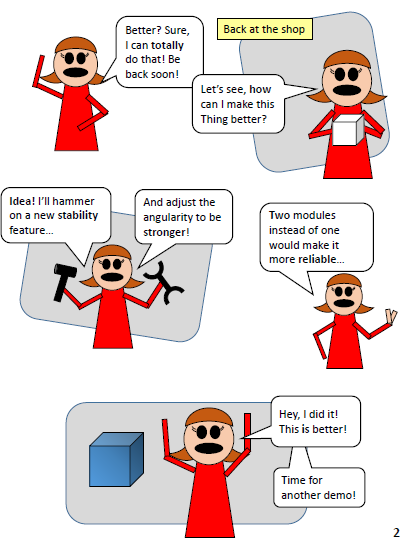
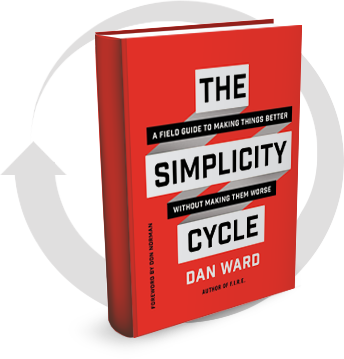
Janet’s story illustrates some common design patterns and pitfalls. To learn more about other design patterns and principles, as well as some tools and techniques you can use on your projects, check out The Simplicity Cycle, available wherever books are sold.


post authorDan Ward

Dan Ward
Dan Ward is the author of F.I.R.E.: How Fast, Inexpensive, Restrained and Elegant Methods Ignite Innovation (HarperBusiness, 2014) and The Simplicity Cycle: A Field Guide To Making Things Better Without Making Them Worse (HarperBusiness, 2015). Prior to launching Dan Ward Consulting, he served for more than 20 years as an acquisition officer in the US Air Force, where he specialized in leading high-speed, low-cost technology development programs and retired at the rank of Lieutenant Colonel. For more information please visit thedanward.com and follow the author on Facebook and Twitter

Tweet
Share
Post
Share
Email
Print

Related Articles

Find out why slapping badges and points into your app doesn’t work and what six principles from real game design actually drive long-term engagement.

Article by Montgomery Singman
Gamification 2.0. Beyond Points and Badges: Designing for Players, Not Metrics. Chapter 2: The Solution
  • The piece argues that gamification fails when game aesthetics are borrowed, but game logic is not. Real game designers use six principles to bring real engagement: authentic mastery, meaningful choice, flow-calibrated challenge, rewarded exploration, self-expressed identity, and real social interdependence. The fix isn’t more mechanics; it’s making the experience itself worth repeating.
Share:Gamification 2.0. Beyond Points and Badges: Designing for Players, Not Metrics. Chapter 2: The Solution
5 min read

Learn how one product designer built a faster, sharper workflow where AI does the scaffolding, judgment owns the outcome, and nothing ships without a traceable why.

Article by Pavel Bukengolts
The Spiral Climbs: Ideas Are Expensive, Systems Are Cheap
  • The piece explores that design is no longer about designing screens but owning systems, bets, and outcomes. But the core judgment, empathy, and research are irreplaceable. I chain Miro, Figma, VS Code, GitHub, and Jira into one traceable loop from idea to learning. AI takes on the exploration and scaffolding. People own architecture, security, and accountability. A 48-hour operating cadence of small, measurable bets, linked artifacts, and documented decisions keeps speed honest.
Share:The Spiral Climbs: Ideas Are Expensive, Systems Are Cheap
6 min read

Join the UX Magazine community!

Stay informed with exclusive content on the intersection of UX, AI agents, and agentic automation—essential reading for future-focused professionals.

Hello!

You're officially a member of the UX Magazine Community.
We're excited to have you with us!

Thank you!

To begin viewing member content, please verify your email.

Get Paid to Test AI Products

Earn an average of $100 per test by reviewing AI-first product experiences and sharing your feedback.

    Tell us about you. Enroll in the course.

      This website uses cookies to ensure you get the best experience on our website. Check our privacy policy and