
Flag

We stand with Ukraine and our team members from Ukraine. Here are ways you can help

Get exclusive access to thought-provoking articles, bonus podcast content, and cutting-edge whitepapers. Become a member of the UX Magazine community today!

Home ›› Short News ›› Interested in remote usability and user research? Give us your opinion to win a free copy of “Remote Research”

Interested in remote usability and user research? Give us your opinion to win a free copy of “Remote Research”

by UX Magazine Staff
2 min read
Share this post on
Tweet
Share
Post
Share
Email
Print

Save

UPDATE 5/11/10 16:15 ET – We’re now giving away five copies of the book instead of just one so more people will have a chance to win.

We’d like to know what products and tools you use (or want to use) for conducting remote usability and user research. There are lots of possibilities ranging from general tools like Skype or GoToMeeting, to specialized ones like Loop11 and Usabilia. What tool, product, or service do you use or wish you had a chance to use? There are useful lists of products and tools on Bolt | Peters’ remoteusability.com and on UX Booth, though these are not comprehensive lists.

Send us your answer through Twitter using the instructions below.
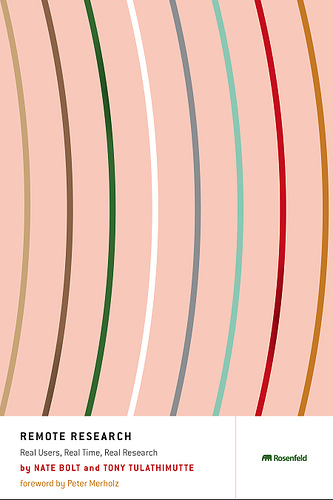
Remote Testing coverOur friends at Rosenfeld Media have generously offered to let us give away five copies of Nate Bolt and Tony Tulathimutte‘s book, Remote Research (2010). About the book:

Remote studies allow you to recruit subjects quickly, cheaply, and immediately, and give you the opportunity to observe users as they behave naturally in their own environment. In Remote Research, Nate Bolt and Tony Tulathimutte teach you how to design and conduct remote research studies, top to bottom, with little more than a phone and a laptop.

To give us your opinion and to enter to win a free copy of Remote Research, just follow these two simple steps:

  1. Make sure you’re following UX Magazine (@uxmag) on Twitter. We won’t be able to notify you if you win unless you’re following us.
  2. Post a tweet following this template: “Hey @uxmag, I use <product name> for #remoteresearch; do I win the @rosenfeldmedia book contest (https://uxm.ag/bt)?” You can click this link to create this tweet… just fill in the blank.

After a few weeks, we’ll select winners at random and will publish the results of what we learn from your responses.

Thanks again to Louis Rosenfeld from Rosenfeld Media and Nate Bolt from Bolt | Peters for their support in this. Rosenfeld Media publishes short, practical, and useful books and webinars on user experience design. Bolt | Peters is a creative research firm specializing in remote user research.

post authorUX Magazine Staff

UX Magazine Staff
UX Magazine was created to be a central, one-stop resource for everything related to user experience. Our primary goal is to provide a steady stream of current, informative, and credible information about UX and related fields to enhance the professional and creative lives of UX practitioners and those exploring the field. Our content is driven and created by an impressive roster of experienced professionals who work in all areas of UX and cover the field from diverse angles and perspectives.

Tweet
Share
Post
Share
Email
Print

Related Articles

Learn why healthcare blames human error instead of fixing broken design, and what needs to change.

Article by Paivi Salminen
Designing for Oops
  • The article explains why mistakes happen, not because we’re careless, but because most systems are built as if humans never mess up.
  • It demonstrates how slips (doing the wrong thing) and mistakes (thinking the wrong thing) require different solutions, including better design for slips and a deeper understanding of mistakes.
  • The piece outlines how aviation and factories prevent errors by removing blame, allowing workers to stop production when something’s off, and designing systems that make it difficult to do the wrong thing, and asks why healthcare hasn’t done the same.
Share:Designing for Oops
4 min read

Learn how usability, accessibility, and inclusivity connect under the idea of human-centered design.

Article by Paivi Salminen
Usability, Accessibility, and Inclusivity
  • The article shows that usability, accessibility, and inclusivity are different concepts that work together to create good design.
  • It explains that accessibility removes barriers for disabled users, while inclusivity designs for all types of human diversity.
  • The piece emphasizes that great design needs all three: usability makes things easy, accessibility makes them possible, and inclusivity makes them fair.
Share:Usability, Accessibility, and Inclusivity
3 min read

Join the UX Magazine community!

Stay informed with exclusive content on the intersection of UX, AI agents, and agentic automation—essential reading for future-focused professionals.

Hello!

You're officially a member of the UX Magazine Community.
We're excited to have you with us!

Thank you!

To begin viewing member content, please verify your email.

Get Paid to Test AI Products

Earn an average of $100 per test by reviewing AI-first product experiences and sharing your feedback.

    Tell us about you. Enroll in the course.

      This website uses cookies to ensure you get the best experience on our website. Check our privacy policy and