



Flag

We stand with Ukraine and our team members from Ukraine. Here are ways you can help

Get exclusive access to thought-provoking articles, bonus podcast content, and cutting-edge whitepapers. Become a member of the UX Magazine community today!

Home ›› The Power of Agentic Commerce

The Power of Agentic Commerce

by Josh Tyson
1 min read
Share this post on
Tweet
Share
Post
Share
Email
Print

Save

Commerce is on the brink of profound change, and PayPal and Google’s recent announcement of a multiyear strategic partnership to advance various commerce solutions is evidence of that. In the latest episode of Invisible Machines, Robb Wilson and Josh Tyson sit down with Prakhar Mehrotra, Global Head of AI at PayPal, to explore how agentic AI is reshaping the way we buy, sell, and interact with technology.

Prakhar brings a rare mix of experience — from applied AI work at Walmart to his current leadership at PayPal — giving him a front-row seat to how commerce is evolving. The conversation ranges from future marketplaces, where machines will bid and set prices on behalf of humans and businesses, to the often-overlooked “plumbing” of technology that organizations must rework to successfully adopt AI.

The trio also speculate about what comes next: a world with more AI agents than websites, where digital interactions become seamless for consumers but increasingly complex for businesses. With insights drawn from his PhD in Aerospace Engineering, Prakhar highlights the role of simulation in managing complexity, whether in space travel or AI-driven commerce.

This episode is a layered, thought-provoking look at the near future of AI, commerce, and human-technology interaction. Listen to it!

post authorJosh Tyson

Josh Tyson
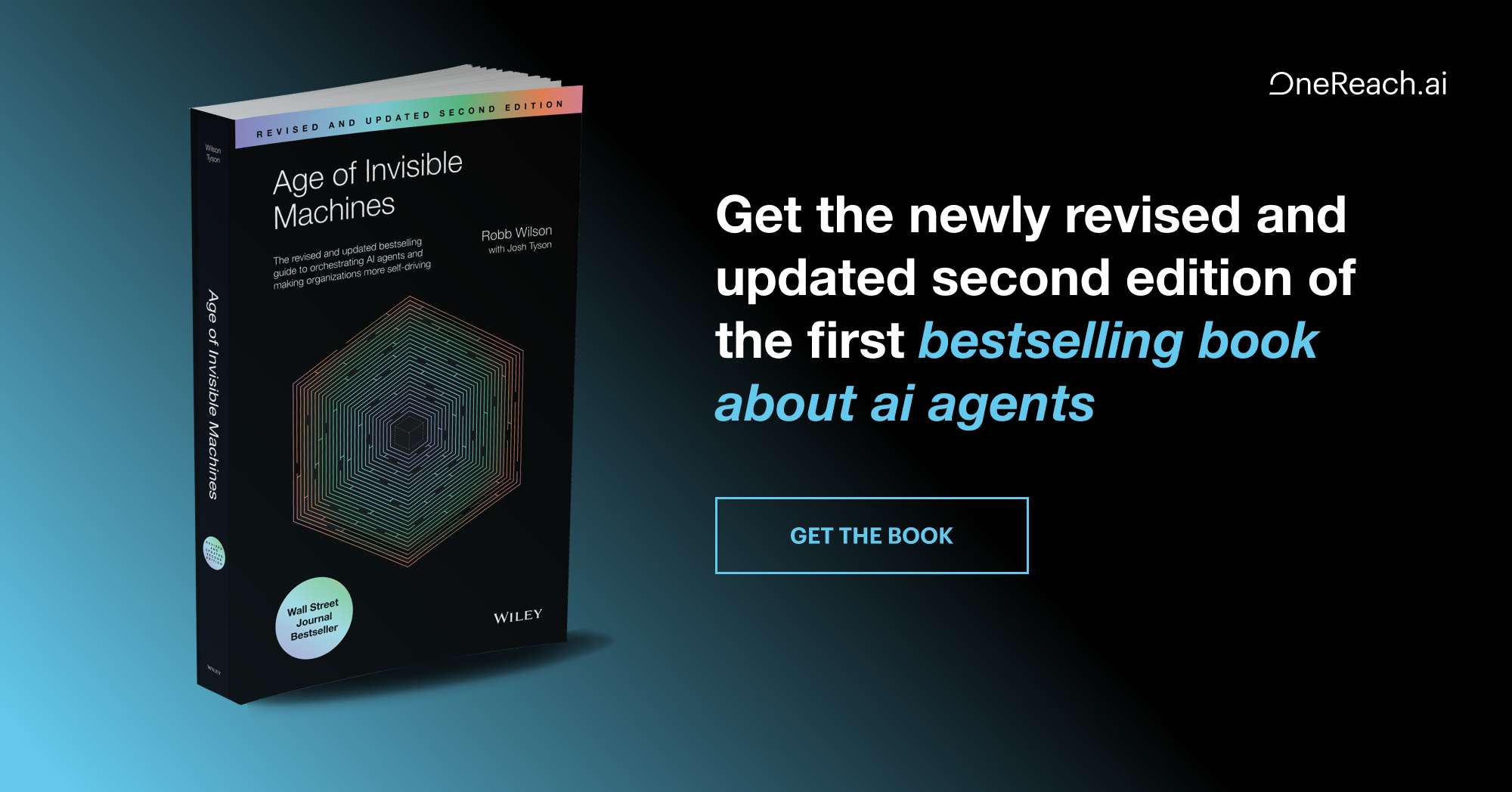
Josh Tyson is the co-author of the first bestselling book about conversational AI, Age of Invisible Machines. He is also the Director of Creative Content at OneReach.ai and co-host of both the Invisible Machines and N9K podcasts. His writing has appeared in numerous publications over the years, including Chicago Reader, Fast Company, FLAUNT, The New York Times, Observer, SLAP, Stop Smiling, Thrasher, and Westword. 

Tweet
Share
Post
Share
Email
Print

Related Articles

Trusting AI isn’t the goal — relying on it is. This article explores why human trust and AI reliance are worlds apart, and what UX designers should focus on to make AI feel dependable, not human.

Article by Verena Seibert-Giller
The Psychology of Trust in AI: Why “Relying on AI” Matters More than “Trusting It”
  • The article argues that “reliance,” not “trust,” is the right way to think about users’ relationship with AI.
  • It explains that human trust and AI reliance are driven by different psychological mechanisms.
  • The piece highlights that predictability, transparency, and control make users more willing to rely on AI.
  • It concludes that users don’t need to trust AI as a partner — only rely on it as a dependable tool.
Share:The Psychology of Trust in AI: Why “Relying on AI” Matters More than “Trusting It”
4 min read

What if your productivity app could keep you as focused as your favorite game? This article explores how game design psychology can transform everyday tools into experiences that spark flow, focus, and real engagement.

Article by Montgomery Singman
Flow State Design: Applying Game Psychology to Productivity Apps
  • The article shows how principles from game design can help productivity tools create and sustain a flow state.
  • It explains that games succeed by balancing challenge and skill, providing clear goals, and offering immediate feedback — elements most productivity apps lack.
  • The piece argues that applying these psychological insights could make work tools more engaging, adaptive, and motivating.
Share:Flow State Design: Applying Game Psychology to Productivity Apps
12 min read

Learn how understanding user emotions can create intuitive, supportive designs that build trust and loyalty.

Article by Pavel Bukengolts
The Role of Emotion in UX: Embracing Emotionally Intelligent Design
  • The article emphasizes that emotionally intelligent design is key to creating meaningful UX that satisfies users and drives business success.
  • It shows how understanding users’ emotions — through research, empathy mapping, journey mapping, and service blueprinting — can reveal hidden needs and shape more intuitive, reassuring digital experiences.
  • The piece argues that embedding empathy and emotional insights into design strengthens user engagement, loyalty, and overall satisfaction.
Share:The Role of Emotion in UX: Embracing Emotionally Intelligent Design
5 min read

Join the UX Magazine community!

Stay informed with exclusive content on the intersection of UX, AI agents, and agentic automation—essential reading for future-focused professionals.

Hello!

You're officially a member of the UX Magazine Community.
We're excited to have you with us!

Thank you!

To begin viewing member content, please verify your email.

Tell us about you. Enroll in the course.

    This website uses cookies to ensure you get the best experience on our website. Check our privacy policy and