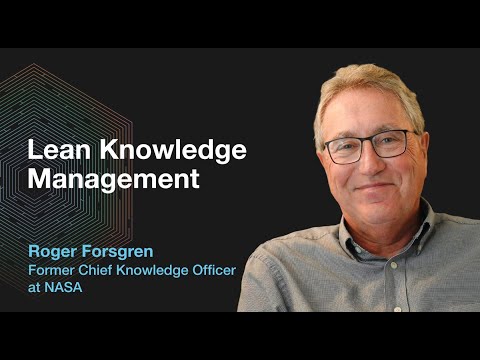
Is Knowledge Management Worth It?
Former NASA CKO Roger Forsgren points to ASRS—the voluntary reporting system behind commercial aviation’s safety record—and asks what that means before organizations pour AI into KM.
Roger Forsgren’s thirty-eight-year career at NASA included agency-wide technical training and a tour as the agency’s Chief Knowledge Officer. He built KM programs so the workforce could reach the knowledge that missions actually depend on—not a portal nobody opens. He is the author of Lean Knowledge Management: How NASA Implemented a Practical KM Program, plus the novel The Confiteor and When Graduation’s Over, Learning Begins. He can be reached at [email protected].
NASA’s former CKO on keeping a gold standard of knowledge in high-pressure environments—lean KM for engineers, a culture that can hear dissent, and why the ROI of knowledge is the absence of disasters.
Former NASA CKO Roger Forsgren points to ASRS—the voluntary reporting system behind commercial aviation’s safety record—and asks what that means before organizations pour AI into KM.
Archive summary of S3E14 with guest host Mike Lee—return on mission success, dissenting-opinion culture, and why the ROI of knowledge is the absence of disasters.
Comments live on the articles. The same thread rolls up here. Real names only—no anonymous drive-bys.
Roger is UX Magazine’s first contributing editor. This page is the prototype: send the piece, we ship the room, the conversation stays on the work. Next week’s note will point across editor pages once there is a second salon to walk into.
The line that stuck: the ROI of knowledge is the absence of disasters. That is the argument most KM decks never make, because you cannot put “the accident that did not happen” on a quarterly slide.
This is the pre-agent problem. If the knowledge is not there, the agent is just a faster way to be confidently wrong. Roger’s ASRS point is the design brief.