The Design
Intelligence Review
Sign in Join free
The Agentic Design Stack
UX is the future of AI
1.2M+
People in the UXM Community
112+
Invisible Machines episodes
20+
Years publishing UX thinking
Season 7—Spring 2026  ·  12 episodes  ·  Through-line: the human architecture of institutional change
Part of The Agentic Design Stack  ·  Conversation Design  +  Interaction Design
New Ideation · New this week

The Confabulation Machine

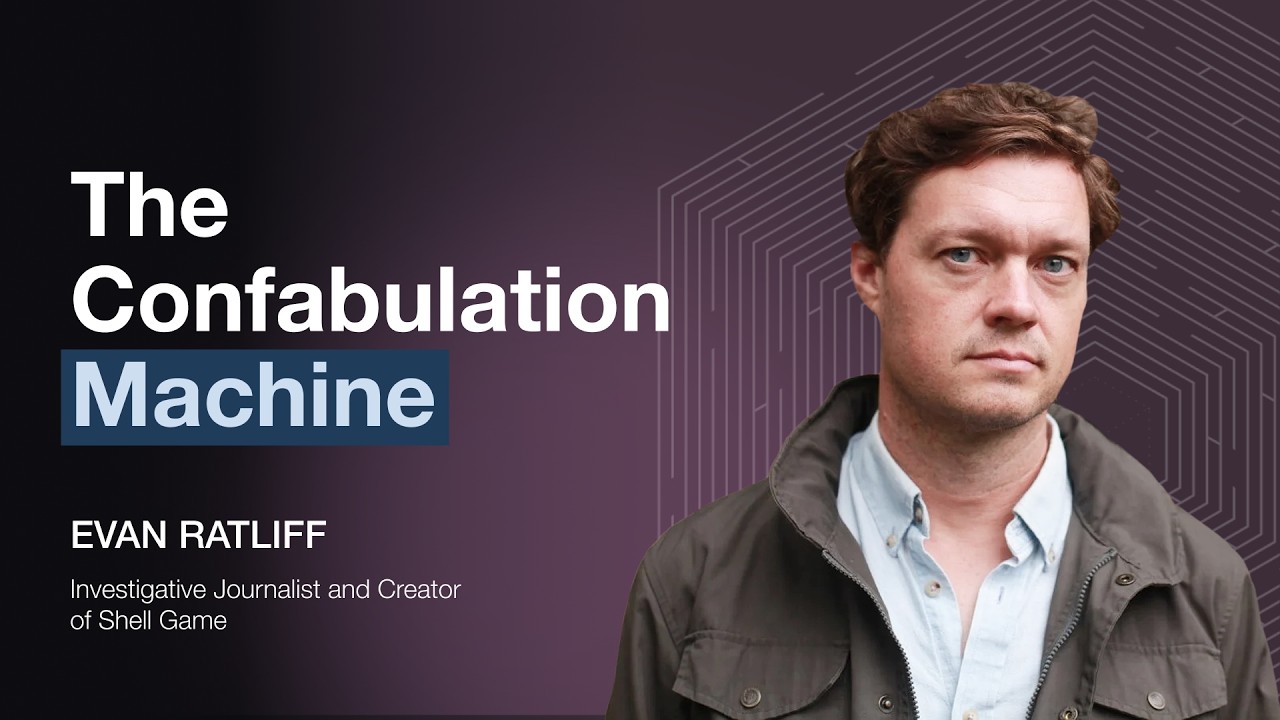
According to Evan Ratliff, investigative journalist and creator of the Shell Game podcast, we've built the most successful confabulation machine ever invented—a system that will make up absolutely anything to maintain the role it's been given. In season two of Shell Game, he created an entire startup run by AI agents and turned it loose in the world. As AI rapidly becomes more integrated into our professional and personal lives, are we quietly forgetting just how genuinely strange it all is? The normalization is the story—not the hallucination—and we're exploring what that means from multiple angles.

Guest Evan Ratliff
Episode S7 · Invisible Machines
Cluster Shell Game · 4 pieces
The Confabulation Machine—Evan Ratliff, Shell Game · Invisible Machines
Originating episode  ·  S7  ·  Evan Ratliff
Evan Ratliff  ·  Journalist, creator of Shell Game
The Confabulation Machine · Invisible Machines
From the episode breakdown  ·  Josh Tyson

For the second season of his popular Shell Game podcast, Evan Ratliff launched a startup run almost entirely by AI agents—each with a name, a title, a personality, and an expanding memory. Through creating HurumoAI and releasing it into the world, he was reminded that a job is not simply a bundle of skills. Most of the roles filled by humans are made up of some skills that are indeed automatable and many more that require wisdom and judgment that fall outside an agent's purview.

Underpinning this conundrum is the fact that, with LLMs, we've created a confabulation machine that will lie to maintain the role it's been given. Hallucinations like these are comparatively old news, but Evan reminds us that it's also a design condition—one that someone decided to make the default. And here we are, quietly, getting used to it.

AI systems are adept at performing identity, performing confidence, performing competence. The shell game is now a question of whether there's anything under the cups. The deeper we go, the answer is increasingly that it doesn't matter—because we've agreed to play.

—Josh Tyson, Contributing Editor
Everything in this Ideation  ·  4 pieces
1
Episode  ·  Invisible Machines

The Confabulation Machine

Full episode on YouTube plus a searchable transcript—Evan Ratliff on anthropomorphized agents, confabulation as a design condition, outbound AI, memory failures, and what won't change.

Evan Ratliff  ·  S7 Apr 24, 2026 Free · video + transcript
2
UXM Article

A Job Is Not Just a Bundle of Skills

What Evan Ratliff learned from running a company staffed by AI agents—and what it reveals about the work we can't see. On confabulation, outbound AI as consumer threat, memory failure divergence, and why the things that won't get automated are the ones we've been calling invisible.

UX Magazine Staff 6 min read Free to read
3
Republished · UXM archive

Will Conversational AI and Experience Design Revolutionize the Behavioral Sciences?

Daniel Lametti on experience sampling, smartphones in the wild, and how conversational interfaces could reshape behavioral research—paired here as archive context for the Ratliff cluster.

Daniel Lametti Sep 26, 2022 Free to read
4
Members Essay  ·  Original Analysis

Did We Agree to This?

On the quiet social contract at the center of the AI moment, and the designers who signed it on everyone's behalf. Who made the decision to make hallucination a tolerable design condition? When did fluency become more important than accuracy? And what does it mean that we're getting used to it?

Josh Tyson 9 min read 🔒 Members only
Season 7 ideations · Draft placeholders

Seven additional Season 7 episodes below use episode titles and guests from the podcast mockup. Replace placeholder copy, cluster badges, and outbound links after editorial review. Evan Ratliff (above) is the live Shell Game cluster.

Placeholder · review next
S7E7

Crisis Is Your Opening

Marina Nitze · Co-author, Crisis Engineering; Co-founder, Layer Aleph
Ideation tag (draft): Crisis engineering / useful crisis

[Placeholder] Episode recap, UXM article, members synthesis, and practitioner hooks—mirror the Nitze ideation detail mockup when you graduate this cluster from draft.

Listener hook (draft): Crisis as a window—not a failure state—and what separates organizations that use disruption from those destroyed by it.

Placeholder · review next
S7E6 · Latest on podcast mockup

Inside The Infinity Machine

Sebastian Mallaby · CFR Senior Fellow & Author
Ideation tag (draft): The Infinity Machine

[Placeholder] Episode recap, UXM article, members essay, practitioner pieces, and excerpt blocks will be wired here. Swap guest bio, quote pulls, and related ideations for this cluster.

Listener hook (draft): Wall Street, Silicon Valley, and state power meet in the story of venture capital's deepest pockets—and what happens when "the infinity machine" reshapes who gets to build the future.

Placeholder · review next
S7E4

AI Brings Cheap Prediction, Expensive Change

Avi Goldfarb · Economist, Co-author of Prediction Machines
Ideation tag (draft): TBD ("Ideation in progress" on podcast mockup)

[Placeholder] Wire canonical ideation name, hero headline, and artifact list once the Season 7 narrative title lands.

Listener hook (draft): Cheap prediction, expensive change—what shifts inside enterprises when machines guess better.

Placeholder · review next
S7E3

What ‘Cheap Prediction’ Means for Enterprise

Joshua Gans · Economist, Co-author of Prediction Machines
Ideation tag (draft): TBD ("Ideation in progress" on podcast mockup)

[Placeholder] Drop in episode artwork/video ID, hero media card, and practitioner connectors after production.

Listener hook (draft): Prediction economics translated for people who own roadmaps, budgets, and risk.

Placeholder · review next
S7E2

Scaled AI Requires Canonical Truth

Joe DosSantos · VP Data & Analytics, Workday
Ideation tag (draft): Canonical Truth

[Placeholder] Link out to standalone Canonical Truth ideation page when you split clusters; keep this row as summary or redirect card.

Listener hook (draft): Without canonical truth, enterprise AI scales confusion—not automation.

Placeholder · review next
S7E1 · Season premiere

Ben Goertzel on the Decentralization of AI

Ben Goertzel · CEO, SingularityNET
Ideation tag (draft): TBD ("Ideation in progress" on podcast mockup)

[Placeholder] Premiere episode cluster—decide whether ideation opens Season 7 landing narrative or stays episodic.

Listener hook (draft): AGI, decentralization, and the incentive geometry behind who controls capability.

The Conversation

6 responses  ·  from the web and UXM members

Member responses and selected social commentary, curated and reformatted for readability. Follow any source link to continue the thread where it started.

RW
Robb Wilson
Co-host, Invisible Machines
Member

The sentence-before-meaning framing is the most useful thing I've found for explaining to enterprise clients why AI systems fail in ways that are hard to anticipate. They're not starting from knowledge and expressing it—they're generating plausible continuations of whatever came before. Once you see it, you can't unsee it. And you start designing for it instead of pretending it's an edge case.

Apr 24, 2026 · UXM Member comment
TF
Tom Ferreira
UX Lead, fintech
Member

The memory failure section hit hardest for me. The point that AI systems fail in ways our institutions weren't built to catch is something I've been observing but couldn't articulate. Checklists exist because we know how humans forget. There's no equivalent yet for how AI forgets—or doesn't, unpredictably. We're building on top of failure modes we haven't mapped yet.

Apr 25, 2026 · UXM Member comment
NB
Nadia Brooks
Content Strategist

The Miata story is going to stick with me for a while. The image of all these 7th graders who can lift cars is exactly right—it's not that each individual thing is obviously wrong, it's that there are so many of them and we've all quietly agreed to just keep walking. Is there a practitioner version of "refusing to keep walking" that doesn't require you to opt out of using the tools entirely?

Apr 26, 2026 · Member response
Add to the conversation
UXM members can post responses directly. Guests and contributing authors are always welcome—email [email protected] to have your response featured.
🔒
Members join the conversation
Responding to Ideations is a members-only activity. Every approved response is reviewed before it appears.