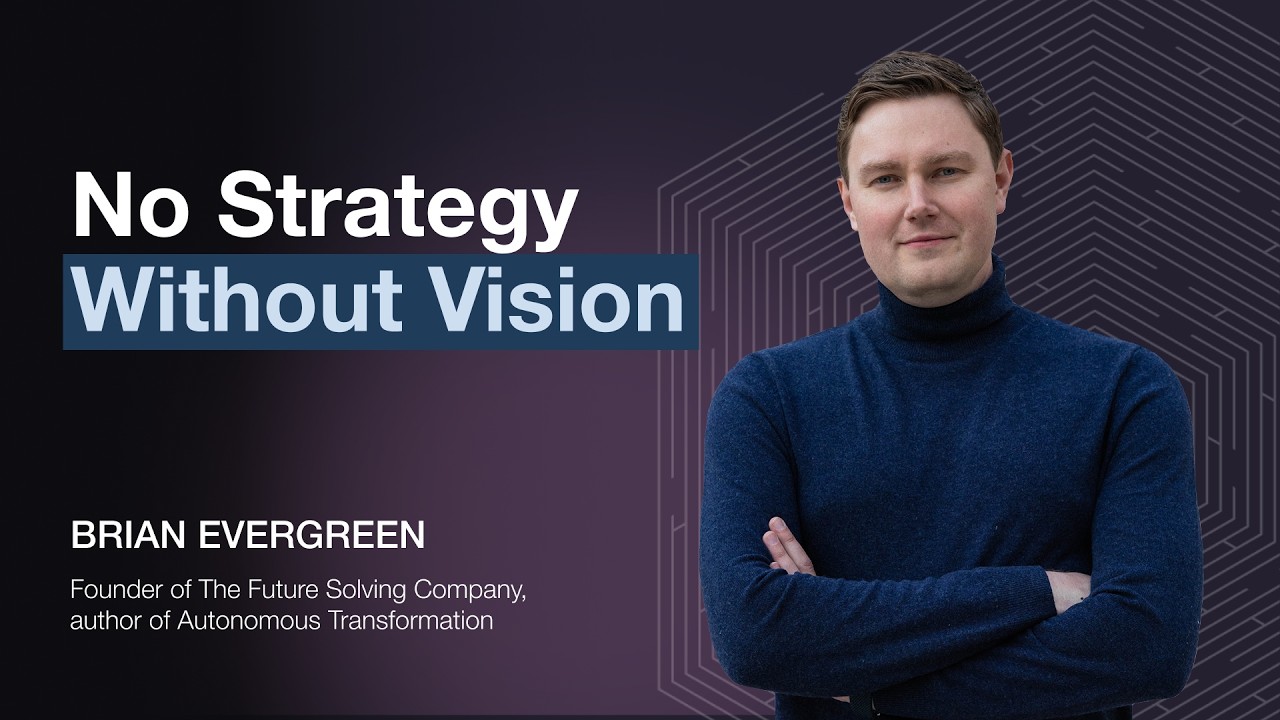
For the companion UXM essay spun from this conversation, see Real AI Strategy Isn’t a Vendor Bake-Off.
Transcript
Speaker labels and timestamps follow the source transcript; light edits may apply for readability.
All right. Well, Brian, it's great to see you again. ⁓ know, last time, last time we spoke, we all agreed that there was a lack out in the world of a clear strategy, right? For, for companies and organizations that are approaching agentic AI, there's, there's a glut of tools and information, but piecing it together is quite difficult. So we had, we had challenged ourselves, even to, to, in the space of an hour or so come up with
with a nice roadmap for organizations to use. when organizations, when business leaders, when executives come to you with questions about agentic AI, what are some of the first things that you tell them that they should be thinking about or looking into?
So it's two part. The first thing I say is sure, you do need to have some level of literacy of what agentic AI is, how's it different than gen AI, how's it different than good old fashioned machine learning. So you do need to have that level of literacy. Like just like if you're a painter, you need to know how to work with colors, you need to work with different textures, right? So you need to know what you're working with in the first place. then once you have some level of literacy of what's possible with these new technologies and what they're capable of, the temptation that I would say that maybe almost perfectly maps to all the. Failure percentages we see out there of like 95 % of AI projects failing and stuff like that. I'd say probably that's probably a one-to-one correlation with leaders who go, okay, now I know how this tool works. So let's immediately put a use case and then let's go. And they essentially have no strategy and no vision, but just a plan, an agentic AI plan is what I've seen. ⁓ And it's always well-intentioned by very smart people, right? That's just the way of doing work with it that we've inherited. ⁓ And so what I say instead is the first thing you do is set aside agentic AI or AI or five years ago, I would have said set aside the metaverse or blockchain and just start with what is it that you're trying to do? what is the vision that you have for the value that your organization, beyond what you're creating today, new value that you could create?
You
And, I, no strategy without vision. So what is that vision in the first place, setting everything else aside and forgetting too about this. Cause if you take the system and the organization as you have it now and say, how do we make it slightly better? You're that's a very complex question. But if you set the organization and the system aside and say, what would be the most amazing version of, of what we do? If we just forget about all the complexity of what it would take to get there. And we just imagine what that should be. Um, and starting from that point.
what should that vision be and then work backwards to figure out okay what tools, technologies, processes, etc. investments will it take to get from here to there.
Ugh. Yeah, yeah. I'm kind of hung up on this. I like what you said. I frequently said like, you don't need a new strategy. You just need to adapt your current strategy. ⁓ But I like this better. You need to go from a plan to a strategy. I like that. I think that's more accurate. Because you have a plan, right? Your plan is how you buy software today.
Yes. Hmm? Yeah.
Right. ⁓ we need AI software. And then you run it through the same planning system that you have. Right. It's not that you don't have a planning system. You have a way to buy software and you have people who what run an RFP, talk to Gartner, create checklists, interview vendors, go through, check the features from the feature list, grab everybody together and then vote like, that's a plan. Right.
Right.
It's a bad plan, but it's a plan. in my opinion, this is, this is what we do for known solutions for things that we know solve problems, right? The sort of
If you need a WordPress site, that's exactly the process you should follow.
Yeah. then you're like, okay, what about for unknowns? Like we're exploring for oil versus like tapping oil. why doesn't that work?
Yeah, I mean, for one, I'd say that it's unscientific to try to prove in advance when you're doing something truly innovative, because there's no data.
Right.
Science requires actual data. And so if you want to just prove something scientifically, would need data to depth through experimentation to demonstrate, Hey, this is, this is repeated in many different experience experiments. And so now we know this is real, but we, we make the mistake when we're trying to be smart, trying to be scientific, we think, there's data involved. I'm going to get a bunch of data from, like you mentioned Gartner IDC, and I'm going to look at where we think the trends are headed. And then I'm going to, that's what we're going to base our. decision on. ⁓ unfortunately, that's actually an unscientific way of making decisions because there is no data about the future. And so you don't actually know where that's going to head. And from a systems perspective, there's so many different contexts, tectonic plates that could shift from here to there. And so if you try to go through the traditional RFP process, well, one, you're limiting yourself automatically to vendors who will even bother to participate in your RFP process. ⁓
I don't know.
And beyond that, you end up with two or maybe three down selected vendors that have done orals that then you have to pick from when you have to do it. It's sort of like a, unfortunately, a little bit like our political system where you end up with a couple down selected that you have to pick from. sometimes, you know,
huh. Yeah. ⁓ it's so funny that you just said that. You just unlocked something for me because I'm like, there's a vendor, I will not name them, but they get brought up on occasion when we're talking to customers and customers are talking to us. their approach to building their application is to create a spreadsheet, go through every vendor. in the landscape, write down all the features, put a check besides all the features that are most common across all the vendors, have their team build those features into the platform. Like this is their roadmap, right? Then go to Gartner who like creates their checklist by doing that exact same thing, looks at them and goes, they check all the boxes and then they win the deal because, That's how software is bought, right? And they win and they win and they win because somebody went to Gartner to get the checklist, goes, well, they have all of the checks and then it doesn't work.
Yes.
Well, right. actually, the funny thing about that, putting it to that layer of abstraction. It's something that bothers me a lot about when people say, well, AI can do the job of a financial analyst now, for example. Because what they've done is that they've zoomed out to say, analyzing financial data. AI can do that, and so can a financial analyst. Same thing. And the same thing if you look at these features of these different software vendors. It's like, we might have the same title of a feature, but the actual, what the underlying feature is and the quality is not accounted for.
Right.
in that analysis, right? And I think the same is true when we try to abstract to different tasks levels and things and say, oh, well, if these are the 10 tasks the average financial analyst does during their day, and we can try to automate those, we think we can do those tasks with AI, then now we can do the job of financial analysts with AI. When that's actually in practice, just like you said, it's absolutely not true.
Yeah. Yeah. Yeah. And how crazy is that idea if you really think about checking feature boxes? it's just, it's like entirely the wrong way that, that this technology works in the sense that if you want a new feature, like it can write it during the call. So how does that matter anymore? Like, like, why does it even matter? Like you're
Well, right, we're the same. Yeah. Well, it's something that drives me crazy about so many of these, ⁓ I call them AI influencers, right? And to be.
opposed to AI experts, right? And I know there's AI experts who create content, right? ⁓ But AI influencers who are not experts, you know, just to distinguish where they'll do a post and they'll say, well, PowerPoint is dead because this other startup that no one's ever heard of that, you know, created a feature where you can auto-generate slides or something like that. So now this is the end of power. And it's like, well, how long would it take like Microsoft to actually recreate that feature? Or they'll say Adobe is dead because of this thing.
Right. Yes.
They'll name a huge company. It's a good way to get, you know, views on your posts. They'll just declare that something's dead when, like you said, like, well, one, sure, maybe AI could even write it even faster. But even if you went through the traditional agile software.
Yeah, it's like date crap.
development and like engineering process you ⁓ You know, wouldn't take them long maybe a few weeks to rebuild whatever that feature It's like maybe a couple months at most but the company like the incumbent company with a massive amount of market share is not Dead just because a new feature came out, right?
Yeah. Exactly. Yeah, yeah, it's like all software is dead as we know it. So say something interesting. Like it's all dead as we know it. It's going to change. Now who's to say that, your buddy's company that just made a new version of PowerPoint is going to be the one that everyone flocks to when all software is going to change and shift and, you know, it's, yeah, it is funny. ⁓
Right. Talk to me when you have a product that as I'm giving a speech, is gonna pair in alongside what I'm saying, bring up the most relevant information based off of like a kind of a rag application with all of the documents and images that I or anyone in my space has created. Like, that would be interesting, right? Where I'm presenting.
Mm.
Right. Yeah, or give me the one that
Yeah.
I talk to you and each person that I'm talking to on a call sees a different slide that's more accustomed to them and their context, right? And it's overlaying what I'm saying. And it's like a heads up display that's like, ⁓ you don't know what this word means. And it explains it. But then those who do don't like that's now we're talking the future, right? We're saying, okay, custom decks for each person.
Yes, right, yes. Yeah. Yes, exactly.
And then most people say, well, that's sci-fi. Like that's way in the future. You're like, no, it's what you do now when you go to chat GPT and ask a question about who the heck is Invisim Machines and why should I watch this podcast? And it says, well, based on your history, based on what I know of you, here's why you should watch it. It has a memory.
Great.
Well that what you mentioned ⁓
That's right. Yeah. And hey, you you asked about this thing. They actually talked about an episode, blah, blah. Right. Or you, you, you're obsessed with Cassie Kozer cough because of all the times you ask about her in chat GPT on there, what, three times or something like that. You gotta, you gotta go check out episode boom, boom, and boom.
Yeah.
Exactly. Yeah.
Twice, yeah. Well, Brian, you mentioned something. You talked about this idea of being connected to sort of like a rag database or something that could give you information in real time. ⁓ If we get back to this idea of creating a roadmap for an organization, like once you have that vision, one thing that Rob and I agree on as a logical first step is beginning to create
Yeah.
source of truth for an organization because for AI agents operating as tools to be able to do things reliably, they need to be able to link into that. And we had a pretty cool conversation with Jeff McMillan and David Wu from Morgan Stanley. they were actually doing this pre-chat GPT with OpenAI. They were working, directly with Sam Altman and some of the people there. And what they realized is it was obviously a lot more than just a dump of like, here's all our unstructured data now make us a source of truth. it became a lot more about like creating this system, right? So all the unstructured data is accounted for, but there's also people assigned to it. Documents are assigned a time to live. So there's a call to come check and make sure that the information is still relevant. if we look back and think about a vision, their vision, I think was that they wanted to use AI to augment the abilities of their financial advisors so that they could save time, kind of like what you're talking about in the idea of like giving a presentation there with a client, they can get answers a lot more quickly and stay more in the moment human to human.
From a vision perspective, what I love about that is that it's visceral. That's something I always tell people when they're trying to come up with a vision, because it's easy to try to think that, ⁓ that our company is 10 % more profitable is my vision. That's not a vision, right? So vision of like, want when my financial advisors are in the room with a customer, they can in real time answer all their questions to the maximum amount of information that's available to help them make like solid financial investment decisions.
Ha ha ha ha ha ha!
Like even though that's a little wordy, like it is a vision, right? And you can kind of imagine being in the room. I'm sure there's a way we could word that to be even more visceral. A couple examples I give is like when you think about JFK saying, he could have said.
again.
My vision is that by the end of this decade, we ⁓ will successfully land on the moon and return. That's the same vision he articulated, but he didn't articulate that way. He said, we'll successfully land a man on the surface of the moon and return him safely home. And when you hear that landing a man safely on the moon, you can almost feel the footsteps, like landing, right? It's visceral. And the same thing when I work with IT departments,
and I saw us.
Mm.
try and I give them examples I say for example What if your work in IT was so good that all of your business partners, whenever someone comes to try to sell shadow IT to them, they laughed them out of the room. It was laughable that they would ever work with anyone outside of the scope of IT. Like go talk to IT. Like it's ridiculous to think that we would ever do a shadow IT project. Cause we love the work from IT so much. So I always say like start with an extremely visceral, you could almost feel the emotion of the moment of what it would mean to have gotten it.
Yeah.
there for your vision. It's much easier than alignment then. Then once you've done that, then ask the question, what would have to be true for us to achieve this vision and work backwards from there? and that's something that guidance that, that precedes me of like, what would have to be true? Like Roger Martin, some of the great thinkers have asked that question where I would say my most unique contribution, in the recent years has been, I have created a framework for turning that strategy of what would have to be true into something that's scientific and visible.
Mm.
So you document all the things that would have to be true from where you are to where you want to go in one single view of these are all the things that if all these things were true, we would have achieved this future. Now, maybe we don't know how that would be true, but it would have to be true that we'd be able to get this information in real time. Okay, well, would be true to that information in near real time? Well, we'd have to have systems that connect it to blah, blah, blah, blah. What would have to be true to have that system that connects to there? There'd have to be some kind of commercial incentive for that, right, you know, that regulated authority to
Yeah.
Yeah.
willing to give us that information. What would have to be done with that? Well, policymakers would have to, right? You'd like, you can work backwards. You can actually produce strategy in a way that just most organizations, their strategies are invisible.
Yeah. Yeah. I think of how many times we provide our customer with tools and no vision, which happens unfortunately more times than I would like to admit. it's like handing someone those pneumatic air guns. Right. And then them taking it and smacking it against the nail. Right. it hurts me because I invented this thing to watch them do that. Right. And and then they're like, what the fuck is wrong with this nail gun of yours? This is the worst hammer I've ever used. both of both of us are miserable. Right. ⁓ And the question is, like, what would have changed that? Right. What would have and
Right. Yeah.
And your point is like you like, like, why don't you start with first of all, understanding how to build houses in this new age of pneumatic tools. And, and then we'll hand you the nail gun before you start hammering. Right. There's like, take a second to understand how these tools work and then start hammering, stop buying stuff. and then realizing like, wait, we bought the thing, like as if as if implementing an AI strategy is about buying stuff versus like learning stuff.
Or even, well, and I'll go a step further to say it's also not just about learning stuff because there's a lot of organizations out there right now that think, okay, if we train everyone in our whole organization how to use gen AI, you know, then we've introduced our new, you know, our brand name LM, right? Or language model or GPT. ⁓ and then let's train everyone on it. And then that we'll get that's, you know, adoption becomes the false proxy for success. And adoption is not like.
Mm.
Adoption is how you measure if you're like in IT like do people like the new tool that we just introduced like that's and a good adoption metric But for whether or not your company is getting value out of a gen AI system Adoption is absolutely the wrong metric I made a joke recently about ⁓ Like someone coming up to Darth Vader and saying ⁓ like Lord Vader, we've reached 99 % adoption of our new platform. And then him saying, great, so you found the Rebel Alliance. And it's like this awkward pause and like, no, no, we haven't. And then it's like, but Jeff in accounting said that he's like much more efficient now. And then like, you know, like.
Ha ha ha.
Asterisk like, know, the rest is cut off due to graphic content, right? So I think we look at we look at Gen AI and ⁓ people look at adoption. There's people building up cottage industries, training people. And the example I gave, I love that you use a construction example, Rob, because my dad actually was a general contractor. So I grew up with a tool belt around my waist and I use tons of construction examples. And the one here for adoption is like if you want to Duomo in Italy.
Hahaha
right in Florence, this big, beautiful building. They weren't even sure if they could do it, right? You wouldn't get there by training everyone in Florence how to use hammers and nails and then wait for like some bottoms up innovation. No, training everyone in hammers and nails in Florence might've meant people are gonna build slightly more robust or like stable homes or they're gonna be able to fix some of their own. There is a value there, there is, but you're never gonna get Duomo from mass.
Yeah.
of tools,
I really like prediction machines for this. Microeconomics of Artificial Intelligence by. Joshua Gans. It's kind of like an evolution of prediction machines, but it really gets into like the weeds and ⁓ it doubles down on this idea that what you're saying, there's point solution change, which is like incremental improvement that AI can bring to like the way you do things. And you should not forsake that. Like, go ahead and get those gains, just, but just do what you normally do. Evaluate short-term, look at ROI, like don't make long contracts and And sure, if that just, you know, gives you a 10 % efficiency lift in area X, like, of course do that, but it doesn't, but that's not the strategy. That's, that's the plan over here while doing that, there's a top down strategy. Let's call that the bottoms up strategy over here. There's a top down strategy. That's like, we're going to have an assembly line. Like we're changing the way that we're doing work and we're going to, and we're going to do that. slowly and incrementally and displace this. So it's this idea that I think most people miss, which is like, this point solution doesn't become this. There's no way this becomes this. This actually goes out here and gets you further away from this while you think it's becoming this. So it's this idea that because you think you're doing this, you think you're doing this. this is a shame because
Exactly. Yes.
Now you're not doing anything here because you think you're doing this over here and this isn't going to end up here. that's a hard one for folks, right? Like they, they, why can't you incrementally add AI to your existing tools? Like, ⁓ summarize my meetings and eventually have systemic change. I'd love to hear your thoughts on that.
So the way I put it, two things. One is that in my book, I had the opportunity, it's kind of funny how I ended up finding him. I was interviewing a VP of innovation at Georgia Pacific of all places where they make toilet paper and like a third of all Amazon boxes. And he said, you got to talk to this guy on my team. was a director of innovation at the time. And he said, oh yeah, I built Blockbuster on demand for Blockbuster in 1995. And we piloted it Texas. and people loved it. We solved for the universal remote. We saw for like our UI was actually the blockbuster store that you could click through sections and it would highlight comedy or like romance or.
When you selected it, would turn into that like that. He showed me the images of the screen where what it looks like in hotels now when you're clicking through, you know, the sort of horizontal bar and then and they also had to deal with Comcast for distribution. Like they had thought through. I mean, they had enough that they could have launched a streaming service in 1995, but it got shut down because of ⁓ it threatened 12 % of late fees, right? 12 years before Netflix introduced streaming, they could have they would have introduced streaming, right? your point like you could use in that case they could have tried to use the internet to drive more foot traffic and do things to get more people into the actual physical blockbuster stores because that was where they were making their money today or they could have used it to introduce streaming and like move into and lead they actually were in the authority position and had the leverage and like everything to lead the streaming world.
Anyways, I'm.
The same thing is what Hollywood faces today, which is you could use AI to try to cut costs and like go, you know, work out like, okay, now we can make films slightly more efficiently. And that means that we can make more movies, which means we can actually hire more people and keep more people employed on that. Great. ⁓ You could also think a little bit more further out of now we can introduce an entirely new form of education, sorry, of entertainment that's more interactive.
where I can choose the ending of the story to some degree or at least there's a choose your own adventure and there's three different options or ⁓ you know some new form like you were saying about personalized presentations like personalized film ⁓ I think that there's you know so to your point it's easy to want to say no let's keep doing what we're doing and let's keep making it more and more efficient endlessly.
Uh-huh.
Bell Labs had a conversation in 1952 where they'd just been awarded the top industrial lab and their president brought together all his leaders and he said ⁓ He said, okay, we just got named the top industrial lab. What are our top three inventions? And they said, well, the dial, the touch, or sorry, dial, the coaxial cable, the ability to thread six calls through a single line and the transatlantic cable. And he said, great, when were those introduced? So they wrote down when they were introduced, wrote down, which all was like 1940s. Remember this was 1952. Introduced in the 40s, 30s, transatlantic cable was the 1800s. And they said, great, so when were they invented? And they assumed, ⁓ probably five to 10 years before.
introduction but turns out all three of them were invented in the late in the 1800s so with that and he said he looked around so you're telling me our top three inventions that we've ever had as a lab were all invented before any of you were born let alone worked here like what in the world have you been doing and he said I'll tell you what you've been
I huh. Yeah.
We've had the wrong R and D strategy. Our R and D has not been actually research and development of new things. It's been research and development of improvements on the things we're already doing. And so we need to actually focus. And so to your point, Rob, what he said is we actually need to assume that the telephone system has gone down and it is irreparable. Like it's completely destroyed and we're building from scratch with all the technology and economic system and political.
like regulatory environment, everything that we have today, what would we build now from scratch? And maybe we can bridge things over from what we have, but in the next year of doing that, they invented the basis of the touch tone phone, voicemail.
and enjoy this.
It was like a year of rapid invention, some of which took decades to come to fruition. But that's a focused exercise. You're not going to stumble into that. Like that's a time focused exercise. And that's actually what I help a lot of organizations do is to create that moment for themselves because it doesn't, it's not, it's not going to just naturally happen. is an inorganic exercise.
Yeah. Yeah. Yeah. Yeah. Yeah. I like your analogy. So dating myself, I was there for that Blockbuster moment. I was a consultant. I wasn't involved in it, but I was there. ⁓ I was part of the opinion crowd to Blockbuster. was a consultant. ⁓
Okay. You were aware of it. Nice.
It's a really good example because that solution that you just mentioned was bottoms up. That was not top down. ⁓ It wasn't the top saying we need to build this thing. And when they came to the top, it was so clear that they had no idea. Blockbuster was a series of franchises and each franchise had owners and Blockbuster
Okay.
Their customer was the franchise owner, not the end person renting movies. And they were like, how do we make money for our franchisees? Like what you're talking about is going to war with our franchisees and taking revenue from them to go direct. They had to invent a system that was inclusive and gave life to those franchisee owners. They couldn't just.
Right.
with them because it's not competing with themselves. It's not like the guy at the top can just say, ⁓ screw it. Screw all of our franchisees, right? That's where they get their money. And you could say the business model was flawed from the beginning because it shouldn't have been a franchise. Now, granted, lots of them were owned and there's there's there's a lot of nuance to this. I'm totally oversimplifying, but it shows you that a bottom up strategy without a top down strategy, you're going to end up
Get destroyed.
creating something that doesn't fit the business model. And so you go, yeah, they had a solution, but it wasn't aligned with the overarching business model. so if you don't create a strategy at the top for how you're going to handle this, that's what you end up with. You end up with someone at the bottom coming up with it and it being wrong or off. Xerox, like there's all these examples of
Hoedek.
of bottom up, yeah, Kodak. I love that one because a buddy of mine was there and brought in to solve that problem. And he would say, you had a bunch of chemists. that basically built a company and ran a company around chemistry, trying to wrap their head around digital photography. And they're like, but I don't know how the chemicals are going to, how are we going to make film? They just could not wrap their head around it. And so I see what you're saying. Like, but what does that look like? Like, why does that happen? Like, let's say they say, come on in, Brian, let's come up with a strategy. There's something missing there's some way that you walk out of the room in a lot of these cases and they're still not aligned. Like, how do they get that alignment? so that the bottom doesn't build something completely out of touch and the top isn't out of touch with the bottom's building. I hate to call it bottom top, but.
No, yeah, yeah, yeah, no, completely understand the question. What I do is, first of all, I think there is a natural bifurcation where certain people are operations focused, certain people are more future. future thinking. They see something about either where things are headed or could be headed and they get really interested and maybe even obsessed with that. And so much so that they get bored and they struggle in purely operational roles. So I think first of all just knowing that and from a talent perspective make sure people are in the right roles. But what I do when I help organizations do this is I say, ⁓ First and foremost, transformation of a culture of an organization is a tops down exercise. It can be a ground swell where you could try and you could transform much of the organization, but if the top isn't bought in, if incentives aren't aligned, it will ultimately. When they say the falsely attributed ⁓ culture eats strategy for breakfast, ⁓ I always say the ⁓ thing that bugs me about that is that you can you can design for culture and you could create a strategy to create the kind of culture you want to create. And that's something that Microsoft did.
Uh-huh.
right from to 10 X. They didn't do that by just cutting costs, right? Like they had a new bold vision and they created a strategy for it. So when I come help organizations, I first of all say, we have to get out because we're gonna create a vision and that's a vulnerable exercise and it requires you to take off your operational hat completely. So we're gonna get out of the context. Like let's get away from your offices, away from your computers and your phones where you can actually think, right? And without knowing all the fire.
Right. Mm.
that you need to put out because having a brainstorming meeting like sandwiched in between all this operational work in a given day you're You're you're not gonna be able to show up with the right kind of brainpower and energy and clarity of mind right because in your mind is all those things you have to get to right after this meeting, right? Having an off-site is I think incredibly important if you're actually gonna ⁓ do this and then and then ⁓ at that off-site having first of all introducing some of the ideas right like how how everyone is traveling
in problem solving as a, and that's the reason my company is called the Future Solving Company, because so many of us are trapped and we're trained, it's like, it's in our DNA. Like, every conference you go to, start with what problem you wanna solve. But.
and you're all right.
Problem solving is an elimination exercise. So it's curating and trimming the hedges you already have, the value you already have. Problem solving will help you make that incrementally better. But it will not, problem solving has nothing to do with getting what you do want. So it just has to get rid of what you don't want. So future solving is envisioning and then solving for what you do want. So I introduce some of those ideas and that, and I make sure that we have enough of the right leadership team out there that if create cohesion
Mm-mm. You Okay. Nuh-uh.
and alignment. And then ⁓ I have them write down visions. what are three visions for the company and the market that you think are worth solving for on stickies, right? And then I introduce this thing called the, I call it the nindrant because there's not a Latin equivalent of quadrant when you get up to nine. So nindrant it is. Where we talk about whether it's or sorry, not ambitious enough, bold and achievable or too ambitious. And then the why
⁓ Hmm.
My office is achievable within my department. In other words, don't need anyone to buy in.
Nuh-uh.
achievable within the organization with consensus. In other words, we have to collaborate across the org or achievable in the industry with a coalition. In other words, it's bigger than our company. And it's really telling when you put that up on the board after they've written down their visions and then you have them do an exercise of actually show and tell. Like, this is a vision I wrote down. I think this is bold and achievable. And I think it's achievable in the industry with a coalition. And this is the second one I did. And you can start and
and they're not allowed to leave it there until everyone else agrees. And so that exercise alone is more vision, in one hour and a half, or depending on how much time we have, more vision work than most exec teams do all year, because they usually are just receiving a scorecard, hearing, I have to come up with this, I need a strategy for that. Okay, it's usually reactive.
Bye.
this gets out of that context. Then once they've done that, we let them vote with little sticky circles on which ones they want to solve for. And then we put that at the very top of the whiteboard and we say, if this is a future we're solving for, what would have to be true for us to reach that future? So if you're Netflix and you said, or you're a studio and you said, the future is we want to have an entertainment where the same movie can be viewed by everyone and it's personalized to them in such a way
anything.
that it just like blows their mind. Let's say that's the vision, right? Well, what would have to true for us to achieve that? And you start working backwards and say, okay, there might be eight things that have to be true. And you list them and go, okay, if this were true, this were true, this were true, this were true, and just think of like a decision map going or decision tree going down. If these eight things were true, would we have achieved the vision? And if the answer is yes, great. Then now we'll go to each of the eight things one by one and say, for this one, what would have to be true? And document that. And you end up with this, I think,
It's on.
beautiful decision tree ⁓ that reason tree, but we all the reasoning of all the things that would have to be true that you're thinking over and then now your strategies visible so that when you leave that offsite sure you wouldn't have completed the whole thing, but you'd have enough of it that you introduce it to the team members. can say this is where we got to and you can collaborate on a visual strategy instead of sort of a abstract. I'm trying to describe what we talked about in the offsite, but I don't know if I remember everything and right, which is kind
Right?
the status quo that we're at today.
Yeah, I'm going to go back to this book again. And it's just because it's fresh. I'm obsessed with this concept. So one of the things that he mentions is, which I think aligns exactly with your book and what you talk about. But what I like is he kind of takes this economics lens. He really looks at it through like the economics viewpoint.
You know, almost like how a CFO needs to look through this, right? ⁓ And he talks about one of the biggest impacts like systemic change with AI is where you pull out the friction within organizations, not replace people. So in other words, you reduce friction, not replace jobs. And it's a super interesting, it's not like augment people, but it's very clear. It's much more precise. It's reduce friction, not replace jobs. And one of the things that's very clear when you start to like lay out where is the friction. So you draw a map of friction in the organization, right? And you go, okay, well, Let's go find the friction and then let's apply solutions to get rid of it. Right. And essentially, like, you're not going to see middle management doing that, because they are the friction. the end of the day, you're going to find out like, great. They are the friction, and they're the ones most vulnerable. So they're the least likely to adopt, right? So you're like, okay, that's a problem. The people at the very bottom, they're suffering from the friction. So they're all about it, right?
Right. Yeah.
They're like, please, because we're going to keep our jobs, right? The front line is the front line. And the people at the top, which are like the shareholders, right? They're going to pound and demand that that friction be reduced, because if you don't, that friction represents profit, right? And more and more shareholder value, right? So they're going to be like demanding this, right?
Right.
this compression. But one of the things that's talked about that the effect of this is what you end up with is like, less padding between the top and the very bottom, right? Like, ultimately, when you compress this, you get more transparency to the top. So when we talk about these like strategies, and the fact that the senior management goes off and makes a strategy and the bottom is making their strategy and then both of them do something and they just miss each other completely, right? You're like, well, if AI starts compressing the middle, what you're gonna end up with is greater transparency at the top. They're gonna have much more insight to what's really happening on the frontline because the middle this buffer layer that tells them what they wanna hear. instead of what they need to hear is going to be gone. There's also a supposition in all of this that it's going to weed out the top managers and the top leaders that aren't good at their jobs. It'll expose them, right? Because now their decisions will get exposed. Instead of this buffering that happens, this will be exposed. But setting that aside, one of the ideas is like, you
Yeah.
attack that first. In other words, as you think about your strategy, attack the friction and the highest friction first. And it's interesting to think like, is it the friction for your customers to do business with you? Or is it the friction for your frontline workers to get their jobs done? And I think, I think that's a good question. I'd love to hear your opinion.
So two immediate thoughts on that. One is that I think that we, I like the idea because what I love about it is that it's something that I talk about which is designing for the systemic context of your organization so that people can show up and do their best work. And that's where I think my ideas and work overlap with that idea of eliminating friction that stops people from doing their best work or from achieving valuable outcomes for the organization and for customers and so on. ⁓ Where I feel like there's a risk to that is that if you're searching for friction in the organization, I would, from my time at many large organizations and working with many large organizations, I think there's an unlimited amount of friction. And so you could end up doing a ton of analysis and going, okay, here's the 15 different ways that there are friction. But to me, it's a little bit like, ⁓ it could be. I haven't read the book, but based off what you described to me. some of that friction might be like purely contextual where you could look at that friction as a problem to eliminate when instead the thing that I always recommend, which I'm going to need to read the book to get my own sense of what you've shared. But my point of view is that the
channel. Ha ha ha ha ha.
Vision is the only and this is something I'm actually working on researching and writing about right now More to come on that in the future and maybe I'll come back on the on the podcast in the future talk about it ⁓ But is that vision is the only force with enough? ⁓ momentum to overcome organizational inertia, which I think is very similar you're talking about with friction. So I take, and maybe this is a very American mindset, but like I, one of the chapters in my book is called like building a pilot purgatory steamroller, right? Of like, I don't want to go through with a fine tooth comb and figure out what every little problem is. I want to steamroll over the problems with vision that enrolls everyone in what we're doing because they're so
Mm.
about what and they'll leave it to them to eliminate the friction in service of achieving a vision that they find purpose and excitement in. Would be like more leading with the guess the carrot than this then not not that the other approaches leading with a stick but leading with that vision is you know when people are excited about and they feel passionate about what you're what you're solving for ⁓ they find ways to eliminate the friction themselves.
I'm sorry, I like this. So I think of a very common UX paradigm here, a design paradigm, which is in the early days and even continuing when people talk about good UX, they tend to go in and look at experience and look at the friction, right? And say, oh, people are confused here. People are confused. Oh, maybe if we make this font bigger, maybe if we have fewer steps in the process, then they'll buy it, right? So they start to look at the buying process, right?
Hmm. Right.
whatever, buying a new car, right? And they eliminate, ⁓ there are too many steps. And every time someone, we add a new step, then we lose, our conversion rates go down, right? It's sort of like why Amazon site still looks exactly the same to most people, right? They don't even recognize the change. Cause you move a button just a centimeter over and all of a sudden sales go down. But they don't think about
Yeah. Yep.
If you supercharge them emotionally to want that car so freaking badly that they would literally climb a mountain to get it, right? Then that might be the easier job. If you just emotionally connect with them on why buying that car is gonna make them feel good and all their dreams will come true, then it's kind of like if I give you a million dollars to get through the process, you'll get through any process. And so. ⁓
Yeah?
We often in design forget that motivation overcomes friction in a lot of cases. And you got to work on both. got to like, yes, reduce friction, but you can only get so far with friction. At some point, you got to go to the head of the journey and say like, but do you want that car? Right? If you don't want it, then the friction needs to be almost zero.
Right, at the point where you're purchasing something as big as a car. it's typically not gonna be that there was an extra button you had to click. Maybe you get to that straight and you go, you know what, am I actually, like is this the right choice right now? for our family, for, don't I need a seven seater? This is more of a five seater. Maybe I should rethink that. Not because you felt too much friction in the process, right? And I think, yeah, so I think that totally agree with you. That it is, it's an organizational design principle that I think not just OD professionals should take accountability for, but that tech leaders,
Right.
business leaders and industry leaders need to be looking at and saying what force of what we're moving toward. Because if all we're moving toward is like, you know what, if everyone achieves what we're setting out to do right now, we'll be 3 % more efficient. Isn't that just great? It's not that motivating. But if you said, if we achieve what we're working on right now, like, patients will be able to save lives or we'll be able
Yeah.
to if you're an education company, we'll be able to educate X percent more people. like every industry, even entertainment, there's no industry where you can't have purpose in the root of what you're talking about paired with a vision that enrolls people, that brings them along, that they feel like, wow, not only am I, like I love that I'm getting paid to do this work, but I also feel connected to what we're doing and why. And that means I'm gonna find, like go ahead and try to stop me from achieving this outcome.
Yeah. Yeah, I think it's an interesting point. think, you know, I'm sort of dwelling on this idea of vision being storytelling. And like you said, good stories are visions, like a tangible. You can picture them, Vision being like you can visualize it. It's been described in that way. And that is so key that you spend the time to actually imagine for yourself. what it is and then that you communicate that down so that other people can share in that vision. the other end of that that is like the extreme opposite. Like if you don't do that, let's just go to like, let's say you do the opposite of that. Let's say you say, we don't have an AI vision. Our AI vision is no AI, right? And I'm not going to say that's wrong or right. For some companies, it might be right. ⁓ But what
Right.
I'm sure this has happened to readers of your book. We've had several readers that will let us know they quit their job after reading the book. And ⁓ I'm sure it's happened to you as like I said, ⁓ their comment was they've read it and they were like, okay, this is what getting it looks like. Like this is organizations that get it, this is what they need to do, right? And they read the whole thing and they're like,
There's no freaking way my organization is going to do that. So I'm going to go somewhere that it can. So it led me to this place where like, as a leader, understanding this stuff and communicating it to your company, even if you never planned to implement one single thing, it's still critical that the people that follow you believe that you get it and, and that they're not in a
have gotten views. Right.
regular ship, right? So there's some obligation for leaders to at least be literate at the very least in the space so that the people that follow them feel like they're not in an organization that's going to fall behind. And maybe it's wrong. Maybe they won't fall behind, but the whole world is saying they will, right? There's all this, like you said, those influencers are out there saying, if you don't do this, you're going to die.
Yeah, yeah. Yeah, well, and what you said touches on another another thing that I've another phrase that I've been kind of noodling on and fine tuning, which is that ⁓ I believe that vision, sorry, shared vision for the future is the foundation of trust. So what I mean by that is if you, Rob, are working toward a future where there's going to be fewer, like no one in the world is going to be working and it's all robots and.
And they're believing him, right?
like et cetera, et Let's say that's a few, I don't think that's where you're headed or what you believe we should do. But let's say that were your future that you wanted. And then I articulated a vision of a future where we're creating more jobs for people, right? And let's say that's the only difference. One person has a vision where it's almost no people, mostly robots and people like we gotta do UBI because there's no work for them left. And a different vision is more people are employed than ever. And those are two different visions of the future. Like people will make job decisions of where they're gonna work that will align to one of those two based on.
Thank you. No, no, no.
alignment with that vision. So that's obviously an extreme example to illustrate the point, but like the same is true for an organization. You either have no vision, which I'd say is the vast majority of organizations I've met where they say like, when you, I just come in and I ask like, what's your vision? Right. And a lot of times they're like, do you mean like our mission statement or like, what do you mean?
I hate this.
And so, and then, or if you have a vision, like you said, Rob, like it might not be clearly articulated, or maybe you articulated it to your leadership team, but it didn't trickle down to the point where frontline, like the way NASA, I forget which president it was, but there was a president who, when visiting NASA, asked ⁓ a janitor what they did. And they said, I helped send people to the moon. Like.
Yeah.
And that's true. Like if you looked at how long it would take for the trash to build up and no one to be able to work at the NASA HQ, whichever HQ that was, it may be a few weeks to the point where it'd be a biohazard and then they wouldn't, they'd all have to stop working. like truly that janitor helped send people to the moon and they felt alignment in their role of how that was a part of that bigger systemic picture. And so I think that that's for me, that energy of like, and I think that organizations was such an overt mission.
Yeah.
JPL getting the Mars Rover like on tech and on Mars or not, you know in getting a man on the moon or like there's that natural energy that that's that clarity of vision just naturally creates. So I've been trying to help. I've been helping organizations figure out what's the version of that energy that can be harnessed and captured for you today in this in this context of sea change that we're all facing like that that clarity of vision.
Mm. Uh-huh.
and communication, articulation of that vision. ⁓ My hypothesis and what I've been seeing in the research is that it's a force to be reckoned with and there's not really a substitute that I've seen.
Yeah. Yeah.
When, we look at like Joshua Ganz's model that Rob's talking about, right? And we assume that this technology will sort of flatten middle management. How do organizations craft a vision for that transitionary period, right? Like not, cause it's not only going to affect middle management, like lots of people are going to transition in one way or another in their roles. Like how do companies. put together a vision that gets people on board for something that is that drastic.
Well, I want to be careful not to, on my end, not to ⁓ over respond to something I haven't read. So since I haven't read the book, don't want to be, I don't want to.
huh.
It's good, it's it's it's good, it's good, good,
Right. Right.
What I will say is, from what I hear from you, what I understand is, if we believe that, okay, there's a version of the future where the organization, and when you say the flattening, I think we're all deducing and deciding for ourselves what that would mean for the people that worked there to some degree. it's very easy to look at the current.
Welcome to.
construct of what a firm is, of what an organization is, and say, we're going to take this exact construct of an organization and we're going to overlay AI and then this is how it's going to transform. I would almost look at it more like, what are all the different constructs that would make the most sense?
huh.
that where you have social contracts between people leveraging systems and machines and processes to create value and based off of like what we want to do. Again, starting with vision. So if you have a strong vision for something you want to achieve and then you work backwards and say, okay, the construct we actually need is a little bit more decent. Like Amazon's a great example where there are not so many different legal entities that are in all these different spaces, right? And so they've taken the concept of a firm
I don't know.
And within those, yeah, it's a little bit more like the current general construct of a firm. I personally, think it's another time, not only we're already upheaving like business models, we're upheaving ways of working, we're upheaving, right? So why not upheave the.
Yeah.
construct of what a firm is and how it should be organized because I think that the underlying question under there Josh that from what you brought up is where do I fit into your vision of the future? What does that mean for me? And if I don't see my future, why am gonna help you build it, right?
Yeah. Yeah, and I- what I like about this is I think there is alignment with like, if you look at the top and the bottom, who doesn't want to remove friction from their jobs? Who doesn't want their jobs to be easier? Like if you just look at, you know, what drives people crazy in their work all day long, it is the friction of trying to get things done. and having to go through these hoops that they've got to jump through, especially the frontline, right? They're like, God, I just want to do my job, right? And I think if an organization aligns around, we're here to reduce friction. We're here to make your jobs easier to do. ⁓ That feels.
Right? Yeah. Spoken like a true US leader, by the way.
Yeah, like I get the land on the moon thing, right? And I think you need that too. Like, hey, and we'll land on the moon. Like, it's so we can land on the moon, right? But some people just make pizza, right? They're not like, some people are like, yeah, but we just make pizza. Like, we're not gonna, we're not feeding the world. We're not like changing the world. We're making pizza and like, well, let's make better pizza. Let's reduce friction.
Right. Yeah.
And it just, feels like a service leadership position. Like we as leaders are using AI to service the frontline and make life easier for them by reducing friction. But I do also agree with you to say, and here's our vision here's what we're going to do with that energy that we're going to free up. now you're going to spend less time, less energy on bullshit. And that's going to free you up to land on the moon so we can do something extraordinary together. And I do, I do see both of those pieces. I like both of those pieces. So yeah, this is cool.
Exactly. Yeah, I mean, think that the, it's not for everyone. Like you said, if you're in the business of pizza, I would say that even, there's no business that you couldn't have a bold and achievable vision that would be creating new value within your space. So I think if you're a pizza chain, like for instance, being able to say, okay, you know, what is our underlying like need of a consumer? Okay, they as a consumer are what are the times that they're buying pizza? They're buying them when they're going to watch a football game, they're buying them when they're going to do a video game party, they're doing it on movie night, like, right, there's these certain times that you're like, why don't we get a pizza? Right? So then it's like, what are the things?
Yeah, when you don't feel like making dinner.
Yeah, yeah. So whether things could be valuable for them in that moment that we could potentially commercialize and experiment, like do some A.B. on that would make that an even better experience for them and profitable for us. it's sure you're right. You're not saving the world But you are like that's you can still have a vision that that create captures and create the new value and captures revenue.
Yeah. Huh? Huh? Yeah. Yeah. Yeah. And I love this. Like, okay, so I want to buy a pizza. How do we reduce the friction? What can AI do to reduce the friction for them to buy a pizza right now? Because why are they buying a pizza? To reduce friction, because they don't want to make dinner. Especially for 20 people. Like, I'm going to have 20 kids over for a birthday party and I don't want to make 20 hot dogs.
Right. Right, they're looking for the least. Well, right. Yep. That's right. Well, and I think at that point it becomes a systemic thing because what we don't want is 15 different pizza apps to have to download like from all the different pizza companies. And so I think what we would really.
Yeah, exactly. And maybe I don't want to have to send an alarm to have to order it 20 minutes before everyone arrives. Like, I want to order it right now and just have it.
Just like tonight we're doing a movie night, honestly what it should be and the funny thing is that the technology is already there. That I should be able to speak to my phone and just say, just the same way I set a reminder using like Apple intelligence, know, hold the side and say. I want a pizza. want you know, pizzas and enough pizzas to serve 20 people tonight. ⁓ I think two of them are vegetarian, so make sure there's a vegetarian option, you know, but otherwise, you know, the general pizzas we usually order, like, I should think about if it's Uber Eats or DoorDash. I should think about if it's Pizza Hut or Papa Murphy's or who, right? It should just happen, right? And I know that.
No. Yep. And it should not be transactional. It should be relationships. So you start like a month before and you're like, I want a pizza for 20 kids. It's like, great. And then someone's sick. And you're like 19 kids. You just send a text. That's it. Got it. 19. Like you don't have to go log into the app and find the order and then cancel the order and make a new one. Like you just like, you just send a text. I go, it looks like it's going to be 19. ⁓ what they have is lice. Looks like it's going to be 10, you know? And I go, no problem.
Haha
You
Well, right. mean, what you're talking about is where like the, from a UX perspective, like what percentage of the UX gets completely eliminated with AI, right? Where you don't have a UX. Like you make a purchase and I say, I'm having a party and I'm doing a Superbowl party and I want enough food for this many people.
Yeah.
you know, it's maybe showing me a brief it's with of like, here's all the ingredients. But at that point, I'm not going through an Uber didn't need to design a UX for me to do that. Or dash nor Safeway nor Albert, wherever the store is that the groceries are getting bought.
Yeah. Yeah. No! No, we want our kids to say, what's login mean?
Right, it's just, yeah, yeah, right, exactly, where you can literally just.
What's login mean? I don't get it. What's login mean? I can't even explain it. don't even know how to explain login to someone who's never logged in.
That's a good point. It's like, ⁓ that's a great point. It's sort of like how, you know, I don't know if you've seen this joke that circulated where somebody saw a floppy disk and they told their parent like, my gosh, did you see someone 3D printed the save icon? You know, when they saw it.
Yeah.
They thought it was a 3D printed save icon. They didn't realize the floppy disk was a thing that the icon was based on, right? They of it the other way around. So I think I imagine a future for sure, certainly, where people will think it's super confusing that we used to download, you know, 100 different applications onto our phone and have one of them, right? Yeah. Yeah.
You
Yeah. Yeah, but be like, what's download? What's an app? And you're
like, email Brian, what's email? Like, you mean just tell him? Like, yeah, just tell him. We used to say words like that. you know, it's send him a telegraph. What? Like, what do want us to do? Like, we don't need to know any of this. We don't need to know what protocols used to tell Brian. Like, this is gone. This is completely erased in the future. It's
You
Yeah. Right. Yep. all that to say circling back, I would say that I think that we are in an era. The thing is like everything we just described is a different version of the future than we're in today, but not one we're going to stumble into and the ones that.
No.
set a bold vision and this bold and achievable for that future and Actively solve for it are the ones who will define what the actual future looks like people are looking out and going ⁓ Open AI is trying to do XYZ thing and I don't know if I like that or what that would mean for us in society It's like well, what are you creating because they're actually like envisioning something and solving for it And so if you that's not the future you want to be in Someone else gonna have to envision and solve for the future that you do want to be in because that's the
Yeah. No. Yeah, they're talking about a button in the pizza app that suggests an order, right? And we're like, no, there's no pizza app.
Right. Yeah. Yeah. Well, an open AI is like, you know, there's no pizza app, right? Where you just, you know, they want to be the new interface to everything. And, and that's, that's one version of the future that may manifest if, and, you know, people say like, you know, ⁓ history is written by the winners. Same thing for the future. Like the future is, is created by those who design and solve for it.
Yeah. Yeah. Yeah, well, this is great. I'm just great conversation. ⁓ Thanks for coming on. We got to do this more often for sure.
Alright, that sounds great. Thanks for having me.
Yeah, thanks, Brian. Appreciate it.