Organizations don't fail in a crisis—they fail before it, by constructing stories about how their systems work that have never been tested under load. AI is about to stress-test all of them at once. The question is whether you have something ready when the window opens.
Marina Nitze walked us through the California unemployment system's call center—a room of empty cubicles that every executive had confidently cited as their safety net. Nobody had ever visited it. Nobody had ever followed the process from beginning to end. That is the story of almost every organization under stress, and AI is about to make it everybody's problem at once.
The "useful crisis" concept stuck because it reframes something that feels like failure as a mechanism for change that ordinary pressure can't produce. The cognitive dissonance of a shattered mental model is, briefly, a resource. The organizations that understand this—and have something prepared—are the ones that come out of it different. Everyone else just recovers.
We named this Ideation because it connects directly to the outbound AI threat we've been tracking all season: the consumer with an agentic tool who finds your TTY line on Reddit and dials it until it answers. Crisis engineering isn't just crisis response. It's the design discipline that AI makes unavoidable.
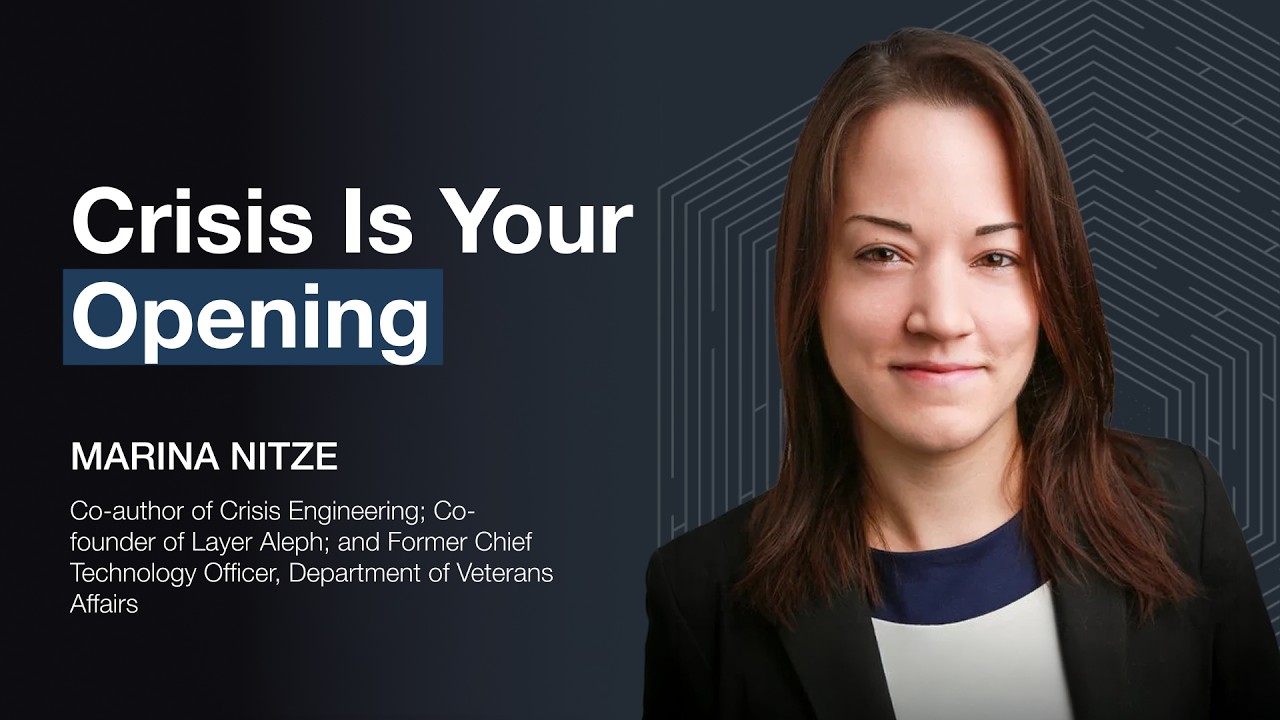
Most organizations treat crisis as a failure state. Marina Nitze treats it as a window. She walks through what a "useful crisis" actually looks like, the five indicators that distinguish it from chronic problems, and the practitioner toolkit for standing up a crisis engineering center when the window opens—because the window is usually hours, not days.
On sensemaking, the stories organizations tell themselves, and why crisis is sometimes the only thing that reveals the truth. The call center that wasn't a call center. The carbon copy form that two dedicated public servants were dutifully exchanging because each believed it was the other's requirement.
An excerpt from Crisis Engineering by Marina Nitze. The five indicators of a genuinely useful crisis—and the difference between the kind that opens a window for transformational change and the kind that just makes things worse.
Marina Nitze wrote this piece for UX Magazine as a companion to the episode. It's not theory—it's what she actually does when she walks into a failing system with a 90-day mandate and no authority to hire. Practical, specific, and unsettling in the best way.
The problem is rarely the technology. It's the organizational immune system that forms around it. A product manager at USDS maps the patterns she's seen across federal systems—and what the rare successes have in common with everything Marina describes in the episode.
There's a difference between crisis-as-permission and crisis-as-panic. This piece, written by a design director who's rebuilt three failing teams inside large enterprises, draws a sharp line between the two—and explains why the best crisis practitioners slow down precisely when everyone else speeds up.
On agentic empowerment, the systems that weren't built to handle it, and why designers are the new crisis engineers. Synthesizes the Nitze episode with Joe Dos Santos on canonical knowledge and Cassie Kozyrkov on decision intelligence.
Member responses and selected social commentary, curated and reformatted for readability. Follow any source link to continue the thread where it started.
The distinction between "crisis as permission" and "crisis as panic" from the Daniel Bloom piece is going straight into our team playbook. We've been burned by the panic version twice in the last 18 months. Both times we moved fast and broke things that will take years to fix. Slower crisis, better crisis.
The framing of "useful crisis" vs. chronic dysfunction is one I've been wrestling with for a client engagement right now. The five indicators feel like a diagnostic checklist I didn't know I needed. Has Marina or anyone published a more detailed breakdown of how to apply these in practice? The book excerpt hints at it but I'd love to go deeper.
What Marina articulated in the episode was something I've been trying to say for years about enterprise AI deployments. Clients call us when they're in crisis, but by then the window is usually already closing. The five indicators she outlines are now part of our intake assessment.