
ARTICLE NO. 507    March 24, 2010

The Impossible Bloomberg Makeover

Redesigning the Bloomberg Terminal would be any interface designer's dream. There's obviously much room for improvement since the interface hasn't changed for a long time, and the personas using it are quite easy to define.

But the complexity and richness of the displayed data, the necessity to fully understand how traders use the tool, and the immediate impact on the work efficiency of more than 156,000 users around the world make it tremendously challenging to make any changes.

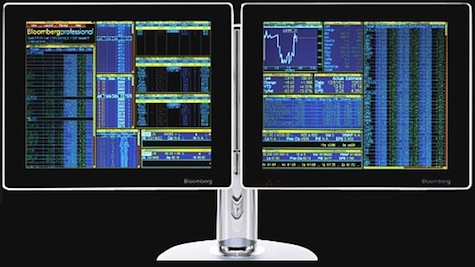
Here is a picture of the Bloomberg Terminal as it stands today (2010). As most users say, "it's hideous."

The current Bloomberg UI

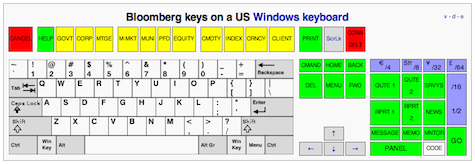
Here is the Bloomberg keyboard:

The Bloomberg keyboard

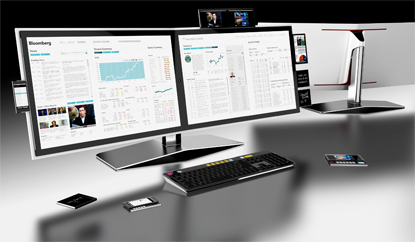
IDEO has submitted a redesign proposal back in 2007 after a 3-week study. Here's how it looks:

IDEO concept design

A widget allows you to zoom in on some detailed part of IDEO's design and have some explanation on the choices they've made. You can also read a short description of the project on their website.

But as a PortFolio.com article clearly puts it: "Bloomberg isn't looking to do a major overhaul of its terminals' graphic design anytime soon. In fact, company executives see the Bloomberg terminal's unique presentation as a status symbol and a selling point. 'We have to be religiously consistent' to satisfy users who become attached to terminal's look and feel, says Bloomberg chief executive Lex Fenwick. 'You can see a Bloomberg from a mile away.'"

The Bloomberg terminal is the perfect example of a lock-in effect reinforced by the powerful conservative tendencies of the financial ecosystem and its permanent need to fake complexity.

Simplifying the interface of the terminal would not be accepted by most users because, as ethnographic studies show, they take pride on manipulating Bloomberg's current "complex" interface. The pain inflicted by blatant UI flaws such as black background color and yellow and orange text is strangely transformed into the rewarding experience of feeling and looking like a hard-core professional.

The more painful the UI is, the more satisfied these users are.

The Bloomberg Terminal interface looks terrible, but it allows traders and other users to pretend you need to be experienced and knowledgeable to use it. Having been a user of the Bloomberg Terminal for five months, it took me a week and a few painful hours to handle it, and I am no genius. The only real impediments were the unbearable UI, remembering which key to push to make the "magic" work, and having to go through the 86-page manual.

Bloomberg's terminal interface will not evolve any time soon both because of the leadership Bloomberg has on the market and because users will not be satisfied with something simpler and more efficient.

Bloomberg is an extreme case of a common UI phenomenon where users take pride and find highly rewarding to handle a painful interface. Obtuse UIs are generally only accepted by early adopters of brand new or highly innovative services. Most of the time, the success of the service and the growth of its user base makes it both necessary and natural to redesign the UI. But despite the fact that Bloomberg is a market leader and has a large user base, this pattern of UI evolution hasn't come to pass.

The only valid reason explaining why the Bloomberg design will not change is the behavior of its users. Users who favor complexity and clutter over efficiency and clarity to sustain a fictive status symbol.


 

ABOUT THE AUTHOR(S)

Comments

Add a new comment

Because of problems with spam comments, HTML in comments is not permitted. URLs are allowed, but they will not be rendered as clickable links.
@J.Cer: honestly I can't find much support of Bloomberg here in this thread. Personally I am not defending this UI as good one (I bet UI is creepy), but still. I'm sure this UI should be defended from designers who are easy with convention of labeling whole user base as "lads with little dicks who need a status symbol so badly".
“So clearly emacs and vi users are inefficient morons.” I actually make a point of setting my vim/terminal/whatever editor colors to use a dark gray background, instead of black (or god forbid white). I find both pure black and pure white to be extremely irritating. Otherwise, I agree. I’m way more productive (efficient?) using dark colors in an editor like vi. I’m not familiar with Bloomberg Terminals at all, but if I used one I’d probably want a way to make the colors slightly easier on the eyes. Instead of pure yellow on black, a slightly more gold shade on dark grey. This is probably just a personal preference, though.
"A white background was chosen to prevent eye fatigue." Black text on a white background is the pessimal combo for eye strain, especially when the white is active (computer, television) rather than passive. The fact that a well known UI design shop doesn't know that might explain why Bloomberg doesn't think they're worth listening to.
@J.Cer: You get it, my man. I think only a few of the people who posted here have actually used a terminal. An open challenge to the Bloomberg supporters: find a company tearsheet. Still searching? I thought so. Most likely you entered the keyword tearsheet into the command line and saw no relevant matches. That's because the search function is extremely unforgiving and doesn't know that a tearsheet is similar to a factsheet and that both are similar to a company summary. Finally, all three of these are similar to a Company Description, which is what Bloomberg calls its tearsheet. Hence the command line code DES. So after a 15-minute conversation with Bloomberg support (chances are they don't know what a tearsheet is either), now you know to enter DES into the command line, hit Go on the Bloomberg keyboard, and see your tearsheet in awful 1980s DOS graphics. And what happens if you forget the command line code DES? Back to Bloomberg support for another 15-minute discussion about a tearsheet, I mean Company Description. Anyone still think the terminal is fast and efficient? The problem is that the terminal is only fast and efficient when you know precisely what commands to enter. Otherwise, get ready to bang your head against the wall. This is not a system built around human beings (traders, etc.) and their perception of the world (tearsheets, etc.). It's a system built around Bloomberg and its perception of the world, which explains why emails become Bloomberg Messages, instant messages become Instant Bloombergs, and tearsheets become DES. Again, we don't need Ideo's drastic overhaul, but I'm sure a consistent, logical, forgiving interface would be warmly embraced by old and new users. Just ask the guy who searched for a tearsheet.
I have used BBG terminals for 16 years and I find it ridiculously obsolete. Start with one basic information device function: Search Has any of all the BBG defenders in this blog ever tried to "Search" for anything on BBG? ¿No? Yeah. Right. There is no search functionality and trying to find anything is a nightmare. Search emails? (excuse me, "BBG Messages") impossible. Search news articles? well, they have never heard of Google at BBG (or about Spotlight) . . . search functionality is stuck in 1995 or worse. Render a PDF? Oh with a lot of wheels spinning and Windows OS support you get a little window with a peek at your PDF, awful! circa 1998. My only hope is that as the generation of the current computer-illiterate BBG users retires and dies off, there will be future generations that will refuse to use BBG garbage interface and either demand a better UI or move to another financial workstation platform from a cheaper better vendor. Let the dinosaurs from the 1990 that have been using BBG for decades move out of the way and let's hope future generations will kill BBG off.
I'm a software developer and love to spend my time creating what I hope are intuitive and attractive interfaces. You have to remember what the requirements of the Bloomberg interface are though. Lots of people have lots of software they rarely use, so having an obvious, discoverable interface, and looking "pretty" so people try your software rather than binning it immediately, are important requirements for such software to be successful. Those criteria simply aren't relevant in specialist software such as Bloomberg, or if they are they come a long way down the list of priorities. Instead, the crucial requirements are that it's fast, accurate, consistent and as extensive as possible in its coverage. That means things like keyboard navigation, obscure colours and codes and indicators in specific areas of the screen so you can instantly find what you're looking for, for people who KNOW what they're looking for. (A trivial and daft car example: which is the better user interface, a simple blue LED on your dashboard, or a beautifully rendered warning dialog that says "Warning: you have full beam headlights on, this may blind other road users!") Whether someone goes "yuck!" when they first see a terminal really doesn't figure. Even ease of learning it for new users matters little when you can hit a function key on the keyboard and 3 seconds later your phone rings with a support representative on the line, who can see exactly what's on your screen and instantly answer any question you may have! The rules for normal software development simply don't apply in that sort of environment.
None of the redesigns for the Bloomberg system looks easy to use to me. (A) They seem to be mouse-centric instead of keyboard-centric, and (B) they have much lower information density. It is much better to use the keyboard for navigation and operations than the mouse, because even though mousing is actually faster than pressing key combos or hot keys (contrary to popular belief about hotkeys faster than mousing), it require hand-eye coordination that breaks your chain of thought, which takes time to recover (something ignored in many HCI research). People should prefer keyboard not because it's faster, but because it is less distracting. When it comes to keyboard sequences, how painful it is to learn the system is mostly irrelevant as long as everything is logical and bug-free. You soon develop muscle memory and the steps to get something done become transparent. This is exceedingly difficult to do on a nonlinear, dynamic interface that needs frequent mouse clicks. However, I do feel that the colors can use some improvement. Legacy systems often inherit the color palette from the 16-color evga displays in the 80s. They should be tweaked to give less eye strain on a black background in a dark environment. I don't think people want terrible interfaces. I think people want a linear system that lets them skim as much information as possible. Whether they are spending time on the right stuff is something else entirely, of course.
"A white background was chosen to avoid eye fatigue"....what? I'm a programmer, I stare at the screen for 12-16 hours a day. White backgrounds give me eye fatigue, Bloomberg's design looks positively soothing compared to the IDEO concept. You designers have your heads up your asses... Function is everything. Bloomberg's design may offend your delicate sensibilities, but it is functional. Not all tasks can be reduced to something a grandma could do, not without losing power and efficiency. Sure, there may be some warts, but I bet you'll have a hard time getting any of the users to switch, in typical designer fashion you'll redo it and lose 90% of the functionality, along with missing the point of the software (to make the user productive). I know everyone likes beating up on the finance industry after the crisis, but come on. Switching the design of the terminal would hardly have avoided the crisis :)
They should name this "The Linux Phenomenon".
Ryan, I think the article itself answers your (implied) question. While emacs and vi are full of generally understood UI flaws, they don't change for the same reasons that the Bloomberg Terminals don't change. Thanks for coming up with another great example though!
This is post is so condescending. "...blatant UI flaws such as black background color and yellow and orange text..." So clearly emacs and vi users are inefficient morons.
wow, you really don't have a clue what you're talking about. first off, lex fenwick is no longer the CEO. secondly, the number of users worldwide is roughly twice what you say. lastly, there's no way you "handled it" in a week. the thing has 20-some thousand functions on it. you maybe learned how to use, what, a dozen or so? the sheer number of functions is also what makes a redesign prohibitive. lastly, it's not a "fictive status symbol." fixed-income markets would more or less cease to operate without it.
If you have used the system for 20 years, as I have, then you would find that long hours watching a low-contrast screen (black background, primarily amber font) is a lot easier on the eyes than Reuters white background, or indeed the Apple macbook I am writing this on. Secondly, the command line interface is much quicker to use than a menu driven approach. Once you have set up the BLP screen and macros as you like, there is no more to be done. Finally, it's a tool not a toy. If I want it to look more 'cool' I can export the data in Excel and have it shown in any combination of fonts & colours - but that's not why I use it.
I think it's important to remember that Bloomberg has a veritable army, i.e. hundreds and hundreds and hundreds of people, dedicated solely to explaining the terminal and solving the mysteries of its inconsistent, almost maddening, user interface. Clients call in just to learn how to log off the system (hint: you type the code OFF into the command line and hit Go on your Bloomberg keyboard, or you hit the Conn Default key on your Bloomberg keyboard. Obvious, right?). Sure, this is a one-time question, but if clients have questions about logging off, can you imagine how many questions they have about analyzing an index, for example? If Bloomberg doesn't make it obvious how to log off, do you think they make it obvious why moving average data is available for one index, but not another? So really we're not just talking the aesthetics of the terminal, and we're not even just talking about the usability of the terminal. You have to also consider the long-term ability of Bloomberg to support its users, both old and new, with an army paid millions of dollars just to help them figure out what command line codes to enter and why the data doesn't make sense. Is this system sustainable? Even if Bloomberg can fund its support staff indefinitely, is that really better than funding some small, but potentially profitable usability improvements? A drastic change a la Ideo probably isn't the answer (I agree, the finance guys would go crazy), but no change won't work either. We can't pretend the system works well now. Just ask any client who has contacted Bloomberg for help logging off.
Bright colors on black are much easier on the eye. White background was introduced to computers to resemble the idol at the time: paper. A pity because we are now trained in something much less effective than what we had in the beginning. I have some experience from the banking sector. They used to have 3270-terminals with cryptic short cut keys. They were blazing fast and extremely efficient tools in the hands of a trained professional. Now they have slow web based interfaces and mouse induced carpal tunnel inflammations. Anyone who stops to think for a minute would prefer a tool that is more efficient throughout their career, even if it takes six months to learn. After all you will spend 30 years with the tool.
I have yet to read a UX discussion of a horrifying interface that didn't devolve into a pile-on of justification. There is no UX or design that is so horrible that someone won't try to justify it. Worse, they will laud it as the essence of greatness. I could purposefully create the worst piece of crap and put it up on a design or UX blog and within hours someone would try to justify it as more substantive, efficient or user-focused.
OH SHURE! Tell BB to upgrade... Then the terminal price will go to $3000 / desk.
@dom Have you considered that maybe IDEO's proposal was pretty terrible? You seem to be making the assumption that if one company's pitch isn't considered, that Bloomberg doesn't take UX/design seriously? Most everyone reading this article, and definitely the person writing it, has never even used the terminal. I'm surprised this was even published considering the proposal and your information isn't even current.

@ay

Having used Bloomberg for several months, it is true I only had a glimpse of what it is, what it can do and certainly used only 1% of its features.

I am just saying that it could be better and that change is difficult in the financial world.

I am not saying that the Ideo design is the solution.

I use Bloomberg (!) I didn't find it to be a "painful experience" though, but I'm definitely not a power user. The black background seems easier to read than the glaring white in the redesign. Each function in Bloomberg has an associated code that's displayed next to the function, so it's easy to learn. You can just type in the codes to get to the information you need faster. You can pretty much right click anything to get more info about how it's calculated and you can export anything to excel easily as well. I think that any redesign of Bloomberg terminals has to really consider these things: 1. Speed: Currently Bloomberg loads quickly, updates quickly, and exports data quickly. If a redesign slows it down even just a fraction, impatient financial people (read: all of them) everywhere will complain. Also, the redesign says you use a touchpad to navigate. This is a bad idea. Anything that makes me take my hands off the keyboard to use is going to slow me down. 2. Transparency: There's no point in displaying a pretty chart unless you can see the data tables it's generated off of. And where the numbers came from. This info needs to be readily available. 3. Cost of change: You need to weigh efficiency gains from a new system against the cost of retraining people who are familiar with the old system. Sure the UI is ugly but these three things are far more important than the looks of the display.
@domleca: "Bloomberg is now losing clients due to the financial crisis and competition (Thomson-Reuters) is gaining market share" The problem with this view is that not all products are multiplicative. For example, IPhone is cool product indeed but not many people actually buying 2 or more just because its soooooo cool. There is real maximum of units per consumer. Some products are different - for example, if some cookie vendor will invent better cookie, his sales will pop not just because more people will buy his product but also because current users will be constantly buying more or more often. The problem for Bloomberg here is that their product is of type A, i.e. no one will ever buy more licenses just because the item gets better ("cheaper" is totally another option). Instead, sales are linked to economy: lots of traders was fired thanks to crisis so less demand for terminals right now. "4. When a product is redesigned, I don't believe former users feel they have been robbed especially if the new UI allows them to be more efficient. On the contrary, they experience it as a free reward. They pay exactly the same price and the product keeps improving." Well I have zero data for Bloomberg users but i was involved in slow redesign of one small exchange's terminal. Users were surprisingly angry on most changes ( Not to mention that trader's speed is related to speed of the market changes AND to the number of steps in his work activity -- both of these factors are not related to UI. Usually it means that in order to improve efficiency by any noticeable gain, one have to change activity, not just UI.
@Dominique L. unfortunately, your opinions seem baseless. "Bloomberg Terminal" comprises a few thousand very different functions spanning trade execution, security analytics, product structuring, legal search, pricing, quoting over the counter products, news mining etc. The screens you describe as "cluttered" are monitoring hundreds of securities in real time and that look you have there is configurable by the customers. The customer *built* this for a very specific purpose. The IDEO proposal has a pretty interface for like .01% of what the system can do. Please do your homework before making such "analysis"
The success of Bloomberg is based on its longstanding leadership role in this particular niche market. People are hesitant to change, it’s called the “kitchen-cabinet problem” where routine drives the emotional engagement, i.e. your wife would kill you if you ‘optimized’ her kitchen ;)
After the financial meltdown sponsored by all those Bloomburg using terminal morons, I have two minds of this: 1). Maybe a better interface would have prevented these guys from making so many mistakes. I good interface might have warned them of the impending disaster. 2). A better interface would have caused even more damage. These goofballs had plenty of warnings that the world was financially unstable, but that didn't make them use any sort of caution.
As others have pointed out here, simplicity isn't everything. I'm sure like every UI, there's room for improvement. But I would like to see an Edward Tufte-style analysis of data density, layering, and non-data clutter in the current UI (and Ideo's redesign), because to a financial trader, that's going to be pretty key. The more data points you can represent on the screen in a scannable, meaningful manner, the better. And what's up with the last sentence? It's not even a complete sentence. Try a colon or an em dash to join it with the previous sentence.